
Managing senior care often feels overwhelming, but you are not alone. The secret to navigating this journey is shifting from a reactive approach to a proactive, integrated one.
This means partnering with a care provider that coordinates all the moving parts for you. An integrated model ensures seamless transitions and expert support at every stage.
The Reality of Senior Care: Moving Beyond the Basics

Managing a loved one’s complex health needs can be daunting. Most advice explains services like home health or hospice but rarely touches on real-world family experiences.
Families are often left to figure out how services work together. What happens when your parent’s condition suddenly changes? Who coordinates between the hospital, specialists, and the in-home support team?
This gap is where families get lost and overwhelmed. It leads to late-night worries and the constant feeling of being one step behind. This reactive cycle creates stress and can lead to poorer outcomes.
The Unspoken Burden on Families
Many families in Monterey County and Santa Cruz County feel they must manage everything alone. Juggling a job, family, and a parent's appointments is a recipe for burnout.
A typical scenario involves setting up physical therapy, managing new medications, and arranging transportation. According to research, 47% of adults expect to become a caregiver for an aging relative, yet most feel unprepared for the logistical and emotional weight.
The real challenge isn’t just the medical care; it’s the coordination of that care. When services are fragmented, the family becomes the default project manager—a role they are rarely equipped to handle.
This constant pressure takes a significant toll. Partnering with a professional home health agency like Central Coast VNA & Hospice can reduce this burden. It can also dramatically lower hospital readmissions, a key indicator of well-managed care. You can explore more in this detailed industry outlook.
Common Caregiver Challenges vs. Integrated Care Solutions
The difference between going it alone and having a dedicated partner is night and day. An integrated care model provides real solutions to common struggles.
| Common Challenge | The Solo Caregiver Experience | The Integrated Care Solution |
|---|---|---|
| Fragmented Communication | Juggling calls between doctors, specialists, and therapists with conflicting information. | A single point of contact—a care manager—coordinates all communication. |
| Crisis-Driven Decisions | Reacting to emergencies like falls or hospitalizations without a clear plan. | Proactive planning and monitoring help anticipate needs and prevent crises. |
| Navigating Transitions | Figuring out the move from hospital to home health or from palliative to hospice care alone. | Seamless, guided transitions are managed by one team, eliminating gaps. |
| Emotional and Physical Burnout | Feeling isolated, overwhelmed, and exhausted by constant care coordination demands. | The family receives expert guidance and support, reducing their burden. |
| Uncertainty About Next Steps | Guessing what services are needed next and struggling to find qualified providers. | The care team assesses changing needs and connects the family with the right services. |
An integrated approach provides a system of support that protects the entire family's well-being.
A Better Approach Through Integrated Care
The solution is an integrated care model. You partner with one organization that offers a full continuum of care.
For over 74 years, Central Coast VNA & Hospice has served the Central Coast of California. As a nonprofit, mission-driven provider, we offer a seamless experience across all levels of care.
- Home Health provides skilled nursing and therapy after a surgery or illness.
- Palliative Care offers expert symptom management alongside curative treatments.
- Hospice Care ensures comfort, dignity, and peace at the end of life.
Our care managers proactively guide families in areas like Salinas and Hollister through every transition. This expert-guided approach empowers families and restores peace of mind. Contact us today to learn how our integrated model can support your family.
Building a Practical and Adaptive Care Plan
A solid care plan is your roadmap to managing senior care. It turns chaos into a structured, manageable process.
Think of it as a living document that evolves with your loved one's needs. The process starts with a thorough look at their current situation. A professional care manager can provide an unbiased view to help create a complete picture.
Honestly Assess Current Needs
Before building a support system, you must know what needs to be supported. Breaking things down into three core areas ensures nothing is overlooked.
- Medical Needs: List all health conditions, medications, and healthcare providers. Note appointment frequency and any specialized services needed, like wound care from a home health Registered Nurse.
- Daily Living Needs: Look at activities of daily living (ADLs). Can they bathe, dress, and manage their home safely on their own? Be specific about where the struggles are.
- Social and Emotional Needs: Isolation can be as damaging as a physical illness. Assess their social interaction, engagement in hobbies, and overall mood for signs of loneliness.
So many families focus purely on the medical side. A truly effective care plan addresses the whole person—body, mind, and spirit. This is a core principle of the compassionate care we provide at Central Coast VNA & Hospice.
Map Your Current Support System
Once you understand the needs, identify who can help. This includes family, friends, and professional services. Be realistic about what each person can do to avoid burnout.
For families in Monterey County and Santa Cruz County, mapping local resources is critical. This might include meal delivery or senior transportation. A Medical Social Worker from CCVNA can provide a list of vetted community resources to fill any gaps.
Start the Conversation About Preferences and Directives
Talking about future healthcare wishes is one of the most important conversations you can have. It is best to have these talks early, before a crisis. The goal is to understand what "quality of life" means to your loved one.
This is also the time to get essential legal documents in order. These documents give legal authority to your loved one's wishes.
Key Legal Documents to Discuss:
- Living Will: Spells out specific medical treatments a person does or does not want.
- Medical Power of Attorney (Healthcare Proxy): Designates a person to make healthcare decisions if they cannot.
- POLST (Physician Orders for Life-Sustaining Treatment): A medical order that specifies treatments for an emergency.
Navigating these documents can feel overwhelming, but they are vital. You can explore our guide on three common advance directives for more details. Having these forms completed removes the burden of guessing from family members.
Navigating the Journey From Home Health to Hospice
The lines between home health, palliative care, and hospice can feel blurry. Understanding these distinct services is a powerful tool for any family.
Knowing what to look for helps you spot changing needs early. This allows for smooth transitions and can prevent stressful hospital trips.
At Central Coast VNA & Hospice, we provide this full continuum of care. Our teams across Monterey, San Benito, Santa Cruz, and South Santa Clara Counties work together to make transitions feel seamless.
The Clear Differences Between Home Health, Palliative, and Hospice
While all three services can be provided at home, they serve different purposes. Knowing which one fits your situation is key.
- Home Health Care: This service is focused on recovery. It helps someone coming home from the hospital regain their strength and manage their condition with skilled care from a Registered Nurse or therapist.
- Palliative Care: This service provides comfort alongside curative treatment. Palliative care helps patients with serious illnesses manage difficult symptoms like pain and anxiety at any stage.
- Hospice Care: This service focuses on comfort when a cure is no longer the goal. When a doctor believes a patient has six months or less to live, hospice shifts the focus to quality of life, dignity, and peace.
These services can flow one into the next. A person might start with home health, add palliative care, and later transition to hospice. When one integrated provider handles it all, the progression feels natural.
Seeing the Continuum of Care in Action
Let's walk through a real-world scenario. Imagine a patient in Salinas with worsening Chronic Obstructive Pulmonary Disease (COPD).
After a hospital stay, they would start with home health care. A nurse would visit to check oxygen levels and a physical therapist would help rebuild strength.
As the COPD progresses, the patient feels more short of breath. This is the perfect time to transition to palliative care at home. A specialized team would focus on managing these symptoms to improve their day-to-day life.
Finally, when the illness reaches its terminal stage, the focus shifts to comfort. The family might decide it’s time for hospice care. The same trusted organization now brings in a team—including a Hospice Aide and Chaplain—to manage pain and provide support.
This decision tree shows how to think through the key steps when building a truly comprehensive care plan.
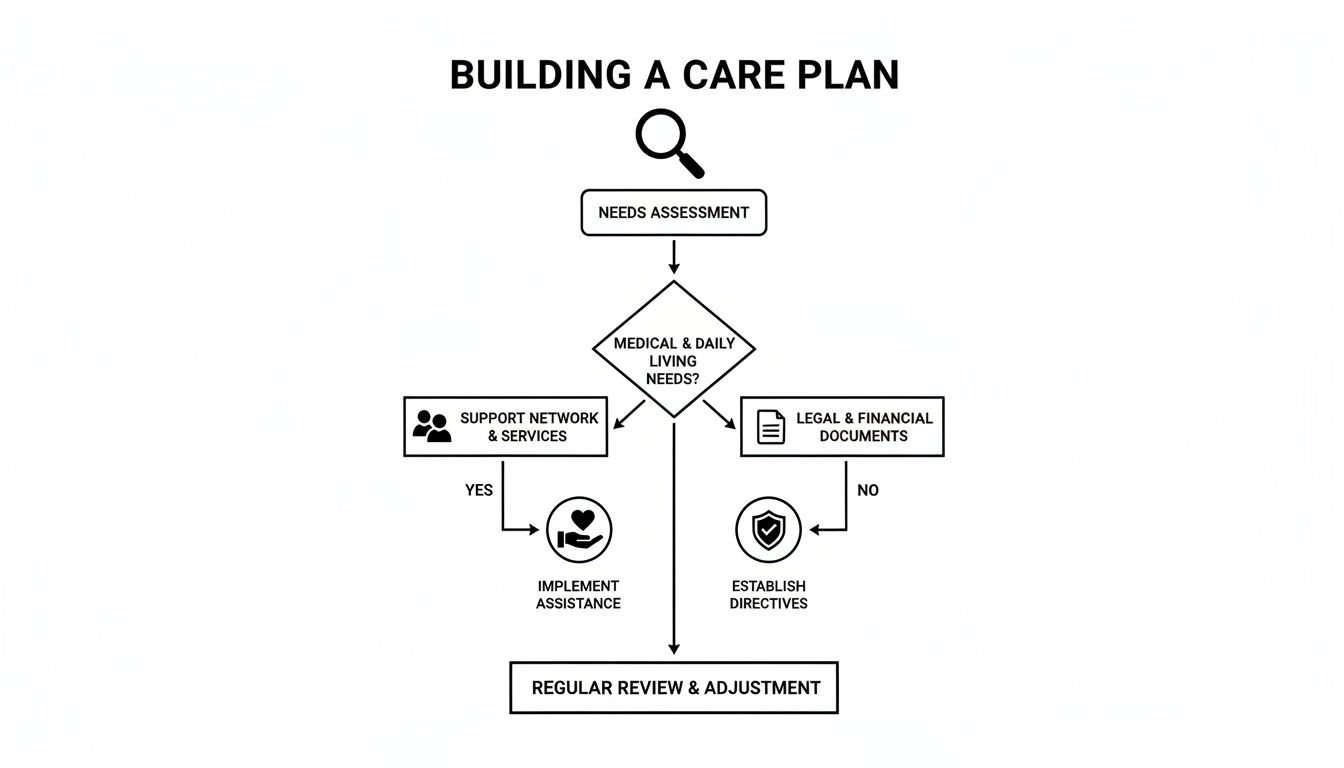
A solid plan always starts with assessing needs. From there, you can build a support network and get essential documents in order.
Advocating for the Right Level of Care
Knowing when to ask for a different kind of support is a game-changer. According to the National Hospice and Palliative Care Organization (NHPCO), over 1.72 million Medicare beneficiaries received hospice services in 2020 (NHPCO, 2021). This data shows how many families rely on this vital support.
Caring for someone with a terminal illness is draining, but hospice can transform that experience. National data also shows that over 90% of hospice patients report their pain is well-controlled.
As the only nonprofit on the Central Coast offering this complete range of services, CCVNA ensures nothing is lost between care levels. Our care managers guide families through each step. To see how these services work together, explore our detailed explanations of home health and hospice care.
Managing Logistics Like a Pro
The daily logistics of senior care are often what burn families out the fastest. Juggling medications, insurance, and communication can feel like a full-time job. The key is to create simple, repeatable systems.
When you establish predictable routines, you free up mental energy. That energy is better spent on being present with your loved one.
Creating a Bulletproof Medication System
Medication management has zero room for error. A straightforward, consistent system is essential for safety and peace of mind.
Gather all prescriptions and supplements in one central spot. Use a pill organizer sorted by day and time to make the routine foolproof. Set daily alarms on a phone as a reliable backup.
Keep a master list of all medications, including dosage, frequency, and prescribing doctor. A Registered Nurse from Central Coast VNA & Hospice can perform a full medication review during a home health visit. You can find more advice in our article, 5 expert tips to prevent medication errors at home.
Navigating Financial and Legal Checkpoints
The financial and legal side of senior care can be a tangled mess. Tackling these issues proactively prevents massive headaches later. For families in Monterey County and surrounding areas, the first step is understanding insurance coverage.
- Understand Coverage: Get familiar with Medicare and Medi-Cal benefits. Ask providers for a clear, written explanation of what's covered to avoid surprise bills.
- Organize Documents: Keep all important documents in one designated binder. This includes insurance cards, Social Security information, and legal papers.
- Establish Legal Authority: Ensure a Power of Attorney for healthcare and finances is in place. These documents allow a trusted person to make decisions if your loved one cannot.
Having Power of Attorney documents completed before a crisis is one of the most important steps you can take. It removes uncertainty and legal red tape during an emotional time.
A Medical Social Worker from Central Coast VNA & Hospice can be an incredible asset. They help families in San Benito County and nearby communities make sense of benefits and connect them with local resources.
Streamlining Family and Provider Communication
Keeping everyone on the same page is crucial for coordinated care and family harmony. A simple communication protocol can change everything.
Here are a few tools that work well for families:
- Shared Digital Calendar: A Google Calendar can track all appointments, medication times, and professional visits. Share access with key family members so everyone is in the know.
- Weekly Email Update: Designate one person to send a short weekly update email. This stops the primary family member from repeating the same information over and over.
- A Central Notebook: This low-tech tool is very effective. Keep a notebook in the home where every professional—from Hospice Aides to nurses—can leave notes.
Finally, home safety cannot be overlooked. An upgrade to advanced wireless interconnected smoke and CO detectors provides another layer of protection. These practical steps create a safer, more manageable care environment.
How to Protect Your Wellbeing and Prevent Burnout

You cannot pour from an empty cup. Protecting your own wellbeing is not selfish; it’s a critical part of providing sustainable, loving care.
Burnout happens when you consistently give more than you have. We are going to cover practical strategies to protect your health. Building resilience starts by accepting that your needs are just as important as your loved one's.
Recognizing the Real Signs of Burnout
Burnout is more than feeling tired. It is a deep state of exhaustion that affects every part of your life. The key is catching the early warning signs before they take hold.
Are you constantly drained, irritable, or anxious? That’s emotional exhaustion. Do you have frequent headaches or trouble sleeping? These are classic physical symptoms.
Another common sign is withdrawal. You might pull back from friends or hobbies you once loved. If this sounds familiar, take a moment to check in with yourself. You can assess your burnout risk with a Burnout Calculator.
Signs of Caregiver Burnout and Practical Counter Strategies
| Warning Sign of Burnout | What It Looks Like | Actionable Step to Take |
|---|---|---|
| Overwhelming Fatigue | Feeling exhausted even after a full night's sleep; lacking energy for basic tasks. | Schedule a 15-minute "do nothing" break each day. Set an alarm and just sit quietly. |
| Increased Irritability | Snapping at family members or the person you're caring for over minor issues. | Practice a 3-minute breathing exercise: inhale for 4 seconds, hold for 4, exhale for 6. |
| Feeling Anxious or Depressed | A persistent sense of dread, sadness, or hopelessness that you can't shake. | Call a trusted friend or family member for a 10-minute chat about something unrelated to caregiving. |
| Social Withdrawal | Declining invitations and avoiding social contact because it feels like too much effort. | Send a simple text to one friend: "Thinking of you." Reconnecting can be a small first step. |
| Changes in Health | Experiencing frequent headaches, stomach issues, or catching colds more often. | Go for a 10-minute walk outside. The fresh air and movement can make a huge difference. |
Recognizing these patterns is the first step. The next is taking small, consistent actions to refill your own cup.
Building Your Personal Support System
No one can do this alone. A strong support network is your most valuable asset. This network should include friends, family, and professional resources.
The most effective support systems don’t just happen—they are intentionally built. Don't wait until you're in a crisis to ask for help.
One of the most practical ways to get support is through respite care. It is a service that provides a temporary break for you to rest. For families in Monterey County and the surrounding areas, this is a necessity, not a bonus. You can learn more about respite care for family caregivers and see how it works.
Setting Boundaries with Love and Firmness
Setting boundaries is vital for preventing burnout. A boundary is a clear line that protects your energy so you can continue to provide care.
- Be clear about your limits. It's okay to be honest about what you can and cannot do. For example, "I can take Mom to her Tuesday appointments, but I need someone else to cover Fridays."
- Learn to say "no" gracefully. A simple, "I wish I could, but I'm not able to take that on right now," is a complete answer.
- Schedule time for yourself. Block out non-negotiable time for yourself in your calendar. Whether it’s a walk or an hour of quiet time, protect it fiercely.
At Central Coast VNA & Hospice, our support extends to the whole family. Our team includes Chaplains and Medical Social Workers who provide emotional and spiritual support to you. We know your wellbeing is the cornerstone of your loved one’s care.
Frequently Asked Questions (FAQs)
What should I do when my parent refuses care?
This is a common experience, often rooted in a fear of losing independence. Start by showing empathy and try to understand their specific fears. Frame care as a tool to help them stay safe and independent at home for as long as possible.
How can our family handle disagreements about care?
Disagreements between siblings can add significant stress. Schedule a dedicated family meeting with a clear agenda and stick to the facts. A neutral third party, like a Medical Social Worker from Central Coast VNA & Hospice, can help facilitate the conversation.
What are our options for paying for services like home health or hospice?
Services like home health nursing and hospice care are often covered by Medicare, Medi-Cal, and private insurance. It is also important to review any long-term care insurance policies or potential Veterans Benefits. Our team can help you understand your coverage options.
When is the right time to consider palliative or hospice care?
Many families wait too long to explore these options. The conversation about palliative care should start when managing symptoms of a serious illness becomes the main challenge. The discussion about hospice care should begin when the focus shifts from finding a cure to maximizing comfort and quality of life. For more details, review these answers to common palliative care questions.
How does a care manager help my family?
A care manager from Central Coast VNA & Hospice acts as your expert guide and single point of contact. They coordinate between doctors and the in-home team, ensuring everyone is on the same page. This proactive approach helps prevent crises and provides peace of mind, so you no longer have to navigate this journey alone.
At Central Coast VNA & Hospice, our nonprofit mission is to provide expert, compassionate guidance. If you are a family in Monterey, Santa Cruz, Salinas, or Hollister feeling overwhelmed, let our team help. Contact us today at 831-372-6668 or visit https://ccvna.com to explore custom care plans that adapt as needs change.