
Direct Answer: The first days center on an evaluation visit by a Registered Nurse, who reviews medications, checks wounds and vital signs, spots home safety risks, and sets the care plan for later visits.
The call usually comes with almost no warning. A hospital case manager says your mother is being discharged this afternoon, and suddenly you have hours, not days, to figure out what care at home is going to look like.
Families across Monterey County describe this same moment over and over. Discharges from Community Hospital of the Monterey Peninsula, Salinas Valley Health, and Natividad often move faster than anyone expects, and the drive home to Pacific Grove, Salinas, or King City is spent wondering who is going to walk through the door and when.
This is a plain look at what the first 72 hours of home health actually involve, so that part of the day stops being a mystery.
Why the Window Between Discharge and Home Feels So Short
Hospitals decide a patient is ready to go home based on clinical criteria, not on how prepared the family feels. Once that decision is made, the discharge itself can happen in a matter of hours.
The piece that surprises most families is the paperwork. Home health cannot start on a family’s request alone. A physician’s order is required before any agency can schedule a visit, which is why hospital case managers and discharge planners are usually the ones who set the referral in motion. If you want the detail on that step, a physician referral is required for home health and it works differently than most people assume.
A few things worth confirming before your loved one leaves the building:
- Which home health agency the referral was sent to, and whether they cover your town
- Whether the order includes therapy, nursing, or both
- The discharge medication list, printed, and who to call with questions about it
- Any equipment ordered, such as a walker, bedside commode, or hospital bed
Geographic coverage matters more here than people expect. A family in Carmel Valley, Hollister, and Watsonville may all get very different answers about who can reach them, so it is worth asking directly rather than assuming.
The First Visit Is an Evaluation, and Care Starts Anyway
The first home visit after a hospital stay is technically an evaluation visit. That word makes it sound like paperwork, but clinical care begins the moment the nurse walks in.
A Registered Nurse typically arrives within a day or so of the patient getting home, sometimes the same day for higher-risk discharges. In that first hour, the nurse is doing several jobs at once:
- Reviewing the full medication list, hospital orders and home bottles both
- Checking surgical sites or wounds and how they are healing
- Taking vital signs and comparing them to what the hospital recorded
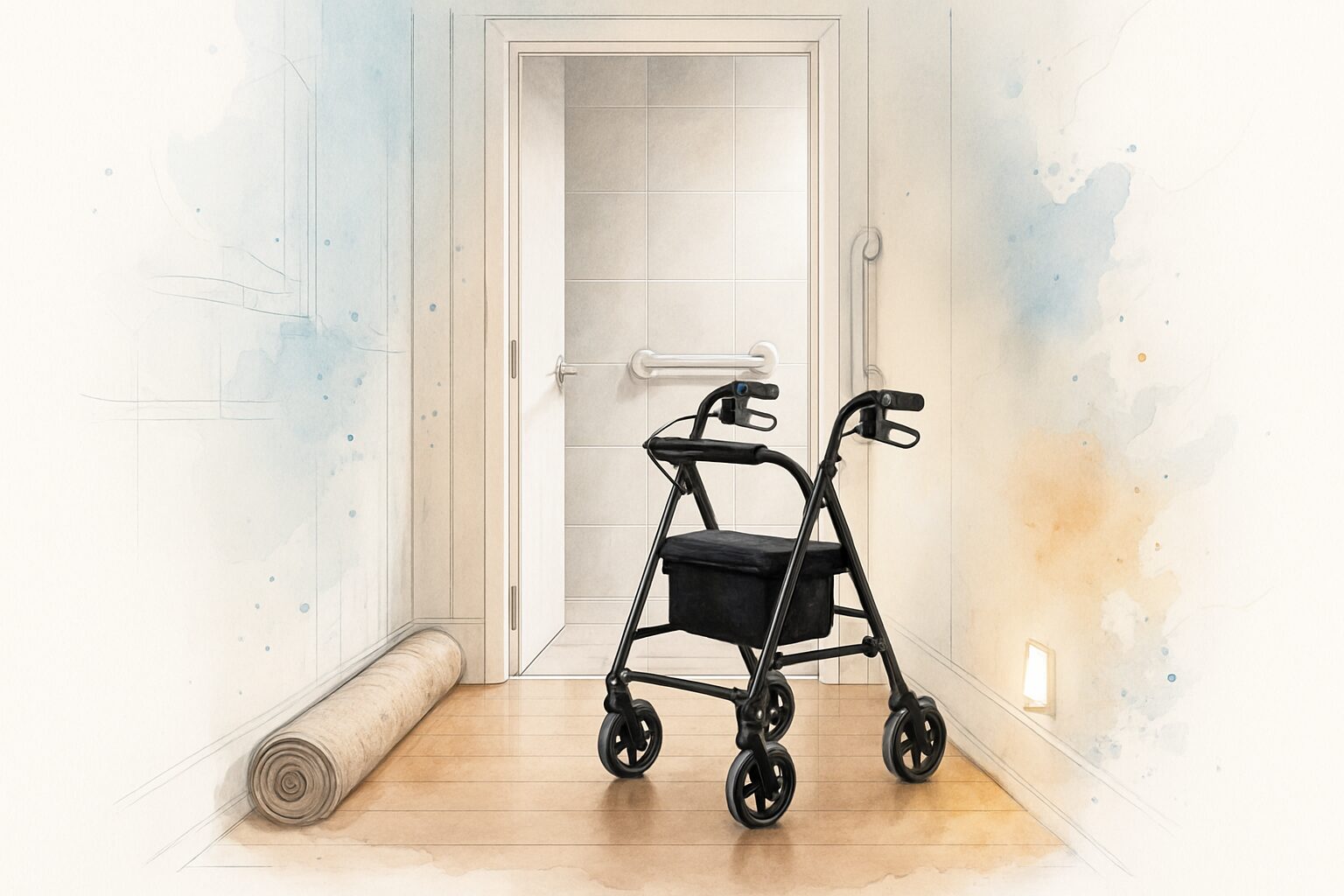
- Looking at the home itself for fall risks, poor lighting, loose rugs, stairs, bathroom setup
- Asking how the patient slept, ate, and moved since getting home
That visit also builds the care plan that governs everything after it. It determines whether a Physical Therapist, Occupational Therapist, Speech Therapist, or Medical Social Worker gets added, and how often each one comes.
One Monterey Peninsula family described exactly this order of events in a public review: a nurse came first to evaluate, then a weekly nurse, then a Physical Therapist who built an exercise plan and kept adjusting it. That sequence is normal. Families are often surprised how much gets settled in the first hour. What a skilled nurse actually does on a home visit goes deeper on the clinical side.
Medication Reconciliation: The Highest-Stakes Task of the First Three Days
If there is one thing that goes wrong in the first days home, it is medication. Hospital discharge paperwork frequently does not match what is already sitting in the medicine cabinet at home.
The usual gaps look small on paper and are not:
- A dose was changed in the hospital, but the old bottle is still on the counter
- A new drug interacts with something the patient has taken for years
- A blood thinner or blood pressure medication was stopped, and nobody at home knows it
- Two bottles with different names contain the same active ingredient
A nurse comparing both lists side by side is the safety net that keeps a paperwork mismatch from turning into an emergency room trip. This is also why the nurse asks you to gather every bottle in the house, including supplements, eye drops, and anything from a previous hospitalization.
One family in Monterey County wrote in describing a parent in their 80s whose five-plus medications had simply become too confusing for a spouse to track. That is a common situation, not a failure. It gets harder when memory is involved, and dementia can turn medication management into a real safety issue very quickly.
Keep a single written list going forward, and update it after every appointment.
Who May Come Through the Door in the First Week
Not every patient sees every role. The care plan built during the evaluation visit decides who is added, based on the diagnosis and what the physician ordered.
| Role | What they focus on | Typical early pattern |
|---|---|---|
| Registered Nurse | Medications, wounds, vital signs, teaching the family what to watch for | First visit, then often 1-3 times a week |
| Physical Therapist | Strength, balance, walking safely, fall prevention | Starts within the first week if ordered |
| Occupational Therapist | Bathing, dressing, kitchen and bathroom safety, daily routines | Added when independence at home is the concern |
| Speech Therapist | Swallowing, speech, and thinking skills after stroke or illness | Added by order, less common overall |
| Medical Social Worker | Benefits, community resources, family stress, planning ahead | Often one or two visits early on |
| Home health aide | Personal care support under the care plan | Varies by plan and eligibility |
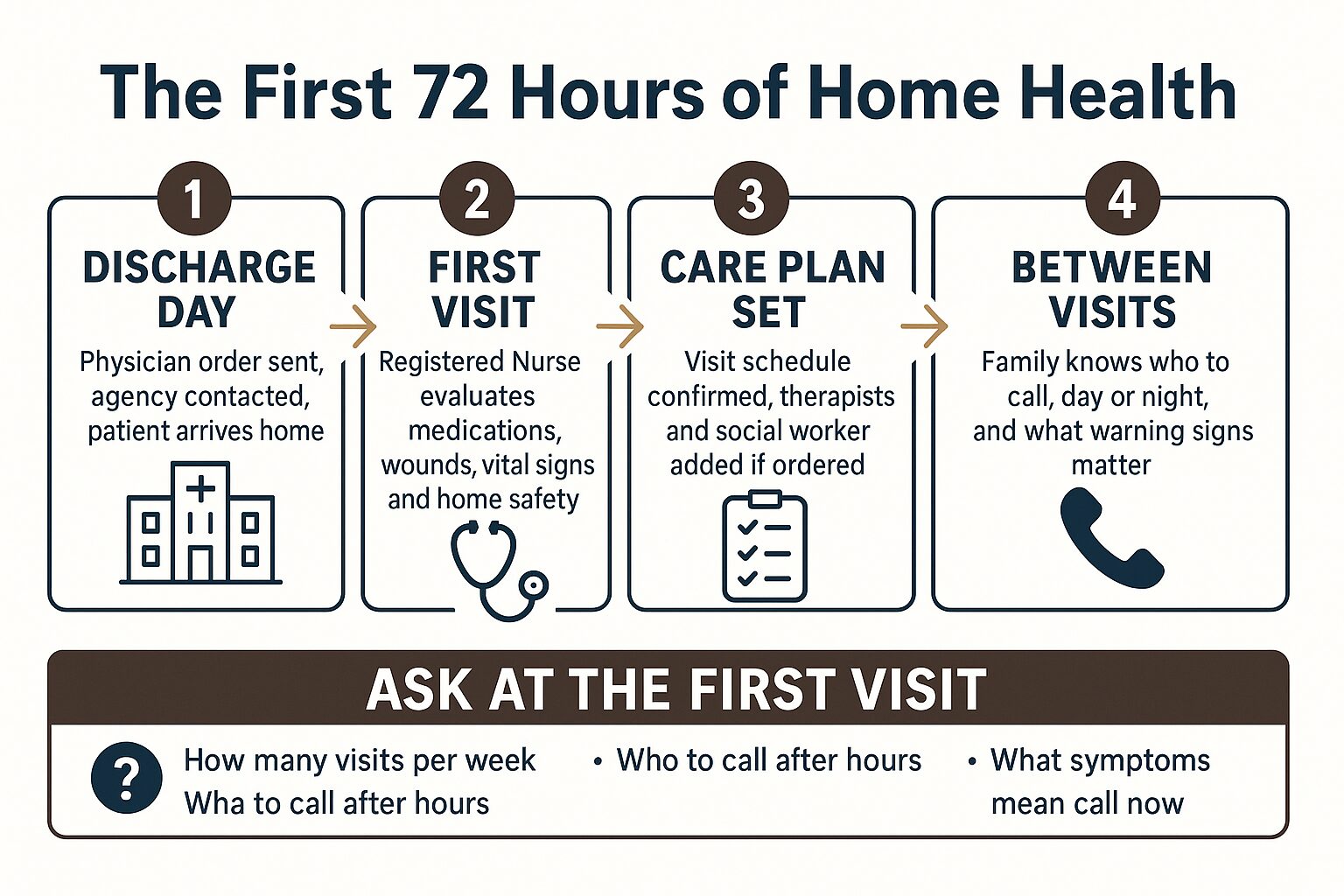
The First 72 Hours at a Glance
A simple map of how the first three days usually unfold once a patient gets home.
Home Health Is Intermittent, Not Around-the-Clock Care
This is the single biggest misunderstanding families run into, and it is better to hear it now than on day two. Home health is intermittent skilled care, which means visits a few times a week, not a nurse in the house all day.
A typical early schedule might be two or three nursing visits a week, plus therapy visits on separate days. Medicare’s own description of the home health benefit spells out that it covers part-time or intermittent skilled care, not continuous supervision.
The gaps between visits are when families feel most anxious, especially in week one. Two questions asked at the first visit make those gaps far easier:
- How many visits a week should we expect, and on which days
- Who do we call at 9pm on a Saturday, and what number is that
If your loved one genuinely needs someone present most of the day, that is a separate kind of help. Private-duty hourly care is paid out of pocket in most cases, and in Monterey County round-the-clock coverage can run into the thousands of dollars a month depending on hours and agency. Costs vary widely, so get real numbers before assuming anything. Many families combine a clinical home health team with private hourly help, and a Medical Social Worker can point you toward local options.
What families in Monterey wish they had known sooner about home care covers more of this territory.
What the Team Is Quietly Watching For
The riskiest stretch after a hospital stay is the first 30 days. That is when avoidable returns to the hospital happen most often, and usually not because of one dramatic event.
Most of the time, something small was missed. A wound that looks slightly worse each day. A new medication causing dizziness that gets written off as tiredness. A patient who seems more confused than they should be for this point in recovery.
A family member without clinical training has no reason to catch those patterns. A nurse or therapist who saw the patient on Monday and sees them again on Thursday does, because they have a baseline to compare against. Part of the job in those first days is straightforward detective work.
What you can do between visits:
- Write down anything that changes, even if it seems minor
- Note appetite, sleep, and how far they walked each day
- Take a phone photo of a wound if you were told to watch it
- Call the after-hours line rather than waiting for the next scheduled visit
That last one matters. Families are rarely wrong when they feel that something is off, and the team would much rather get the call.
If recovery is more about relearning daily tasks than healing a wound, occupational therapy at home after a hospital stay explains what that side of the plan involves.
Frequently Asked Questions About the First Days of Home Health
How soon after discharge will someone actually come to the house?
It depends on when the order arrives and how urgent the situation is, but the first visit commonly happens within 24 to 48 hours of the patient getting home. Some post-surgical cases start sooner. Ask the discharge planner to confirm the timing before you leave the hospital, and call the agency directly if you have not heard anything the next morning.
Does Medicare cover home health, and do we need a doctor’s referral first?
Yes to both, in most cases. Medicare covers eligible home health services, and a physician’s order is required before any visit can be scheduled. Medi-Cal and Veterans benefits also cover home-based care for eligible patients. Coverage depends on meeting the criteria, so a quick conversation about the specific situation is worth more than a general answer.
What if my parent needs help every single day, not just a few visits a week?
That is a real and common gap. Home health provides skilled clinical visits, while daily hands-on help with meals, bathing, and companionship comes from private-duty agencies, family, or community programs. Many Monterey County families run both at once, using the clinical team as the medical anchor and hourly help for the rest of the day.
Is this the same thing as hospice?
No. Home health is focused on recovery, rehab, and managing a condition so someone can get back to independence. Hospice begins when the goal shifts from curing to comfort. They are different programs with different eligibility, and mixing them up is one of the most frequent points of confusion on first calls.
How do I know the person at my door really works for the agency?
Ask for a photo ID badge, and call the agency’s main number to confirm. A legitimate agency will never ask for personal or financial information before an in-person assessment has been arranged. If anything feels off, stop and verify. Nobody will take offense.
Questions about care at home on the Central Coast?
If a hospital stay just ended and you are trying to sort out what happens next, a care coordinator can walk you through how home health works and whether it fits your family’s situation. Central Coast VNA & Hospice has been serving families in Monterey County and the surrounding Central Coast since 1951, and you can reach someone at 831-372-6668 or at ccvna.com. There is no cost to ask a question.