
Direct Answer: Dementia changes how a person recognizes pills and remembers doses, which creates a double-dosing risk. A Registered Nurse can review the full medication list at home and build a schedule the family can follow.
A Monterey County family put it plainly in a message to a local nonprofit home health team. An 86-year-old father had just been diagnosed with dementia. He was taking more than five prescriptions, and his wife, in her 80s and recovering from her own serious illness, was the one keeping track of all of it.
Their question was direct. Could a Registered Nurse look over his medications and help put together a daily schedule?
That same question arrives again and again from families on the Monterey Peninsula, across the Salinas Valley, and out toward King City. This article covers what actually goes wrong with dementia and medication management at home, what a skilled nursing visit looks like, and how coverage works.
Why a Pill Routine That Worked Six Months Ago Can Be Dangerous Now
Dementia changes three things at once: how a person processes instructions, how they recognize pills, and whether they remember taking a dose. Any one of those alone is manageable. Together, they break a routine that used to run fine.
Most families worry about missed doses. The bigger danger is usually double-dosing, because a person who does not remember the morning pills may take them again at noon.
That matters most with a few common categories:
- Blood thinners, where an extra dose raises bleeding risk
- Diabetes medications and insulin, where a repeat dose can drop blood sugar fast
- Cardiac drugs for blood pressure and heart rhythm
- Pain medications and sedatives, which compound confusion and fall risk
An extra dose of a blood pressure medication can end with a fall in the hallway and an ambulance ride to an emergency department in Monterey or Salinas. That is often the moment a family realizes the system had been failing for weeks.
One more detail families miss: pills get moved. A person with dementia may relocate bottles, hide them, or set them down somewhere odd, which makes it impossible to tell from the bottle whether a dose was taken.

What a Registered Nurse Actually Does During a Medication Visit
Families often picture a nurse counting pills and filling a plastic organizer. That is a small piece of it. The visit is a clinical review of the whole picture, in the home, with the actual bottles on the table.
A visit focused on medication management generally includes:
- A full review of every prescription, over-the-counter drug, and supplement, including duplicates from different prescribers
- A check for interactions and doses that no longer fit the patient’s kidney function, weight, or blood pressure
- An honest assessment of whether the patient can still self-administer safely
- Communication with the prescribing physician about simplifying the regimen, such as consolidating dose times or dropping a drug that no longer helps
- Hands-on teaching for the family member running the day-to-day system
- A written schedule that matches how the household actually works, not an idealized version of it
That teaching piece is the part families underestimate. For a spouse in her 80s managing an ailing partner, sitting down with a nurse for an hour can turn daily dread into something she feels able to handle.
The visit is also where problems surface that nobody reported over the phone. A skilled nurse on a home visit sees the stairs, the lighting, the two bottles that look nearly identical, and the sticky notes on the refrigerator that stopped making sense a month ago.
How Medication Needs Shift as Dementia Progresses
Dementia-related medication problems tend to compound. What works with reminders in the early stages often does not work at all 12 to 18 months later.
| Stage | What families usually notice | Support that tends to fit |
|---|---|---|
| Early | Occasional missed doses. A weekly organizer and reminders still mostly work. | Family reminders, one clinical review of the full list, a simplified schedule |
| Middle | Doses repeated or skipped. Bottles moved or hidden. Confusion between similar looking tablets. | Skilled nursing visits, pre-set organizers, physician review to reduce the number of drugs |
| Later | No reliable ability to self-administer. Refusing pills or spitting them out. | Another person administering every dose, with clinical oversight and ongoing family teaching |
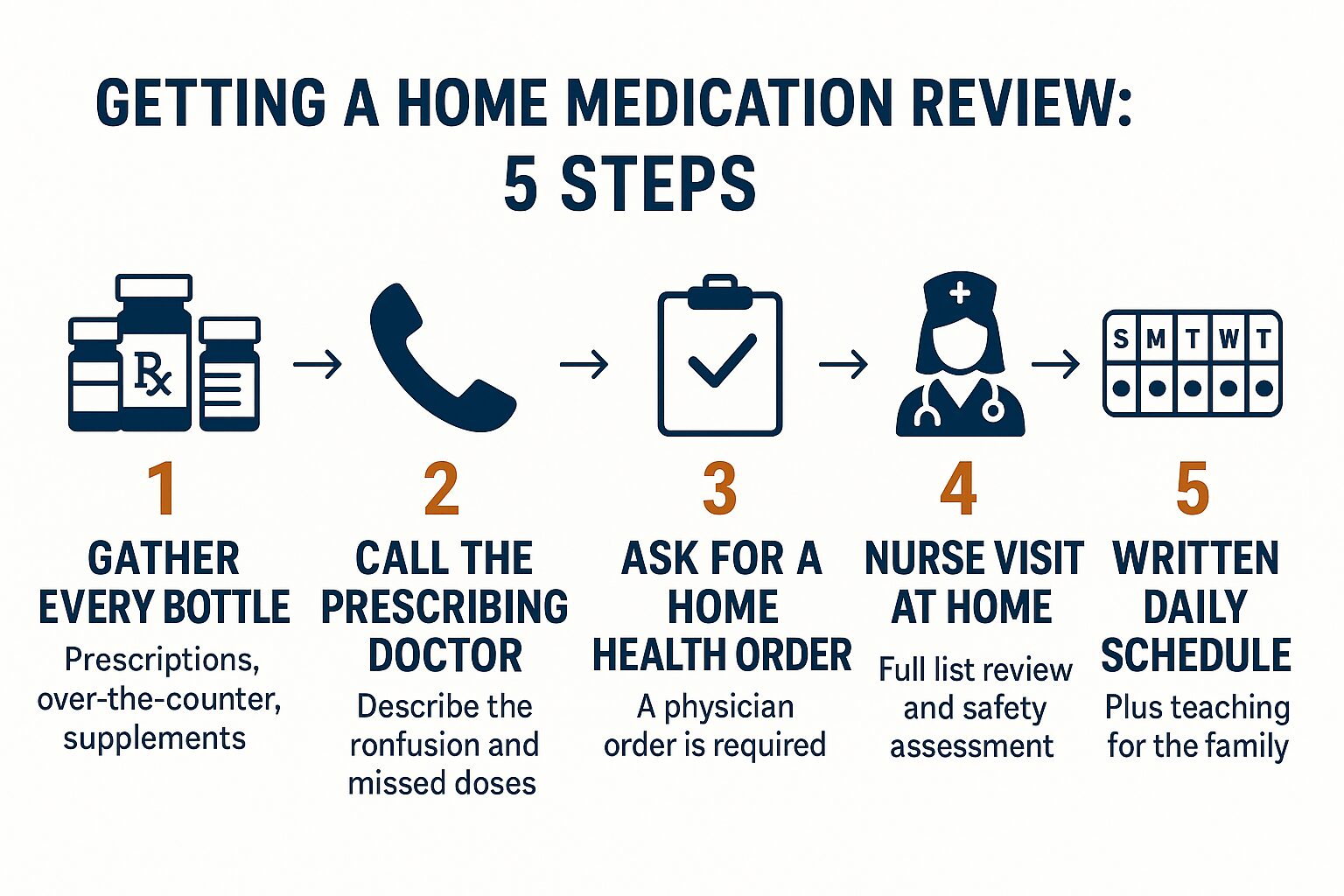
How Families Get a Medication Review Started
The path is shorter than most families expect, but it does start with the physician rather than the home health agency.
Medicare Covers This, and Many Families Are Never Told
Home health visits for medication management are a covered benefit under Medicare when two conditions are met. There has to be a physician order, and the patient has to meet the homebound criteria, meaning leaving home takes considerable effort or help.
Medicare publishes the rules for home health services coverage directly, and skilled nursing on an intermittent basis is part of it. Nonprofit agencies in the region, including Central Coast VNA & Hospice, accept Medicare, Medi-Cal, and Veterans benefits along with most private insurance.
Here is where families get stuck. Callers regularly reach local agencies not knowing that a doctor’s order comes first, which delays everything by days or weeks. And the physician who wrote the prescriptions does not always connect a new dementia diagnosis to eligibility for skilled nursing at home.
So the family sometimes has to make that connection and ask for it. Plenty of households in Hollister, King City, and the Salinas Valley have gone a year without support that was available the whole time. If you want the mechanics, this piece on why a physician referral is required walks through the process.
One honest limit: home health is intermittent skilled care, usually a few visits per week, not someone in the house every day. Families who need daily hands-on help typically add private-duty help, and that market runs into the thousands of dollars per month depending on hours. Costs vary widely, so ask any provider for specifics on your situation.
Asking Early Is Easier Than Recovering From a Crisis
Families who wait for the fall, the hypoglycemic episode, or the hospitalization end up making decisions under pressure with fewer options. Families who ask while the situation is still messy but manageable get to build something on their own terms.
The point of early involvement is not to take over. It is to set up a system the household can actually keep running, then adjust it as the disease changes what is needed.
That usually means the whole team gets involved over time: nurses, therapists, medical social workers, chaplains, volunteers, and other clinicians. A Medical Social Worker may be the one who finds the community resources nobody knew about, which is exactly what one Monterey Peninsula family described in a public review after their 91-year-old mother came onto service.
If you are already past the medication question and wondering about the bigger picture, when caring for an aging parent becomes more than you can do alone covers the next set of decisions.
Frequently Asked Questions About Dementia and Medications at Home
Can a nurse just come out and look over my parent’s medications?
Yes, that is a normal reason for a home health visit, but it needs a physician order first. Call your parent’s doctor, describe what you are seeing with missed or repeated doses, and ask for a home health referral for medication management.
Does Medicare pay for medication management at home?
Skilled nursing at home is covered under the Medicare home health benefit when there is a physician order and the patient meets homebound criteria. Medi-Cal and Veterans benefits also cover home health for eligible patients. Coverage details depend on the individual plan, so confirm with the agency before services start.
What if we need someone in the house every day?
Home health visits are intermittent, often two or three times a week, so daily hands-on help usually comes from a private-duty agency. Many Monterey County families use both, with the home health team as the clinical anchor and private help filling the daily hours.
Will the nurse take over giving the pills?
Not usually. The goal is a workable system the family can sustain between visits, which often means the nurse pre-sets organizers, writes out the schedule, and teaches the spouse or adult child what to watch for.
My dad insists he can handle his own medications. What then?
That is common, and it is one reason an outside clinician helps. A nurse can assess self-administration objectively and frame the changes as doctor’s orders rather than a family member questioning his judgment, which lowers the resistance considerably.
Want to Understand What Support Is Available Near You?
If you are sorting through pill bottles at a kitchen table somewhere in Monterey County and not sure what comes next, a conversation with a care coordinator can clarify what is covered and what a home visit would involve. Central Coast VNA & Hospice has been working with families across Monterey County, San Benito County, and the surrounding Central Coast since 1951, and information is available at 831-372-6668 or ccvna.com whenever you are ready to ask.