
Direct Answer: Respite care gives family caregivers a temporary, structured break — through scheduled skilled nursing visits, hospice inpatient stays, or local community programs — so they can rest before exhaustion becomes a health crisis of its own.
One caller described her situation in a single sentence: she was elderly herself, caring for her husband alone, and didn’t know where to turn. She wasn’t calling to find help for him — she was exhausted and quietly looking for permission to need something for herself. That call captures what family caregivers across Monterey County, Salinas, and the surrounding communities rarely say out loud: I am running out.
The word “respite” sounds formal, even clinical. But what it means is simple — a defined break, built into the care plan, so the person holding everything together doesn’t collapse. It’s not a luxury. Burnout in family caregivers has documented clinical consequences: higher rates of medication errors, missed early warning signs in the person being cared for, and serious health events in the caregiver themselves.
This article focuses on three things that actually matter to family caregivers in Monterey County right now: how to recognize when you’ve crossed from tired into depleted, what skilled home health and hospice services provide as real caregiver relief, and what local resources exist — specific programs, specific phone numbers — that most families never hear about until it’s too late.
When Tired Becomes Something Else
Every family caregiver is tired. That’s not the signal. The signal is when tired stops lifting after sleep — when you wake up at 3 a.m. reviewing a medication schedule, or you realize you haven’t been to your own doctor in over a year, or you snap at your spouse over something small and then sit in the car and cry.
Clinicians who work with families navigating serious illness describe a recognizable pattern. The caregiver starts skipping their own appointments. They stop accepting invitations to leave the house. They become so attuned to the care recipient’s needs that they lose track of their own physical state entirely. This isn’t devotion — it’s a physiological and psychological state with a name, and it carries real risks.
Burned-out family caregivers are more likely to:
– Miss early signs of deterioration in the person they’re caring for
– Make medication errors — wrong dose, wrong timing, missed doses
– Experience health crises of their own — including falls, cardiac events, and hospitalization
– Delay calling for help because asking feels like failure
None of that is a personal failing. It is what happens when one person carries more than one person can carry, for longer than the human body is designed to sustain. When caring for an aging parent becomes more than you can do alone is a threshold most family caregivers cross quietly — often weeks or months before they name it.
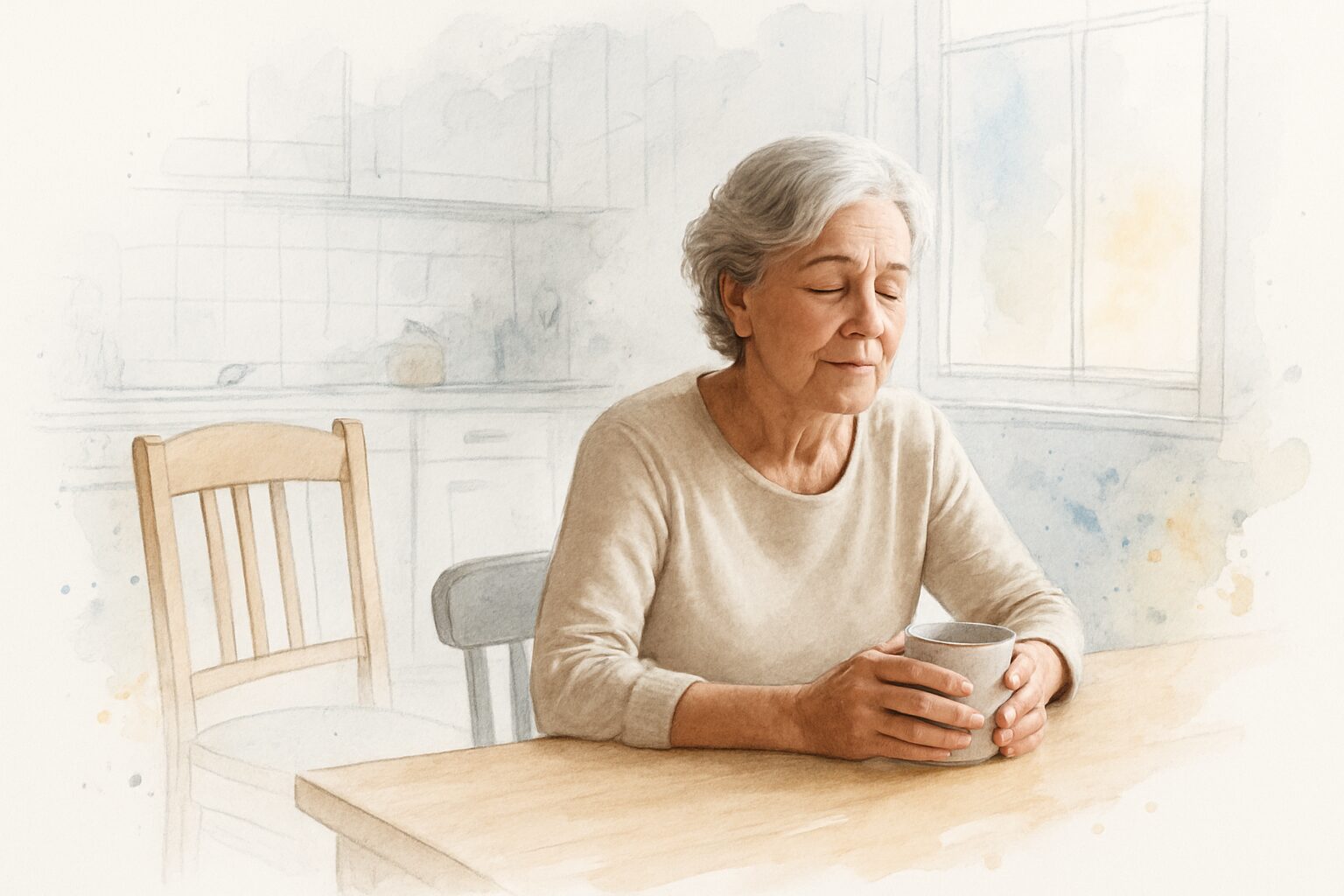
What Skilled Home Health Actually Provides — and Why It’s Different From Companionship
When most people think of getting help at home, they picture a companion — someone who sits with a loved one so the family member can run errands. That’s a real service, but it’s not the same as what skilled nursing care at home provides.
Skilled home health visits involve licensed clinicians — Registered Nurses, Licensed Vocational Nurses, Physical Therapists, Occupational Therapists, Speech Therapists, and Medical Social Workers — doing work that requires clinical training. For a family caregiver, that distinction matters enormously. When a Registered Nurse comes to the home on a scheduled basis to handle:
- Medication management — reviewing the full medication list, identifying interactions, adjusting timing
- Wound care — post-surgical wound assessment, dressing changes, infection monitoring
- Condition monitoring — vitals, symptom tracking, early identification of changes that need a physician’s attention
…the caregiver doesn’t have to do those things that day. They can sleep. They can go to their own appointment. They can leave the house for three hours without carrying the clinical weight of the visit in their head.
This is a meaningful, structured form of respite — not because someone is keeping the patient company, but because a trained clinician is handling tasks the family would otherwise carry alone. For families in Salinas, King City, Pacific Grove, and across Monterey County, this can make the difference between sustainable home care and a crisis admission. What a skilled nurse actually does on a home visit is often a surprise to families who’ve never experienced it.
The Medicare Hospice Inpatient Respite Benefit — What It Covers
Most families enrolled in hospice don’t know this benefit exists. Here’s how the inpatient respite benefit works under the Medicare Hospice Benefit.
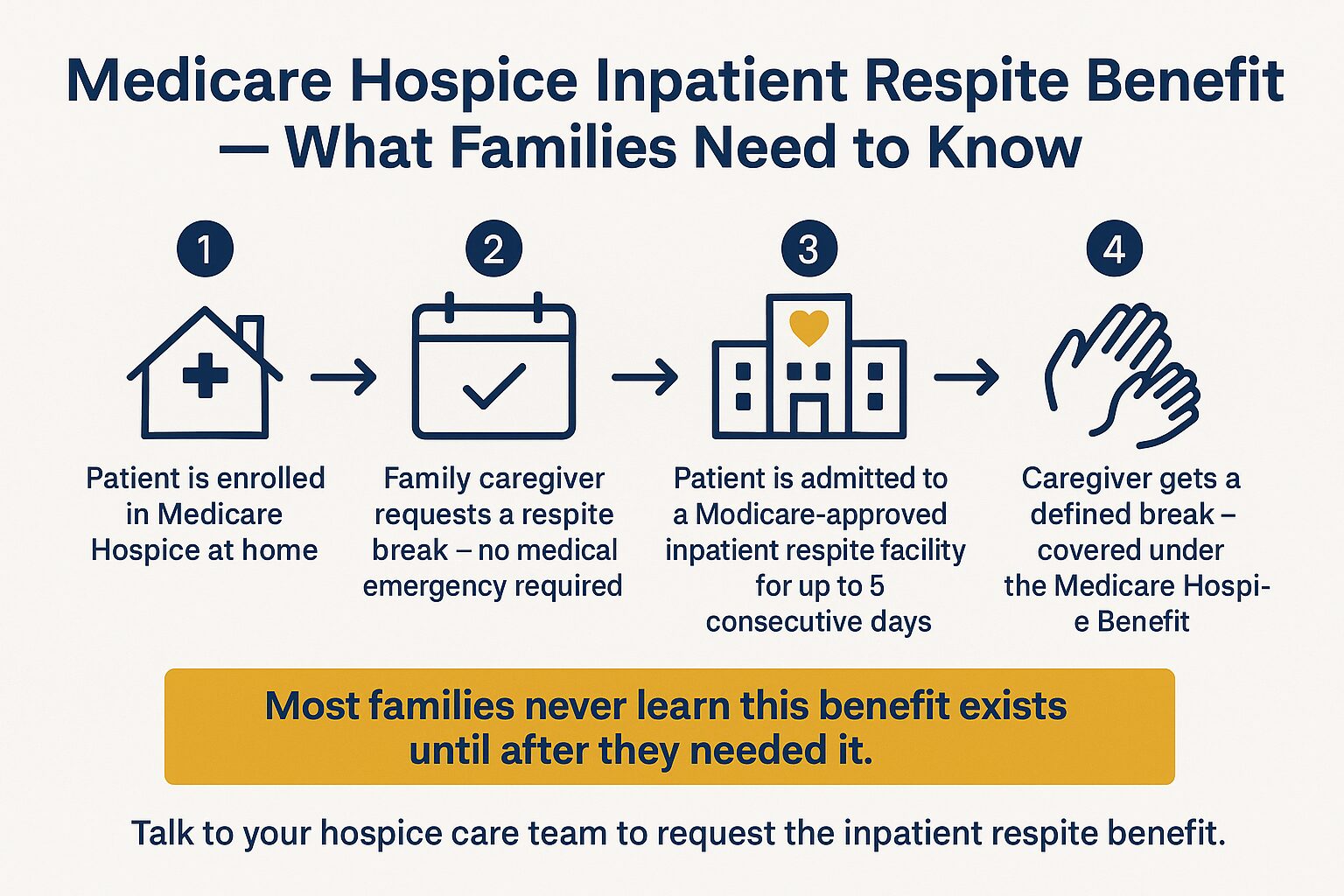
The Hospice Respite Benefit Most Families Don’t Know About
For patients already enrolled in hospice, the Medicare Hospice Benefit includes a specific provision that almost no family hears about until a social worker or chaplain mentions it in passing: the inpatient respite benefit.
Here’s what it means in plain terms. If your loved one is receiving hospice care at home, Medicare will cover a short inpatient stay — up to five consecutive days — at an approved facility. The patient receives the same hospice-level care during that stay. And the family caregiver gets a real, defined break — not a few hours, but days.
This isn’t a workaround or a gray area. It is a written benefit under the Medicare Hospice program, specifically designed to support family caregivers. It does not require a medical crisis or a change in the patient’s condition. It requires only that the family asks.
Many families in Monterey County discover this option only after a caregiver has already hit a breaking point. A Medical Social Worker on the hospice team can help families understand eligibility, identify an approved local facility, and coordinate the admission. If you’re unsure whether a loved one qualifies for hospice and this benefit, the hospice eligibility question most families are afraid to ask addresses that directly.
Local Respite Resources for Family Caregivers in Monterey County
These are real, specific programs available to families on the Central Coast. They vary in what they offer, but each provides a form of relief that doesn’t require a clinical referral to access.
| Organization | What They Offer Caregivers | Contact / How to Start |
|---|---|---|
| Monterey County Area Agency on Aging | Caregiver support programs, resource referrals, case management for older adults and their families | Call 831-755-4501 or visit the Monterey County website |
| Community Bridges — Elderday | Adult day health services in Santa Cruz area; provides structured daytime supervision so family caregivers can work or rest | Contact Community Bridges at cbridges.org |
| Community Bridges — Meals on Wheels | Home-delivered meals for homebound older adults; reduces meal preparation burden on family caregivers | Request through Community Bridges, 831-688-8840 |
| Community Bridges — Transportation | Medical and essential trip transportation for older adults and people with disabilities | Contact Community Bridges for eligibility and scheduling |
| Central Coast VNA & Hospice — Volunteer Program | Trained volunteers who can sit with patients, providing the family caregiver time away from the home | Call 831-372-6668 or visit ccvna.com |
Asking for Help Is a Clinical Decision, Not a Personal One
The emotional weight around asking for respite is real, and it runs deep. Family caregivers — especially spouses caring for a partner, or adult children caring for a parent in communities like Hollister, Seaside, or Carmel Valley — often feel that stepping back, even briefly, is a betrayal of their commitment.
But the clinical framing matters here. A family caregiver who is burned out is a less safe caregiver. The person receiving care is directly affected by the caregiver’s physical and mental state. Respite isn’t abandonment — it’s what keeps the whole arrangement from breaking.
The National Alliance for Caregiving has documented that more than half of family caregivers report their own health has declined as a result of caregiving responsibilities. On the Central Coast, where so many older adults are cared for by spouses who are themselves in their seventies or eighties — sometimes managing their own chronic conditions — this isn’t an abstract statistic. It’s a pattern that families and clinicians see regularly.
The families who hold together longest are usually the ones who accepted help earlier than felt comfortable. That’s not a coincidence. When is it time to think about getting help at home? is a question most families ask a few months too late.
Frequently Asked Questions About Respite Care for Family Caregivers
Does Medicare pay for respite care for family caregivers?
It depends on the situation. If the patient is enrolled in the Medicare Hospice Benefit, Medicare covers inpatient respite — up to five consecutive days at an approved facility — specifically to give the family caregiver a break. For patients receiving skilled home health (not hospice), Medicare covers skilled nursing and therapy visits based on the patient’s medical needs, which can reduce the burden on the family but isn’t framed as “respite” in the traditional sense. A Medical Social Worker can help you understand exactly what’s covered in your specific situation.
How do I know if I’m burned out or just tired?
Tiredness lifts with rest. Burnout doesn’t. If you’re sleeping but waking up still depleted, skipping your own medical appointments, feeling detached from the person you’re caring for, or noticing that small mistakes — like a missed medication dose — are happening more often, those are signals worth paying attention to. You don’t need to be in crisis to ask for help.
Can a hospice volunteer come sit with my loved one so I can leave the house?
Yes. Trained hospice volunteers are specifically available for this. A volunteer can sit with the patient at home for a defined period — giving the family caregiver time to rest, attend appointments, or simply step away. Volunteer availability varies, but this is a legitimate and often underused part of what a hospice team offers. Ask the care coordinator or chaplain on the team about scheduling.
What’s the difference between a companion service and skilled home health when it comes to giving me a break?
A companion or home aide provides supervision and personal care — bathing, meals, company. That’s real support. Skilled home health brings a Registered Nurse or therapist who is doing clinical work: wound care, medication reconciliation, physical therapy assessment, disease monitoring. Both can give you a break, but skilled home health handles tasks that require clinical training — things you’ve probably been doing yourself without that training. That’s a different kind of relief.
My parent lives in Salinas and I live in San Jose. How do we even start?
A phone call to VNA at 831-372-6668 is the simplest first step. A care coordinator can explain what services your parent might qualify for, whether a physician referral is needed, and what the coverage situation looks like. You don’t need to have everything figured out before you call.
Does the patient have to agree to hospice for me to get respite help?
No. Respite support through skilled home health doesn’t require a hospice enrollment — it’s based on the patient’s medical needs and physician orders. The inpatient respite benefit is specific to hospice, but other forms of caregiver relief through skilled nursing visits, community programs, and volunteers are available regardless of where the patient is in their care. Home health vs. hospice explains the difference between the two in plain terms.
Ready to Talk Through Your Options?
Central Coast VNA & Hospice has been supporting families across Monterey County — from Salinas to Carmel Valley to King City — for over 70 years, and the team has navigated these conversations with families at every stage. If you’re wondering whether respite support is available to you, or what it would actually look like in your situation, a care coordinator can walk you through it without pressure. Call 831-372-6668 or visit ccvna.com to start the conversation.