
When you're juggling a career, family, and the needs of an aging parent, one question comes up often. “Can I get help at home, or do I have to put Mom in a facility?” Many families in Monterey County feel caught between these two choices.
This can lead to burnout and stress. But it's an either/or way of thinking that isn't accurate. Most seniors want to stay in their own homes. In fact, 75% of adults over 50 say this is their goal.
With the right support, aging in place is possible. This guide will show you what senior care services are available in Monterey County. It will help you find the best local options for your family.
Instead of feeling overwhelmed, you can build a support system. This system can honor your loved one's wish for independence. It will also make sure they are safe and healthy.
1. Central Coast VNA & Hospice: A Continuum of In-Home Clinical Care
For families exploring what senior care services are available in Monterey County, Central Coast VNA & Hospice (CCVNA) is a trusted nonprofit provider. With over 74 years of service, CCVNA offers a full range of clinical care in the comfort of a patient’s home. This approach supports seniors through different health stages.
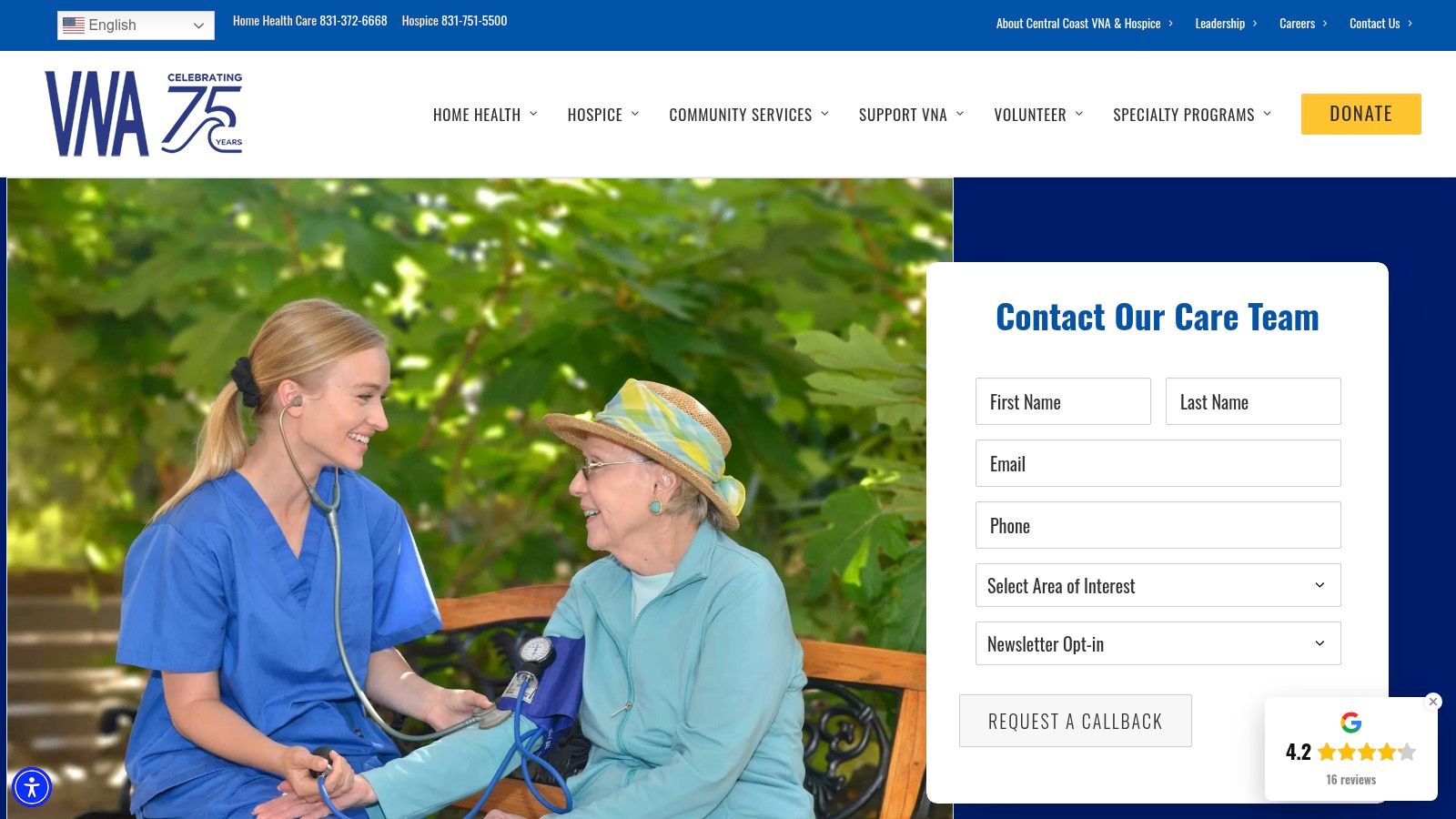
Many families think they must choose between doing it all themselves or using a facility. CCVNA bridges this gap. Their teams of nurses, therapists, and other professionals bring medical support right to the home.
This model helps seniors age in place with dignity. It is especially helpful for those managing chronic conditions or recovering from surgery. CCVNA serves Monterey County, San Benito County, Santa Cruz County, and South Santa Clara County.
Key Strengths and Differentiators
What makes Central Coast VNA & Hospice a standout choice? It provides three levels of in-home clinical care from one coordinated organization. This ensures smooth transitions for patients as their needs change.
- Integrated Continuum of Care: CCVNA offers skilled home health, palliative care, and hospice care. A patient can move from home health to palliative care to hospice with the same trusted team.
- Expert Interdisciplinary Teams: Care is delivered by a team of professionals. This includes Registered Nurses, therapists, Medical Social Workers, and Chaplains. For hospice patients, this team offers 24/7 clinical support.
- Nonprofit, Mission-Driven Focus: As a local nonprofit, CCVNA’s mission is patient well-being, not profit. This focus allows them to reinvest in compassionate care for our Central Coast communities.
Understanding the Services
CCVNA’s website, ccvna.com, clearly explains its core services. It also provides helpful resources for families.
- Skilled Home Health: This service is for patients recovering from illness, injury, or surgery. It includes skilled nursing care and physical therapy ordered by a doctor.
- Palliative Care: This care aims to improve quality of life for those with serious illnesses. It focuses on managing symptoms and pain.
- Hospice Care: For patients with a life-limiting illness, hospice provides comfort care. It focuses on dignity, peace, and support for the patient and family. To learn more, read about how hospice and palliative care support families.
Access and Eligibility
Accessing services usually starts with a doctor's referral for home health care. CCVNA works with local hospitals and doctors throughout its service areas.
The organization accepts many insurance plans. These include Medicare, Medi-Cal, Central California Alliance for Health, Blue Shield, and many private insurance plans. Families can contact CCVNA to ask about coverage.
- Home Health Referrals: (831) 372-6668
- Hospice Referrals: (831) 751-5500
2. Monterey County Aging & Adult Services (AAS)
When you first explore senior care in Monterey County, the options can seem overwhelming. The Monterey County Aging & Adult Services (AAS) website is the official starting point. It acts as a central hub for information and referrals.
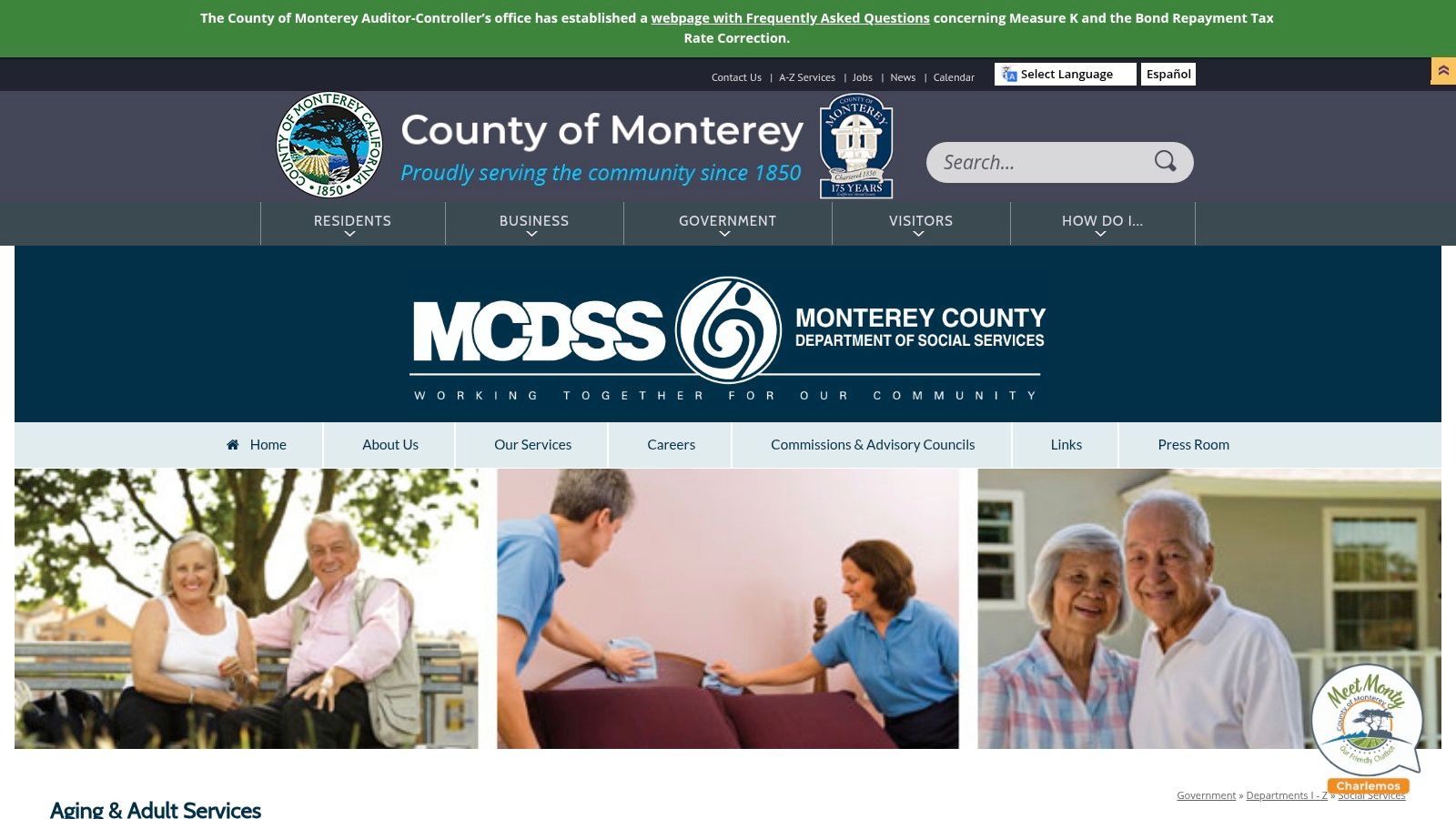
The main job of AAS is to connect you with the right services. They guide you to the right agency or program. This could be for in-home support, nutrition, or Adult Protective Services.
Key Features and How to Use Them
The most valuable tool AAS offers is its live helpline. You can speak with a staff member who can assess your situation. They can then provide referrals to trusted local agencies.
- Information, Referral & Assistance (IRA) Helpline: This is your direct line to a knowledgeable guide.
- Salinas: (831) 755-4466
- King City: (831) 385-7400
- Monterey County Aging & Disability Resource Guide: This downloadable guide is a full directory of services.
- Adult Protective Services (APS): AAS provides a direct link to APS for reporting elder abuse or neglect.
Pro Tip: Before calling the helpline, write down a list of your loved one’s needs and your questions. This will help the representative give you the most accurate referrals quickly.
Why It Stands Out
AAS is the official, county-run resource. The information is up-to-date and the referrals are to trusted local partners. While it is not a direct service provider, its role as a central navigator is key for families.
Website: https://www.countyofmonterey.gov/government/departments-i-z/social-services/adult-services
3. Monterey County Public Authority for In-Home Supportive Services (IHSS) – Registry
For families seeking hands-on in-home care, the IHSS Registry is a key resource. It is a county-run service that connects eligible seniors with individual providers. This allows seniors to hire and manage their own care provider.
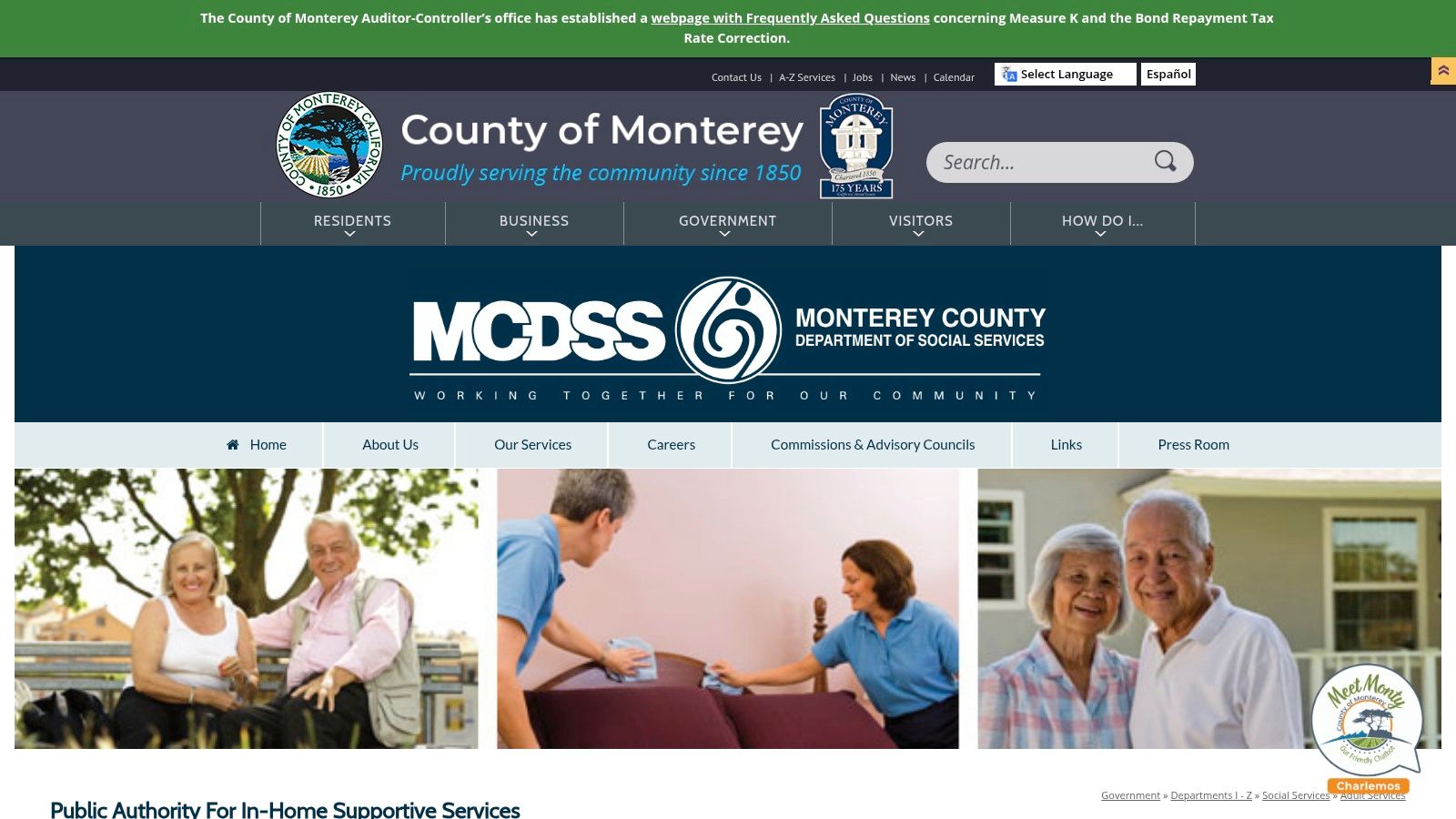
The Public Authority acts as a bridge. It supports both the senior and the provider by maintaining a list of available aides. This model is ideal for those who qualify for Medi-Cal’s IHSS program.
Key Features and How to Use Them
The Registry website guides both clients and potential providers through the process. Seniors and their families get a list of vetted providers to choose from. This personalized approach is a core part of local government programs.
- Provider Matching: The Registry matches clients with providers based on specific needs. This includes personal care tasks, schedule, and location.
- Provider Screening: Aides on the Registry have passed a background check and orientation. This provides a layer of security for families.
- Client and Provider Support: The Public Authority offers guidance on how to join the registry and conduct interviews. You can call them at (831) 755-4466 for help.
Pro Tip: When you get a list of providers, prepare interview questions. Focus on experience, reliability, and communication style. Finding a good personality fit is very important.
Why It Stands Out
The IHSS Registry is unique because it connects directly with a state benefit program (IHSS). It puts the power of choice in the hands of the consumer. The trade-off is that you must first be approved for IHSS benefits.
For those needing skilled medical care, you may need other options. You can explore in-home support to avoid a nursing home that can work alongside IHSS services.
Website: https://www.countyofmonterey.gov/government/departments-i-z/social-services/adult-services/public-authority-ihss
4. 211 Monterey County (United Way Monterey County)
When you need quick information on local support, 211 Monterey County is a powerful tool. This free and confidential service is run by United Way Monterey County. It acts as a 24/7 hotline and online database.
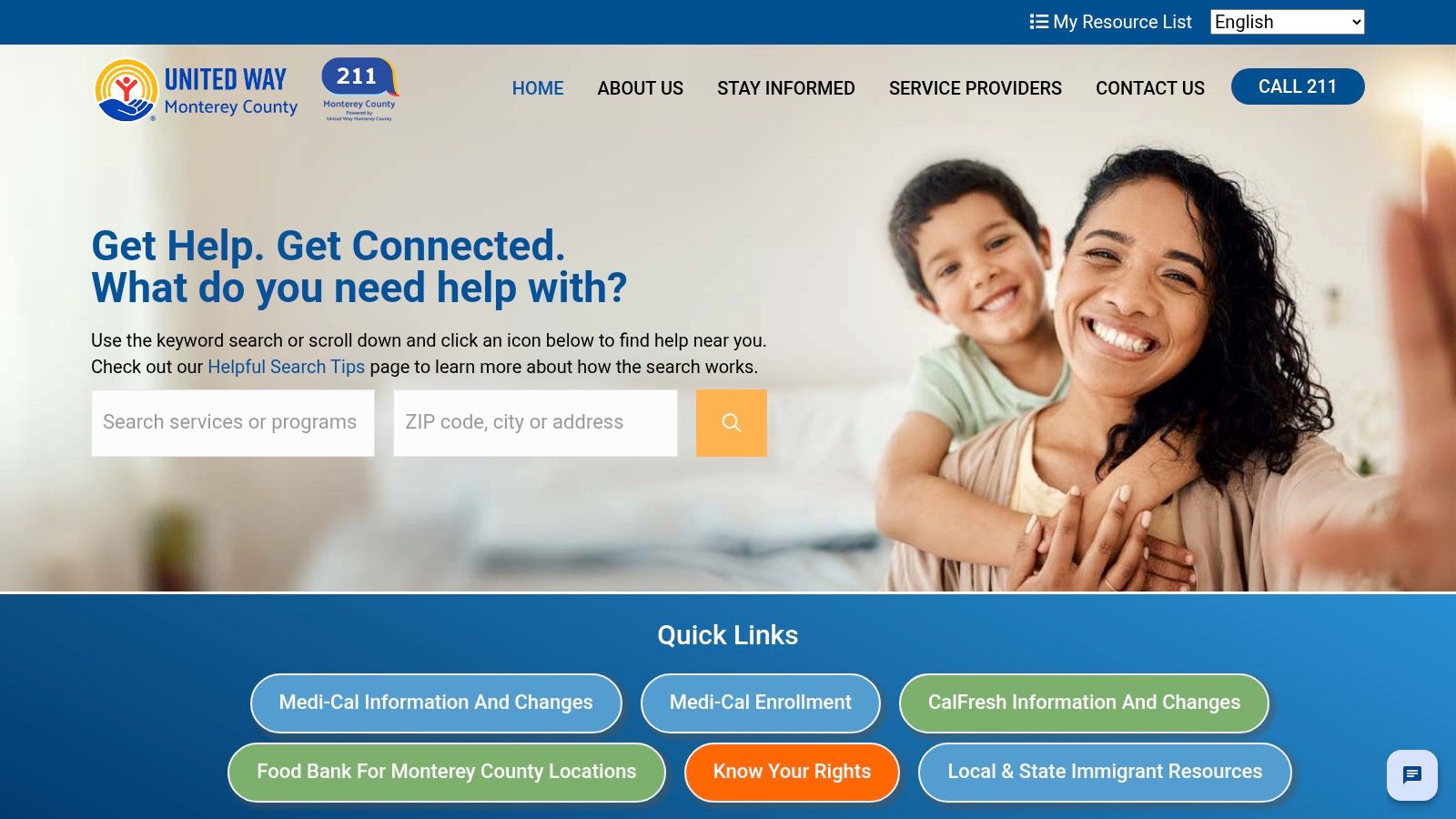
Unlike resources focused only on aging, 211 covers a wide range of needs. This includes food, housing assistance, and transportation. A single call can lead to referrals for multiple challenges.
Key Features and How to Use Them
The strength of 211 is its accessibility. Trained specialists are available around the clock. They provide live, local referrals in multiple languages.
- 24/7 Live Navigation: Simply dial 2-1-1 from any phone. You can speak with a specialist who will connect you to local resources.
- Text and Chat Options: For quick help, text your zip code to 898-211 or use the live chat on their website.
- Searchable Online Database: The website has a large directory of community resources. You can search by keyword and location.
Pro Tip: Use the online database to look for categories like "Senior Services" first. This can help you find specific programs to ask about when you call 2-1-1.
Why It Stands Out
211 Monterey County is special because of its 24/7 availability and multilingual support. It is a no-cost, one-stop shop for finding solutions to challenges that often come with aging. While 211 is a referral service, it is great at connecting you with organizations that provide direct care.
Website: https://211montereycounty.org
5. Alliance on Aging (Monterey County)
Navigating Medicare and finding support can be hard. The Alliance on Aging is a local nonprofit that has served Monterey County since 1970. It acts as a guide for older adults and their families.
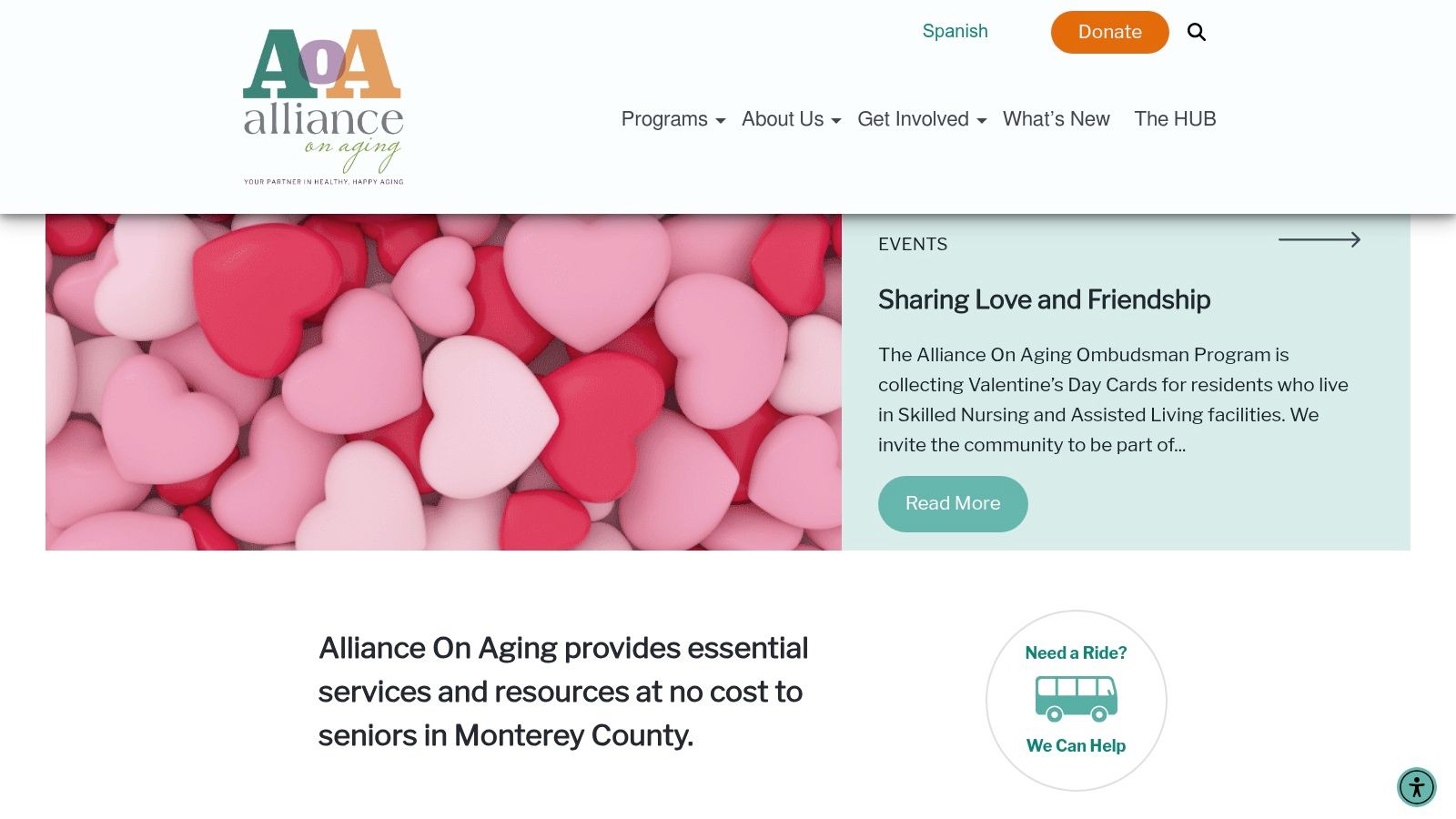
The main role of the Alliance on Aging is to empower seniors. They help people understand their benefits and access services. Their community-focused approach is a great resource for the non-medical side of aging.
Key Features and How to Use Them
The Alliance on Aging offers several free programs. Its services are available through offices in Salinas and Monterey. They also do outreach across the county.
- Medicare Counseling (HICAP): Trained counselors provide free, unbiased help. They can help you understand Medicare benefits and compare plans.
- The HUB Community Center: Located in Salinas, The HUB is a central point for resources. It hosts a Memory Café for people with cognitive decline and their care partners.
- Benefits Counseling & Peer Support: The Alliance helps seniors apply for benefits. It also offers a peer counseling program for companionship.
Pro Tip: Before Medicare's Annual Election Period (October 15 – December 7), schedule a free HICAP appointment. Counselors can help you compare plans to make sure your coverage still meets your needs.
Why It Stands Out
The Alliance on Aging is a trusted, nonprofit advocate. Its HICAP counselors provide completely unbiased advice. This organization bridges the gap between needing help and knowing where to find it.
While the Alliance is great for counseling, it is not a medical provider. For hands-on medical help at home, you will need to explore skilled in-home care. Understanding all of the senior and elderly care services available will help you create a full support plan.
Website: https://allianceonaging.org
6. Medicare Care Compare (Medicare.gov)
When your loved one is eligible for Medicare, finding certified providers is a top priority. The official Medicare Care Compare website is the government's tool to help you. You can search for and evaluate Medicare-certified home health agencies and hospice providers.
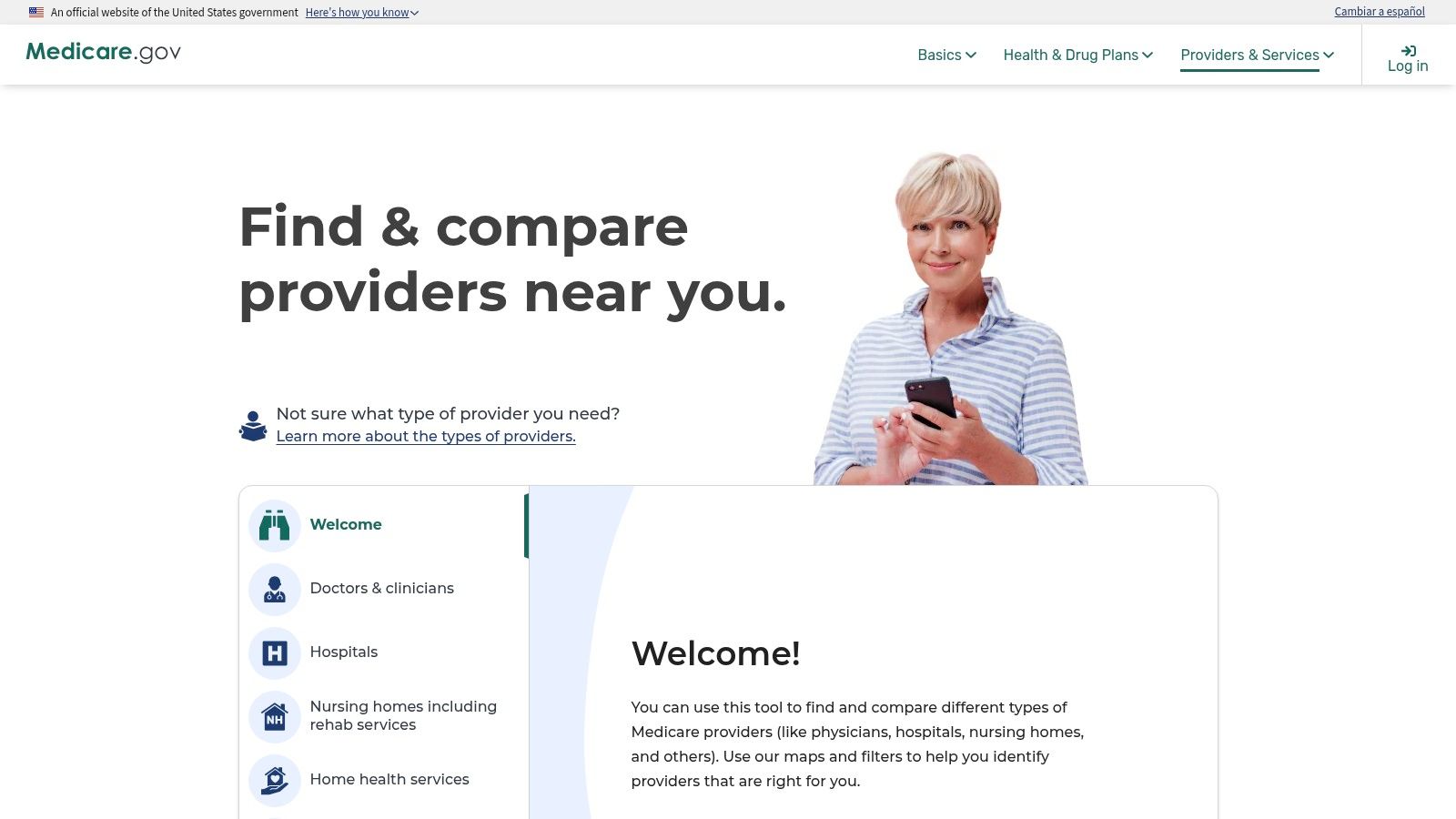
The main purpose of this platform is to provide quality ratings and patient survey results. This lets you compare local agencies side-by-side. It takes the guesswork out of choosing a provider.
Key Features and How to Use Them
The most powerful feature of Medicare Care Compare is its search tool. You can enter your zip code to find providers in Monterey County. Then you can compare them based on official star ratings.
- Side-by-Side Comparisons: Select multiple local agencies. You can view their quality ratings and patient experience scores in an easy-to-read table.
- Detailed Quality Metrics: Explore specific data, like how well an agency managed patients' pain.
- Direct Medicare Information: The site provides clear links to what Medicare covers for services. You can learn more about Medicare home care eligibility to understand the requirements.
Pro Tip: Use the "star ratings" as a starting point, but don't stop there. Click into the "Details" for each provider to read patient survey results.
Why It Stands Out
Medicare Care Compare is essential because it is credible. As the official U.S. government site, it is the most unbiased source for data on Medicare-certified providers. However, the site does not list non-Medicare or private-pay-only agencies.
Website: https://www.medicare.gov/care-compare
7. California Department of Social Services (CDSS) – Facility Search
When you’re researching what senior care services are available in Monterey County, this tool is helpful. The CDSS Facility Search offers a statewide directory of licensed care facilities. It also lists Home Care Organizations.
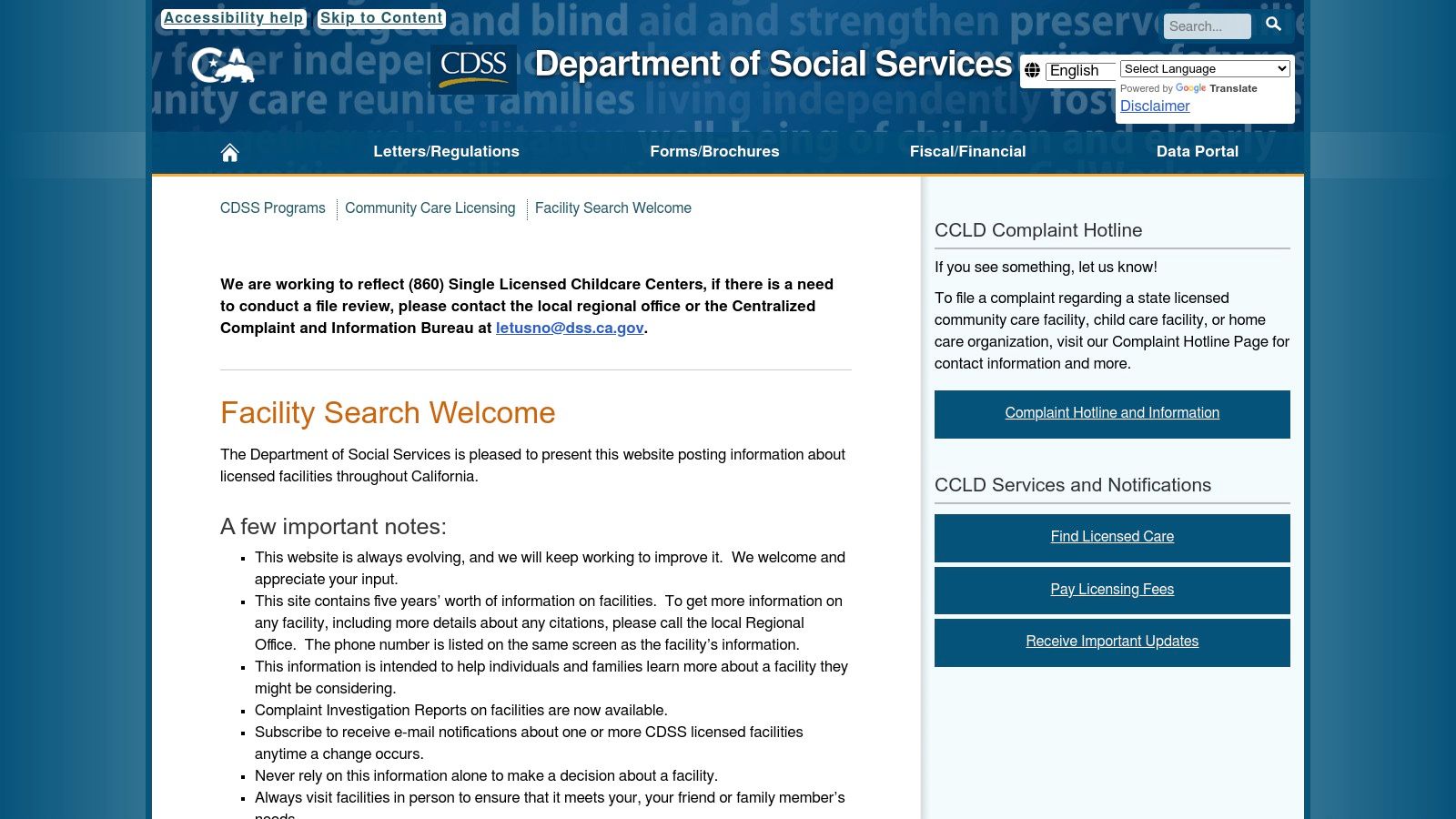
Key Features and How to Use Them
Search by County or City
Enter “Monterey” to list all licensed facilities and home care agencies in your area.Licensing Status
View whether a facility’s license is active. This helps you know it meets state rules.Inspection & Complaint Reports
Access records of health and safety inspections. You can also see any complaints filed in the last five years.Consumer Guidance
Read tips on what to look for during tours. The site also defines different care levels.Email Alerts
Sign up to get automatic notices if a facility’s status changes.Downloadable Records
Save PDF copies of reports to review or share with family.
Pro Tip: Use the site’s filtering options to narrow results by services offered, such as memory care. Note the facility number so you can call directly for pricing and availability.
Comparison at a Glance
| Feature | CDSS Facility Search | Commercial Websites |
|---|---|---|
| Licensing Information | Up-to-date licensing status and history | Varies by provider, may lack compliance details |
| Inspection Reports | Full five-year complaint and violation history | Not always available or complete |
| Pricing & Availability | Not provided, requires direct contact | Often displays starting costs and room availability |
| User Interface | Government functional design | More intuitive filters, photos, and user reviews |
Why It Stands Out
CDSS Facility Search is the only tool backed by the state’s licensing authority. It delivers unbiased, official data you cannot find on commercial sites. This makes it ideal for checking on a facility before you visit.
However, it does not list private pricing or real-time availability. You must call each facility directly to learn costs and open spaces.
Website: https://www.cdss.ca.gov/inforesources/community-care-licensing/facility-search-welcome
Monterey County Senior Care Services — 7-Provider Comparison
| Service | Implementation Complexity 🔄 | Resource Requirements ⚡ | Expected Outcomes ⭐📊 | Ideal Use Cases 💡 | Key Advantages ⭐ |
|---|---|---|---|---|---|
| VNA and Hospice (Central Coast VNA & Hospice) | Moderate–High: interdisciplinary coordination, 24/7 clinical support | High: skilled clinicians, therapy, volunteers, equipment | High: symptom management, seamless transitions, psychosocial & spiritual support | In‑home skilled care, palliative/hospice needs, complex care coordination | Comprehensive in‑home continuum; strong local nonprofit trust; insurance‑friendly |
| Monterey County Aging & Adult Services (AAS) | Low–Moderate: referral and navigation processes | Low: helpline staff, curated county resources | Moderate: faster access to appropriate county programs and eligibility info | Older adults/disabled individuals needing referrals, APS, eligibility guidance | Official county source with up‑to‑date eligibility and live phone assistance |
| Public Authority – IHSS Registry | Moderate: eligibility verification and matching workflow | Medium: screened caregiver pool and admin support | High for eligible clients: matched caregivers to remain at home | IHSS‑eligible people who want to hire/manage paid caregivers | County‑run matching integrated with IHSS; supports client‑directed hiring |
| 211 Monterey County (United Way) | Low: simple contact methods (phone/text/chat) with specialists | Moderate: 24/7 call center, large searchable database | High: rapid multilingual referrals across many service types | Immediate non‑emergency needs (food, transport, community supports) | 24/7 multilingual navigation and broad, no‑cost community directory |
| Alliance on Aging (Monterey County) | Low: counseling, classes, peer support programs | Low–Moderate: HICAP counselors, outreach staff, community HUB | Moderate: improved Medicare decisions, caregiver support, peer connection | Medicare enrollment help, caregiver education, memory/social programs | Free unbiased Medicare counseling (HICAP); long‑standing local presence |
| Medicare Care Compare (Medicare.gov) | Low–Moderate: searchable data + technical quality metrics | Low: public online tool; internet access and data literacy needed | High for Medicare providers: transparent CMS quality and patient experience metrics | Comparing Medicare‑certified home health, hospice, skilled nursing providers | Authoritative CMS ratings and standardized quality metrics |
| CDSS Facility Search (California) | Low–Moderate: search and interpret licensing/inspection records | Low: state database access; internet required | High for regulatory checks: licensing status, inspections, complaints | Screening RCFEs/assisted living or home care organizations before visits | Official regulator‑maintained licensing, inspection and complaint histories |
Your Next Step: Partner with a Trusted Local Expert
Finding senior care in Monterey County can feel like a big task. But now you have explored many helpful tools and services. You've learned about government agencies, nonprofit resources, and online databases.
The journey often starts with one key question. “What senior care services are available in Monterey County that can help my loved one stay safely at home?” This article shows that you have more options than you think. A much better path exists than the all-or-nothing choice.
Key Takeaways for Your Family
As you move forward, keep these key points in mind:
- Aging in Place is a Realistic Goal: Most older adults want to age in their homes. With the right support, this is an achievable goal for many local families.
- A Spectrum of Care Exists: Senior care is not one-size-fits-all. It ranges from help with daily tasks (IHSS) to skilled clinical care at home (Central Coast VNA & Hospice).
- Proactive Planning Reduces Stress: Do not wait for a crisis to explore your options. Learning about these resources now will help you make calm, informed decisions later.
- Professional Guidance is Invaluable: You do not have to create a care plan alone. A local expert can provide a clear roadmap and ensure your loved one gets coordinated care.
Making Your First Actionable Step
So, where do you begin? A direct conversation with a clinical care provider is often the most effective first step. This is true if your loved one is managing chronic illnesses or recovering from surgery.
Start by looking at your loved one’s specific needs.
- Is medical care required at home? If yes, focus on Medicare-certified home health agencies. These groups provide skilled nursing and therapy that non-medical services cannot.
- Is comfort and symptom management the priority? Palliative care provides an extra layer of support for those with serious, long-term illnesses.
- Is the focus on dignity at the end of life? Hospice care provides compassionate support for individuals with a life-limiting illness.
By focusing on the type of care needed, you can narrow your search. This saves time and helps you connect with a team that can meet your family’s needs.
For families in Monterey, San Benito, Santa Cruz, and South Santa Clara counties, Central Coast VNA & Hospice is a trusted, nonprofit partner. We have served our community for over 74 years. We offer a full continuum of care, guiding patients from home health to palliative and hospice care.
Our interdisciplinary teams are compassionate experts. They are dedicated to honoring your loved one’s wishes and bringing peace of mind to your family. Choosing a local, mission-driven organization ensures the focus is always on patient well-being.
Frequently Asked Questions (FAQs)
1. What is the difference between home health, palliative care, and hospice?
Home health care provides skilled nursing and therapy to help patients recover from an illness, injury, or surgery. Palliative care focuses on symptom management for serious illnesses and can be given with other treatments. Hospice care provides comfort and support for patients with a life-limiting illness when curative treatment is no longer the goal.
2. How do I know if my parent qualifies for in-home skilled care?
A doctor must determine that your parent needs skilled medical care at home. This often happens after a hospital stay or if a health condition worsens. Agencies like Central Coast VNA & Hospice can help coordinate with your parent's doctor to assess eligibility.
3. Are these services covered by Medicare?
Yes, Medicare Part A and Part B cover eligible home health care, palliative care, and hospice care. Most services have specific eligibility requirements, so it's important to check with the provider.
4. Can I get help if my parent doesn't need medical care but struggles with daily tasks?
Yes. In-Home Supportive Services (IHSS) is a program for Medi-Cal eligible seniors who need help with tasks like bathing, dressing, and meal preparation. You can contact Monterey County Aging & Adult Services to learn more.
5. What should I look for in a home health or hospice agency?
Look for a local, nonprofit provider with a long history in the community, like Central Coast VNA & Hospice. Use Medicare Care Compare to check quality ratings. Also, ask if they provide a full continuum of care to ensure smooth transitions if needs change.
Don't navigate this journey alone. When you need a trusted partner to help you understand what senior care services are available in Monterey County, turn to the local experts at Central Coast VNA & Hospice. Visit us online to see how our nonprofit home health, palliative, and hospice programs can bring compassionate, professional care directly to your home.