
When you hear the term "hospice care plan," you might picture a dry, clinical document. But it is so much more than that. Think of it as a personalized roadmap—one created not just by a medical team, but with the patient and their family at the very center of the conversation.
This plan is all about honoring a person's complete well-being—physical, emotional, and spiritual. It ensures their final chapter truly reflects their wishes for comfort and dignity.
A Roadmap for Comfort and Dignity

When a family chooses hospice, they embrace a philosophy of care that prioritizes quality of life. The hospice care plan is the tool that puts that philosophy into action. It translates deeply personal conversations about hopes, fears, and values into a practical, actionable guide for the entire team.
At its core, this plan ensures every single decision—from adjusting medication to scheduling visits from a Hospice Aide—is perfectly aligned with what the patient wants. It’s a process that removes the guesswork and anxiety, giving both the patient and their family a sense of control during a difficult time.
For over 74 years, Central Coast VNA & Hospice has been dedicated to this patient-first model. We bring compassionate care to families rooted right here in the communities we serve, including Monterey County and San Benito County.
What Does the Plan Actually Include?
A hospice care plan is a comprehensive document that coordinates every facet of a patient's journey. It’s not a "set it and forget it" document. Our interdisciplinary team constantly reviews and updates it to meet the patient's changing needs.
A great care plan is built on several key pillars:
- Pain and Symptom Management: This details the specific medications, therapies, and other interventions needed to manage physical symptoms like pain, nausea, or shortness of breath.
- Emotional and Psychosocial Support: A Medical Social Worker helps patients and their families navigate the immense emotional stress that comes with a terminal illness.
- Spiritual and Existential Needs: Our Chaplains offer support for a patient's beliefs, values, and search for meaning, no matter their spiritual background or affiliation.
- Family and Respite Support: This outlines services designed to support family members, including vital bereavement counseling and respite care to help prevent burnout.
A hospice care plan isn't about giving up. It's about shifting the focus to a different kind of hope—the hope for comfort, for peace, and for spending truly meaningful time with the people you love. It’s designed to honor a life fully lived, not just manage its end.
To give you a clearer picture, here’s a breakdown of the essential components that form a complete hospice care plan.
Key Elements of a Hospice Care Plan
This table outlines the core components that come together to create a patient-centered hospice care plan.
| Component | Description | Focus Area |
|---|---|---|
| Medical Assessment | Detailed evaluation of the patient's diagnosis, prognosis, and physical symptoms. | Clinical Needs |
| Symptom Management | Specific plan for medications, therapies, and medical equipment to ensure comfort. | Physical Comfort |
| Emotional Support | Counseling and resources for the patient and family to cope with anxiety, depression, and grief. | Psychosocial Well-being |
| Spiritual Care | Support from a chaplain to address spiritual or existential concerns, aligned with patient beliefs. | Spiritual & Existential |
| Family Support | Services like respite care and training for family members to help them provide care confidently. | Family & Health |
| Patient Goals & Wishes | Documentation of the patient's personal preferences for care, location, and end-of-life decisions. | Patient Autonomy & Dignity |
| Bereavement Plan | Support services planned for the family for up to 13 months following the patient's passing. | Grief & Family Continuation |
Each of these elements is woven together, creating a seamless and supportive experience for everyone involved.
A Foundation for Trust and Compassion
Ultimately, the care plan serves as the foundation for the trusted relationship between the hospice team, the patient, and their family. As a nonprofit, mission-driven provider, Central Coast VNA & Hospice makes sure every plan reflects our deep commitment to the communities we serve in Monterey County, San Benito County, Santa Cruz County, and South Santa Clara County.
By clearly documenting a patient's wishes, the plan provides clarity and invaluable peace of mind for everyone. To learn more about how our expert teams develop these personalized roadmaps, take a closer look at our approach to hospice care.
The Four Pillars of Compassionate Care

A truly effective hospice care plan is built on four interconnected pillars. Think of them like the legs of a sturdy table—each one is absolutely essential for providing balanced and complete support. At Central Coast VNA & Hospice, our teams work together to ensure every pillar is strong, creating a plan that cares for the whole person, not just their diagnosis.
We understand that a serious illness touches every part of a person's life. By focusing on these four key areas, we build a circle of support around the patient and their loved ones. This approach ensures comfort, preserves dignity, and honors the individual’s journey with deep compassion.
Pillar 1: Expert Pain and Symptom Management
The first and most important pillar is managing physical symptoms. It’s hard to find peace or connect with family when you’re in pain or uncomfortable. That’s why our primary goal is to provide expert relief from pain, shortness of breath, fatigue, and other symptoms that come with a life-limiting illness.
Our skilled Registered Nurses collaborate closely with the patient, their family, and our Medical Director to find the right mix of medications and therapies. This might involve:
- Medication Adjustments: Carefully fine-tuning doses to maximize relief while keeping side effects to a minimum.
- Non-Pharmacological Therapies: Using gentle positioning, breathing exercises, or calming music to complement medical treatments.
- Durable Medical Equipment: Arranging for a hospital bed, oxygen, or other equipment to make the home safer and more comfortable.
This proactive approach helps the patient stay as alert and comfortable as possible, so they can focus on what matters most. While some of these comfort measures overlap with other types of care, it's important to understand the distinctions. You can learn more in our detailed guide on palliative vs. hospice care.
Pillar 2: Emotional and Psychosocial Support
A serious illness often brings a wave of complex emotions for everyone involved. The second pillar of our care plans directly addresses these emotional and psychosocial needs. It’s about creating a safe space to process feelings of fear, sadness, anxiety, and even anger.
Our Medical Social Workers are trained professionals who provide critical support in this area. They help families navigate difficult conversations, work through unresolved issues, and find healthy ways to cope.
A hospice care plan recognizes that emotional health is just as important as physical comfort. It provides a dedicated support system to help families find strength and resilience during one of life's most challenging times.
This pillar is all about connection and understanding. The social worker becomes a trusted guide, helping to ease the emotional burden so families can focus on their precious time together.
Pillar 3: Spiritual Care and Support
The third pillar acknowledges the deeply human need for meaning, connection, and peace at the end of life. Spiritual care is a very personal part of the hospice plan that honors each person’s beliefs, values, and traditions—whether they are religious or not.
Our Chaplains are skilled at providing non-denominational support. They meet patients and families right where they are, offering a compassionate ear and gentle guidance. This could look like:
- Helping a patient reflect on their life and legacy.
- Facilitating religious rituals or connecting the family with their preferred spiritual leader.
- Simply being a quiet, reassuring presence when words aren't needed.
This support is designed to nourish the inner self, helping patients and their families find a sense of peace and closure.
Pillar 4: Practical Support for Families
Finally, the fourth pillar focuses on the practical, everyday needs of the family. A hospice care plan extends beyond the patient to support those providing love and care around the clock. Our team steps in to help lift some of the burdens that can lead to exhaustion and burnout.
Services like respite care offer family members a much-needed break. A Hospice Aide can step in for a few hours, allowing someone to rest and recharge.
This pillar also includes comprehensive bereavement support, providing counseling and resources for up to 13 months after a loved one has passed. This long-term commitment is a core part of our nonprofit mission, ensuring families in Monterey County and the surrounding areas are never alone in their grief.
How Your Hospice Care Plan Is Created
Creating a hospice care plan isn’t a clinical transaction where a doctor hands you a prescription. It's a thoughtful, collaborative process that unfolds through a series of conversations. The process always places the patient and family at the very center of every decision.
This careful approach ensures the final plan is a true reflection of the patient's values, goals, and wishes. Here at Central Coast VNA & Hospice, our process always begins with listening. We know that a meaningful plan can only be built on a deep understanding of your unique situation, your hopes, and your concerns.
Step 1: Initial Consultation and Assessment
The journey starts with an initial consultation and a comprehensive assessment. A Registered Nurse will meet with the patient and family, usually in the comfort of their own home, whether that's in Monterey, Santa Cruz, or a neighboring community. This first meeting is about so much more than just reviewing a medical history; it's a dedicated time for our team to simply listen.
During this assessment, the nurse evaluates physical symptoms and discusses the current medical situation. More importantly, they create a safe space for the family to ask tough questions and share what truly matters most to them. This foundational conversation sets a compassionate, respectful tone for all the care that follows.
Step 2: Setting Goals and Defining Wishes
Once we have a clear understanding of the situation, the next step is to define the goals of care. This is a critical conversation where the patient’s voice is the most important one in the room. What does a "good day" look like for them?
Our team, which includes a Medical Social Worker, helps facilitate these deeply personal discussions. The goals might be things like:
- Remaining at home, surrounded by familiar comforts and the people they love.
- Achieving enough pain control to be able to enjoy visits with family.
- Having spiritual support to find a sense of peace and closure.
These personal goals become the North Star for the hospice care plan. For families wondering how to even start these sensitive conversations, we offer guidance on how to prepare your loved one for hospice care.
Step 3: Assembling the Interdisciplinary Team
With the goals clearly defined, we assemble the interdisciplinary care team. This team is handpicked to meet the specific needs identified during the assessment and goal-setting talks. While a Medical Director oversees every plan, the specific team members involved will vary from person to person.
For example, a patient wrestling with spiritual questions will have a Chaplain as an active part of their team. A family feeling overwhelmed might receive extra support from a Medical Social Worker and trained Volunteers. This customized approach ensures the right experts are there to provide support across Monterey, San Benito, Santa Cruz, and South Santa Clara counties.
Step 4: Documenting and Implementing the Plan
With the team in place, we document the formal Plan of Care. This written guide translates the patient's wishes into concrete actions for the entire team. It details everything from medication schedules to emotional support strategies and bereavement plans for the family.
This infographic shows how we structure ongoing communication, which is vital to bringing the plan to life.
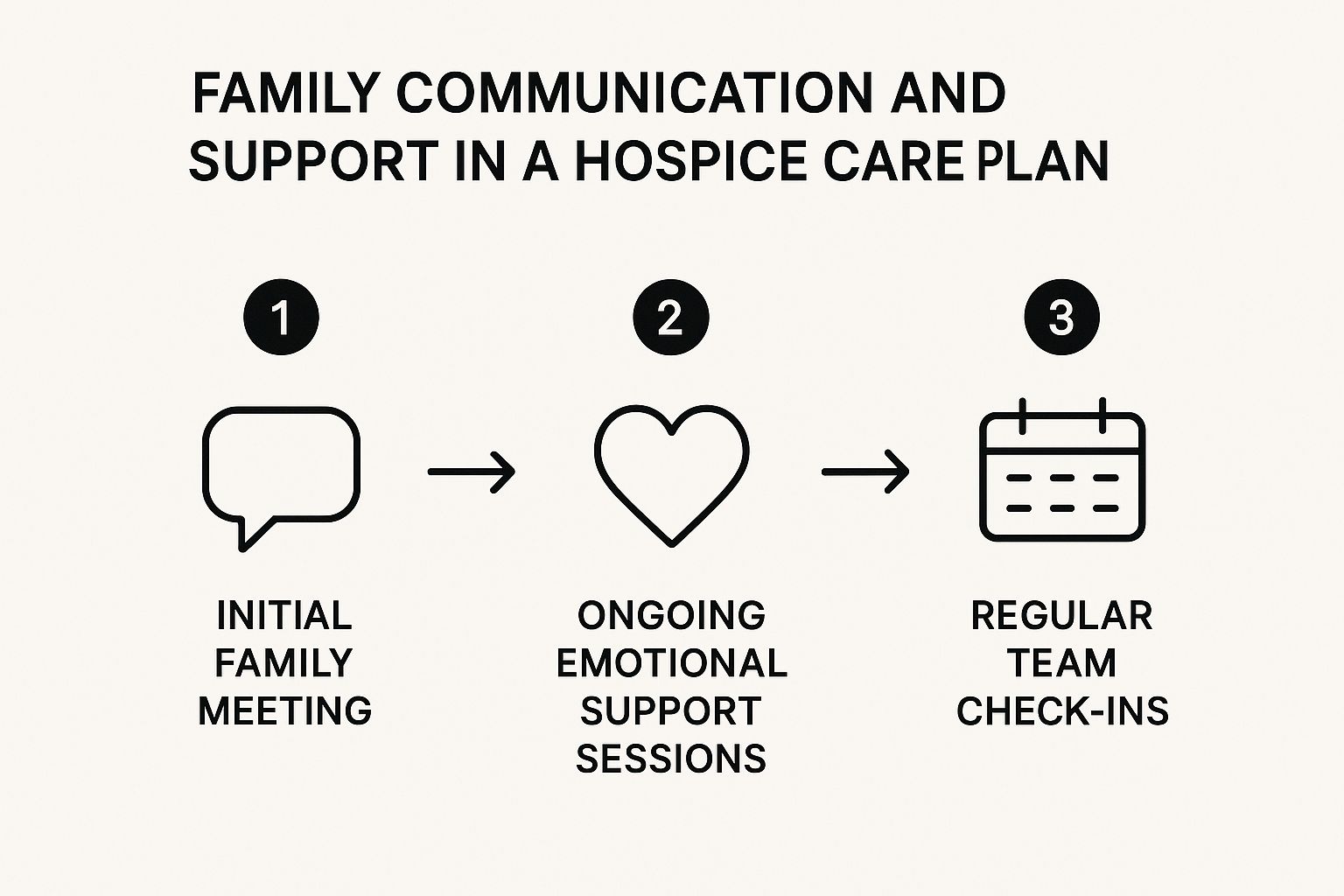
This structured flow ensures communication stays consistent. It also helps families feel continuously supported by their care team.
Step 5: Regular Meetings and Plan Updates
A care plan isn't a static document set in stone; it's a living guide. The interdisciplinary team meets at least every 15 days to review the patient's progress, discuss any changes, and make sure the plan is still meeting their needs.
This ensures the plan remains responsive and effective, adapting as the situation evolves. A patient's needs can change, and the care plan must be flexible enough to change right along with them. This constant fine-tuning is what keeps the focus squarely on comfort and dignity.
Meet Your Dedicated Hospice Care Team

A hospice care plan is a promise of support delivered by a team of committed professionals. We call this group the interdisciplinary team, and they work together to make sure every aspect of your care plan is carried out with skill and genuine compassion. Each person brings a unique expertise, forming a complete circle of care around you and your family.
At Central Coast VNA & Hospice, our entire nonprofit, mission-driven approach is built on this very idea. For over 74 years, we’ve seen firsthand that the best care comes from a group of experts working hand-in-hand. Let's introduce the core members of the team who will walk alongside you on this journey.
Your Clinical and Medical Support
At the heart of your team are the clinical experts who oversee the medical side of your hospice care plan. Their focus is on ensuring your physical comfort and managing complex symptoms with precision and kindness.
The Medical Director is a physician with specialized training in palliative and hospice medicine. They provide overall medical leadership for every patient, working closely with the patient's own doctor and the rest of the hospice team.
Your main point of contact will be the Registered Nurse (RN). The RN makes regular home visits to assess your condition, manage medications, and handle pain and other symptoms directly. They are also an incredible source of education and support for the family.
Hands-On Personal and Practical Care
Beyond the medical side, your team provides the essential hands-on support that makes a world of difference in daily quality of life. These team members focus on comfort, dignity, and helping you navigate any practical hurdles that come up.
The Hospice Aide is there to provide gentle, personal care. This might include helping with bathing, dressing, and other daily activities that have become challenging. Their warm presence and respectful approach are key to maintaining a patient’s dignity and comfort.
A Medical Social Worker is your go-to resource for navigating emotional and practical challenges. They offer counseling, connect you with community resources, and assist with complex things like advance directives. They're there to ease the non-medical burdens that can add so much stress.
A hospice care team is like a symphony orchestra. Each musician plays a different instrument, but together, they create a beautiful, cohesive piece of music that soothes and supports the listener.
This collaborative approach ensures that every need—from medical to emotional—is met. Here's a quick look at how each team member contributes to your well-being.
Your Hospice Interdisciplinary Team Roles
The strength of hospice care lies in its team-based model, where professionals from different fields collaborate to provide holistic support. The table below outlines the key members of your team and what they do.
| Team Member | Primary Role |
|---|---|
| Medical Director | Oversees all medical care and collaborates with the team on symptom management. |
| Registered Nurse | Manages pain and symptoms, provides clinical care, and educates the family. |
| Hospice Aide | Offers hands-on personal care, including bathing, dressing, and daily assistance. |
| Medical Social Worker | Provides emotional support and connects families with practical resources. |
| Chaplain | Offers spiritual support that respects all beliefs, values, and backgrounds. |
| Volunteer | Provides companionship for the patient and respite breaks for the family. |
Each role is distinct, yet they all work in unison to wrap a complete layer of support around you and your loved ones.
Spiritual and Companionship Support
Finally, some members of the team focus on the spiritual and social needs that are so integral to a person's sense of self and peace. Their goal is to provide connection, comfort, and a sense of calm.
The Chaplain offers spiritual support that is completely inclusive and respects all beliefs, traditions, and backgrounds. They are skilled listeners who can help patients and families explore questions of meaning, find peace, and reflect on a life's legacy.
Last but not least, our highly trained Volunteers are the heart of our community-based care. They might read to a patient, offer simple companionship, or just provide a comforting presence that can dramatically reduce feelings of isolation. They also give family members a chance to take a much-needed break.
The True Value of a Formalized Care Plan
A structured hospice care plan is so much more than a clinical checklist. It is a roadmap for comfort, clarity, and communication. It ensures that a patient’s wishes are not just heard, but turned into compassionate actions every single day.
For the person at the center of care, having a formal plan provides a sense of control and dignity when so much feels uncertain. There's real peace of mind in knowing your preferences are clearly documented and respected. It’s about ensuring your final chapter is written on your own terms.
Easing the Burden on Families
For families, a well-defined hospice care plan is a huge relief. It helps lift the heavy weight of second-guessing decisions or worrying if they're doing the "right" thing. The plan lays out a clear path that everyone can follow, clarifying roles and setting up straightforward communication with the hospice team.
This allows family members to step back from managing logistics and focus on what truly matters: spending meaningful time together. It creates a framework of support that helps prevent burnout and lets the family feel guided. For anyone navigating this journey, understanding the 5 reasons to consider hospice for a loved one can offer even more clarity and confidence.
Enhancing Quality of Life Through Organized Care
One of the greatest gifts of a formal hospice care plan is how much it improves a patient's quality of life. By proactively managing symptoms, the plan helps keep pain and discomfort under control. This allows the patient to stay as alert and engaged as they want to be.
This organized approach coordinates the entire spectrum of care, from visits by a Hospice Aide to counseling from a Medical Social Worker. It’s about nurturing the whole person—body, mind, and spirit. At Central Coast VNA & Hospice, our nonprofit mission is rooted in this philosophy, ensuring a smoother journey for everyone involved across Monterey and our neighboring counties.
A formalized hospice care plan is the bridge between a patient's wishes and the compassionate care they receive. It ensures that every action taken by the care team is a direct reflection of what is most important to the person at the center of it all.
The preference for this kind of organized, comfort-focused care is clear. According to the National Hospice and Palliative Care Organization (NHPCO), over 1.72 million Medicare beneficiaries received hospice services in 2020 (NHPCO, 2021). The overwhelming majority of this care was provided as Routine Home Care, highlighting the desire for supportive services at home. You can explore more hospice care trends in this federal report.
Care That Adapts to Every Person and Place
A hospice care plan is anything but a standard document. It's a deeply personal roadmap that is flexible enough to honor a person’s unique life, their specific situation, and where they feel most comfortable. Truly compassionate care is all about meeting people exactly where they are—both physically and emotionally.
The real sign of an excellent hospice care plan is its ability to adapt. At Central Coast VNA & Hospice, our teams have spent over 74 years mastering this. We specialize in tailoring support to fit the individual needs of every patient and family we serve across Monterey County, San Benito County, Santa Cruz County, and South Santa Clara County.
Care Wherever Someone Calls Home
While most people think of hospice care happening in a person’s own home—and it often does—our support follows the patient wherever they reside. A well-designed hospice care plan works just as effectively and compassionately in any setting. The priorities of comfort and dignity never change.
We are experienced in creating specialized plans for individuals in:
- Skilled Nursing Facilities: We work closely with the facility's staff, adding another layer of expert symptom management and emotional support.
- Assisted Living Communities: Our team integrates into the community, supplementing the care already in place and focusing on the specific needs that come with end-of-life journeys.
- Board and Care Homes: In these smaller homes, our plan ensures patients get the full benefit of our entire team, from nursing and medical oversight to spiritual and emotional support.
This flexibility guarantees that every patient gets consistent, high-quality hospice care, no matter what they call home.
Adapting Plans for Different Health Conditions
Just as every home is different, so is every patient's diagnosis. A hospice care plan has to be precisely tuned to manage the specific symptoms and challenges that come with different terminal illnesses.
For example, a plan for someone with advanced cancer might focus on sophisticated pain management strategies. But for a patient with end-stage heart failure, the focus would shift to managing shortness of breath and fatigue.
A hospice care plan for a person with dementia requires a special kind of understanding. It must anticipate non-verbal cues for discomfort and focus on creating a calm, soothing environment to minimize confusion and agitation.
For conditions like advanced dementia or ALS, the plan will often emphasize non-verbal communication and gentle personal care from a Hospice Aide. It will also include significant emotional support for the family as they navigate what can be a long and heart-wrenching journey. This detailed, person-centered care is part of our commitment to serving the entire Central Coast community.
Frequently Asked Questions About Hospice Care Plans
Navigating end-of-life care brings many questions, and getting clear, straightforward answers can provide comfort and control. At Central Coast VNA & Hospice, we believe open communication is the heart of compassionate care. Below, we've answered some of the questions we hear most often.
Who creates the hospice care plan?
A hospice care plan is developed by an interdisciplinary hospice team in collaboration with the patient and their family. The team includes a Medical Director, Registered Nurse, Medical Social Worker, and Chaplain. However, the patient's personal wishes and goals are the most important factor guiding every decision in the plan.
How often is the care plan reviewed?
By regulation, the interdisciplinary team formally reviews the care plan at least every 15 days. In reality, it can and should be updated any time there’s a noticeable change in the patient's condition, symptoms, or personal preferences. This flexibility ensures care remains perfectly aligned with the patient's current needs.
Can a patient or family request changes to the plan?
Yes, absolutely. Patients and their families are essential partners in this process. If you notice a new symptom, have a concern, or feel a part of the plan isn't working, you should speak up right away. Your hospice Registered Nurse is your primary contact for discussing adjustments to the hospice care plan.
What happens if a patient's condition improves?
It is possible for a patient's health to stabilize or improve while receiving the comprehensive comfort of hospice care. If their prognosis improves to the point where they no longer meet medical requirements, they can be discharged from hospice services. Our team at Central Coast VNA & Hospice would then help coordinate a safe and seamless transition back to curative treatment or another level of care. You can learn more by reading our guide on hospice care eligibility.
Does the care plan include support for the family after death?
Yes, it does. Comprehensive support for the family, known as bereavement care, is a core part of the hospice philosophy and is included in the care plan from the beginning. Our commitment to families in Monterey, San Benito, Santa Cruz, and South Santa Clara counties continues for up to 13 months after their loss, providing counseling, support groups, and other resources.
The end-of-life journey is deeply personal, and having a compassionate, expert team by your side makes all the difference. At Central Coast VNA & Hospice, we are here to answer your questions and guide you with care and respect. Contact us today to learn more about our nonprofit hospice services.