
It’s a situation every family on the Central Coast dreads. A loved one with a chronic illness is suddenly worse, but you’re not sure if it’s bad enough for the emergency room. For families in Monterey, San Benito, Santa Cruz, and South Santa Clara Counties, this stressful gray area can feel overwhelming.
When a loved one is too sick to manage at home but not quite in need of the ER, what’s the right call? For those with serious or chronic illnesses, exploring skilled in-home health services is often the safest and most compassionate choice. This is especially true when our local hospitals are strained.
In-home support from Central Coast VNA & Hospice can be the lifeline your family needs. It provides an alternative to a stressful hospital visit.
The In-Between Illness Dilemma for Central Coast Families
This isn't a theoretical problem; it's a real scenario that plays out in homes across our community. A parent with a chronic condition takes a turn for the worse. Their symptoms don’t seem to justify a 911 call.
This "care gap" is where families often feel the most alone. Hospitals across the Central Coast are experiencing seasonal strain, leading to longer wait times and limited beds. This is especially true for non-emergency but serious conditions.
Finding a Safer Alternative to the ER
For most families on the Central Coast, the goal is simple. They want high-quality care without the anxiety and exposure of a hospital. An unnecessary trip to the emergency room can expose a vulnerable person to infections and cause a great deal of stress.
Central Coast VNA & Hospice offers a strategic, compassionate, and safe alternative. With over 74 years of nonprofit service to our community, our teams bring hospital-level support right into a patient’s home.
This model of care is quickly becoming the preferred way to manage serious illnesses. It honors the deep desire most people have to age in place, surrounded by the comfort and familiarity of their own homes. Dealing with these health concerns can put a strain on an already busy household, and finding effective strategies for balancing work and family life can create a more stable foundation.
How In-Home Care Fills the Gap
Instead of spending hours in a crowded ER, your family can have a dedicated team of clinicians. They provide personalized, one-on-one support. This approach focuses on managing symptoms before they become a crisis.
Services that provide a real alternative to the hospital include:
- Skilled Nursing: Our Registered Nurses can visit the home to manage complex symptoms, administer medications, and educate the patient and family.
- Palliative Care: This is specialized support focused on improving quality of life for anyone with a serious illness, helping manage pain and stress.
- 24/7 Clinical Access: Having a direct line to a clinician offers incredible peace of mind and can prevent many unnecessary trips to the hospital.
By bringing expert care directly into the home, Central Coast VNA & Hospice helps families and eases the burden on our local healthcare systems. This guide will give you a clear path forward, helping you explore all your options. For more specific local information, you can also review these local health care resources for seriously ill family members.
How to Assess Your Loved One’s Symptoms at Home
When a loved one isn't feeling well, your first instinct is to worry. It’s tough to stay calm and figure out what’s really going on. Making a clear-headed assessment is the most helpful thing you can do.
This is especially true for older adults or anyone managing a chronic condition. Even small changes can point to a larger problem. Instead of guessing, you can learn to spot key differences in their breathing, hydration, mental state, and mobility.
Look for Meaningful Changes in Breathing
Breathing is a vital sign you can check without any special equipment. It's helpful to understand causes of shortness of breath and when to worry. Pay close attention to the effort it takes for your loved one to breathe.
Keep an eye out for these specific signs:
- Breathing faster than usual while at rest.
- Using their neck or stomach muscles to pull in a breath.
- Struggling to speak in full sentences without stopping for air.
- Appearing pale or even bluish, especially around their lips or fingertips.
If you notice these symptoms, it’s a sign their body is working too hard to get enough oxygen. This likely warrants a call to their doctor or a trip to an urgent care center.
Check Hydration and Nutrition
Dehydration can sneak up quickly, especially on older adults. It can cause confusion, weakness, and dizziness. These symptoms can easily be mistaken for something more serious.
Look for a dry mouth and lips. Check if skin on the back of their hand doesn’t bounce back right away when you gently pinch it. A sudden loss of appetite or refusing to drink is another major warning sign.
Evaluate Mental Clarity and Awareness
A sudden change in someone's mental state is one of the biggest red flags you can spot at home. This is about an abrupt shift from their normal self.
Pay attention to sudden confusion, unusual agitation, or extreme drowsiness. If your loved one is suddenly unable to recognize familiar people or answer simple questions, seek medical advice promptly.
This infographic can help you visualize the decision-making process when you're facing this common Central Coast care dilemma.
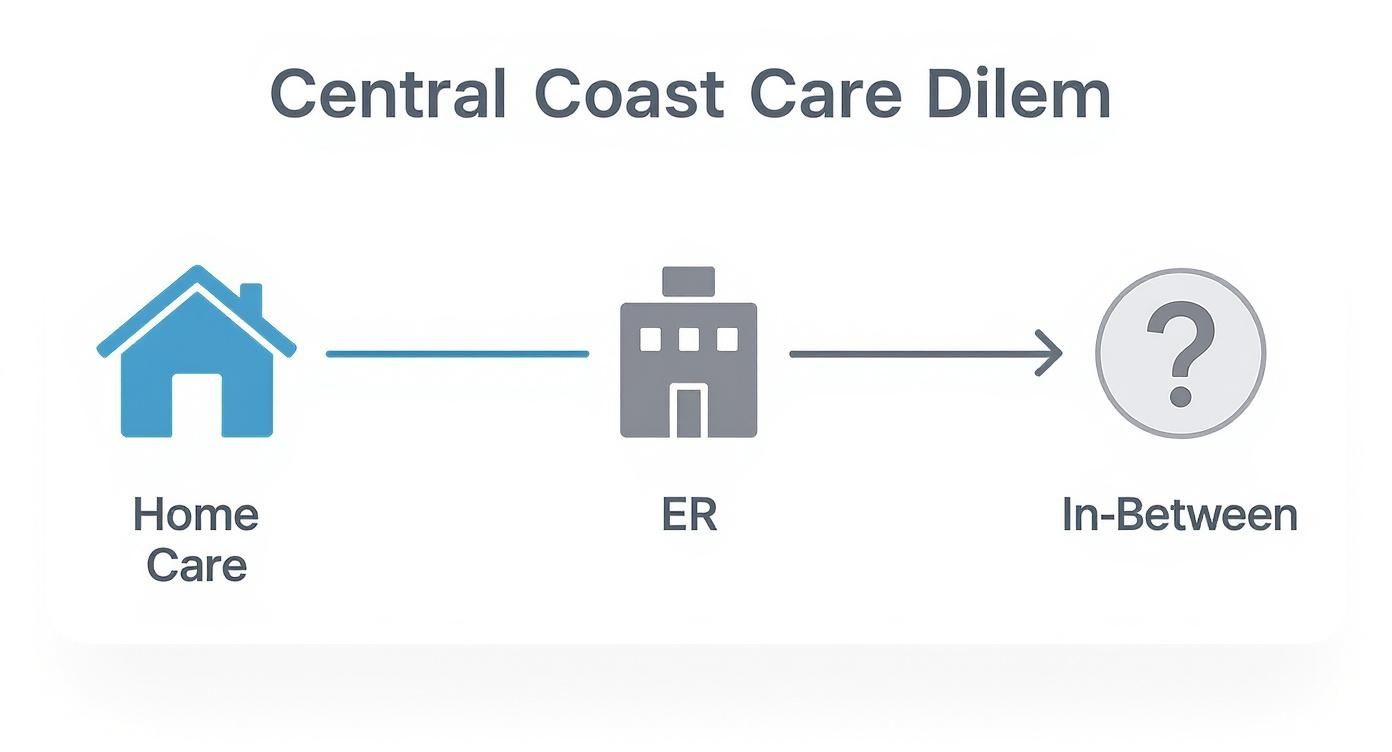
As the guide shows, while some situations clearly point to the ER or home care, many fall into that "in-between" space where professional guidance is best.
Assess Mobility and Pain Levels
How your loved one is moving can tell you a lot. A new inability to get out of a chair or walk to the bathroom is a significant change. This decline shows their current condition is making them too weak to be safe at home.
Listen carefully to how they describe any pain. Uncontrolled pain is a good reason to call their primary care doctor or look into getting in-home support.
By methodically checking these four areas, you can build a clearer picture of your loved one's condition. It gives you specific information to share when you call their doctor or a home health agency like Central Coast VNA & Hospice.
When Urgent Care Is the Right Choice on the Central Coast
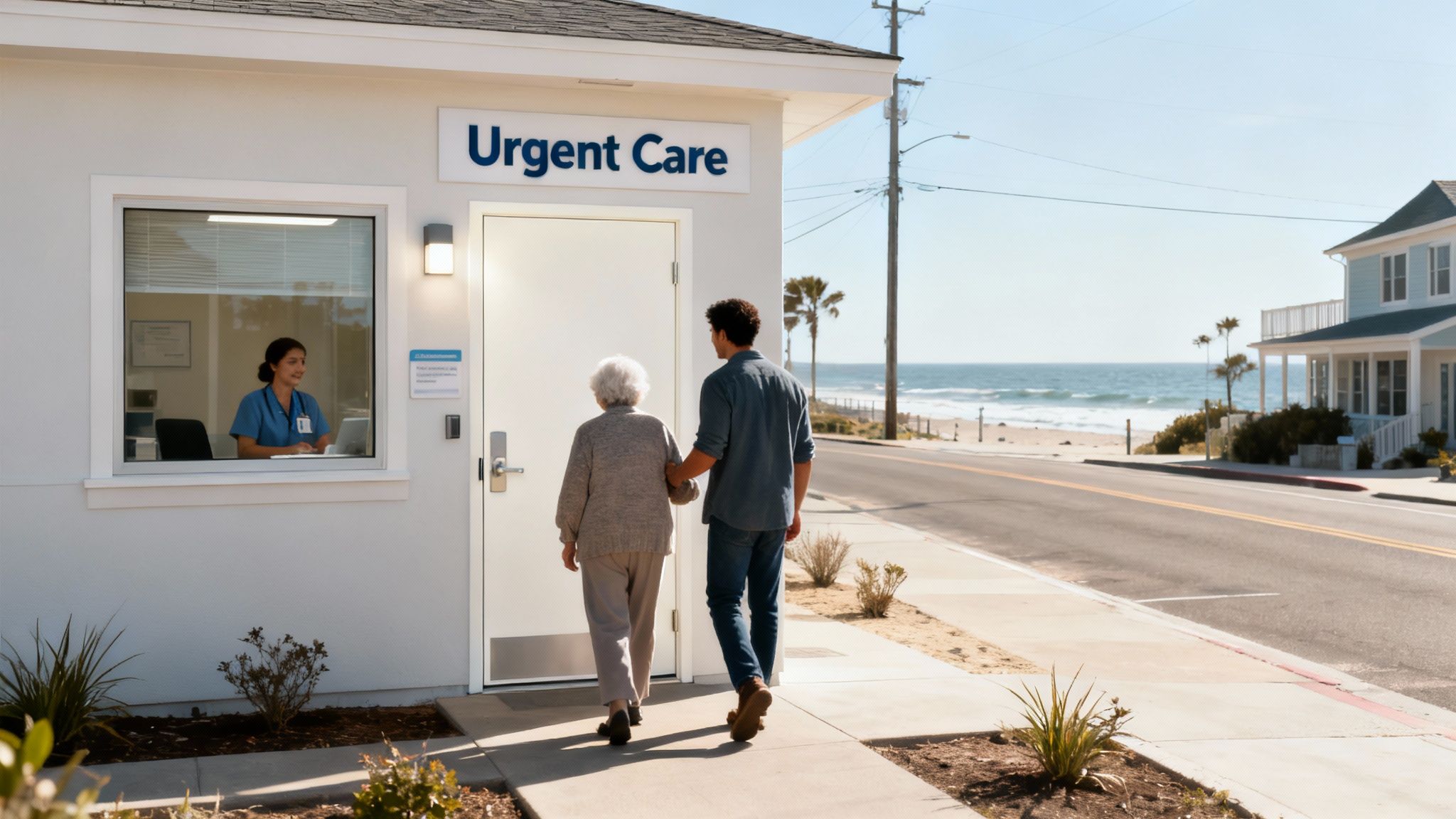
Urgent care centers are valuable resources for Central Coast families. They fill the critical gap between a routine doctor's visit and a full-blown emergency. Knowing when to turn to urgent care can save you time, money, and stress.
Urgent care is the perfect choice for an illness or injury that can’t wait for an appointment but isn't life-threatening. These clinics are expertly staffed and equipped to handle many common health concerns.
Conditions Well-Suited for Urgent Care
Many common sicknesses and minor injuries are exactly what urgent care centers are for.
It's a good idea to head to an urgent care for conditions like:
- Persistent fevers or flu-like symptoms.
- Minor cuts that might need stitches but aren't bleeding uncontrollably.
- Sprains, strains, or suspected simple fractures.
- Nagging infections, like urinary tract infections (UTIs) or ear infections.
- Vomiting or diarrhea that has you worried about dehydration.
- A bad sore throat, especially if you think it could be strep.
These centers provide a much more convenient and often faster alternative to the emergency room for these types of issues.
The Real-World Benefits for Local Families
For families in Monterey, San Benito, Santa Cruz, and South Santa Clara Counties, choosing urgent care over the ER for non-emergencies comes with real advantages. One of the biggest perks is drastically shorter wait times.
This makes a huge difference, especially with a miserable child or an uncomfortable older adult. On top of that, the cost of an urgent care visit is typically a fraction of what a trip to the ER would cost for the same condition.
The Rise of Urgent Care as an ER Alternative
The explosive growth of urgent care centers across the country proves how much families needed this middle-ground option. Increased respiratory illness, staffing shortages, and rising admissions are creating care bottlenecks in hospitals. This is leading many families to look for high-quality alternatives.
By 2022, there were more urgent care visits (206 million) than ER visits (131 million) nationwide. This cements their vital role in modern healthcare. You can explore more about this significant shift in patient care to see how it's reshaping the system.
How to Prepare for an Urgent Care Visit
A little preparation can make your visit to a Central Coast urgent care center go more smoothly. It’s smart to identify local options in your area before you need one.
When it's time to go, be sure to have these items handy:
- Your photo ID and insurance card.
- A list of your loved one’s current medications and any known allergies.
- Any key medical history details the provider should know about.
Having this information ready helps the medical team give you the best and safest care possible.
Bringing Hospital-Level Care Home with Central Coast VNA
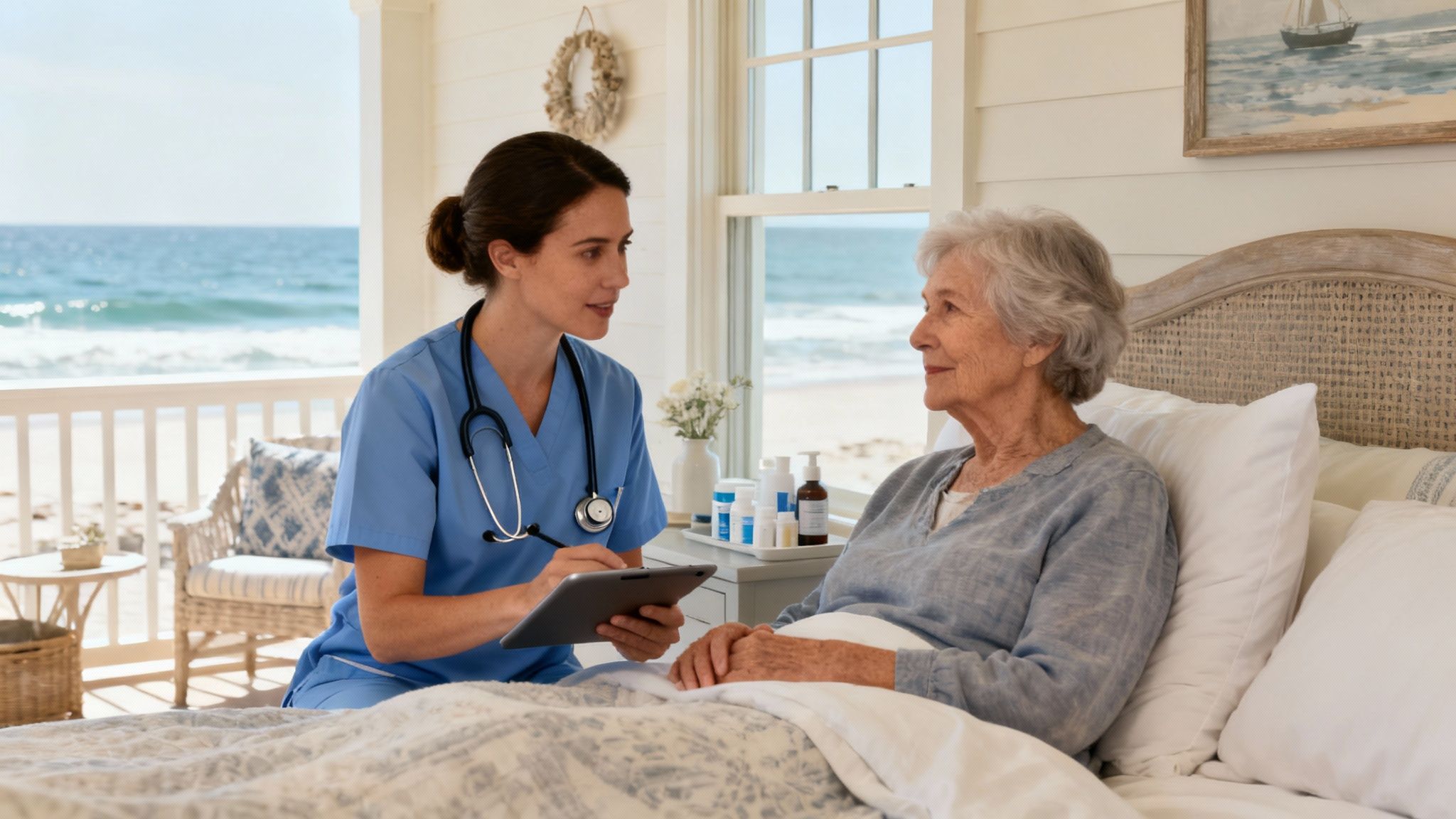
Sometimes, a loved one needs more medical attention than you can provide, but not enough to justify a hospital stay. This is exactly where Central Coast VNA & Hospice steps in. We bridge that gap by bringing skilled, compassionate care right to your front door.
For more than 74 years, we’ve been a local, nonprofit fixture in Monterey, San Benito, Santa Cruz, and South Santa Clara Counties. Our entire mission is to deliver the expert medical support your family needs. We provide it in the one place they feel most comfortable—their own home.
Skilled Services Tailored to Your Family's Needs
Knowing a team of professionals can step in brings incredible relief. Our services are designed to manage complex medical issues and prevent unnecessary ER trips. This ultimately improves quality of life.
Our coordinated care teams offer a range of specialized support, including:
- Skilled Nursing: Our Registered Nurses are pros at managing serious symptoms at home. They can oversee complex medication schedules, provide advanced wound care, and teach you how to best support your loved one.
- Physical Therapy: Our physical therapists create personalized plans to help improve balance, build strength, and make moving around the home safer.
- Palliative Care: This is a specialized layer of support focused entirely on comfort and can be provided alongside curative treatments.
How In-Home Care Works in a Real-World Scenario
Let's say your father, who has a chronic heart condition, is getting weaker. The thought of taking him to a crowded emergency room is stressful. Instead, you call Central Coast VNA & Hospice.
A Registered Nurse comes to your home and assesses his condition. They work directly with his doctor to adjust his medications. A physical therapist starts visiting to help him build endurance. Because of this support, his symptoms stabilize, and he avoids a hospital trip.
At its core, in-home skilled care is about providing the right support at the right time. By managing symptoms proactively and offering 24/7 clinical access, we empower families to avoid the stress and uncertainty of the ER.
The Benefits of a Coordinated Team Approach
When you work with CCVNA, you have an entire team in your corner. Our nurses, therapists, and social workers communicate constantly to ensure your loved one receives seamless care.
This team approach delivers real advantages:
- Fewer Hospitalizations: Our teams are trained to spot warning signs early, which reduces the chances of an emergency.
- Truly Personalized Care: We create a care plan that reflects your loved one's personal goals and values.
- Greater Safety and Comfort: Receiving care at home minimizes exposure to infections and avoids the confusion of a hospital setting.
This shift isn't temporary—it reflects a broader trend toward aging in place and home-based care models. You can learn more about the essentials of skilled nursing care and see how it supports independence at home.
When you find yourself stuck, please know you have options. Central Coast VNA & Hospice is here to provide the expert, compassionate support your family deserves.
Why Avoiding the ER Can Be the Healthier Option
When a loved one is sick, our first instinct is often to rush to the emergency room. While the ER is the right place for a true medical crisis, an unnecessary trip can create its own problems. This is especially true for older adults or those with complex health conditions.
Understanding these risks helps you make a safer, more supportive choice. The reality is that our hospitals on the Central Coast and across the country are under incredible strain.
The Hidden Risks of a Hospital Visit
For someone with a weakened immune system, a busy ER is a hotbed for potential infections. What starts as a manageable issue can become more serious after exposure to the flu or other illnesses.
Just the physical and emotional toll of getting to the hospital and waiting for hours can drain a person's strength. This makes recovery that much harder.
The hospital environment itself can be disorienting for patients, especially older adults. The constant noise and disruption can lead to confusion and anxiety. This is why managing care at home is so often the healthier choice.
ER Overcrowding: A National Challenge
The struggle to get timely care in an emergency room isn't just a local issue. It's a well-documented challenge across the United States. This puts families in a tough spot when deciding what to do.
Americans make roughly 155.4 million emergency department visits each year. As you can discover more insights about these national health statistics, it’s clear why finding alternatives is so critical.
This national data drives home the point for families in Monterey, San Benito, Santa Cruz, and South Santa Clara Counties. When a condition is serious but not life-threatening, options like in-home health care can provide faster, safer support.
In-Home Care: A Proactive and Safer Alternative
This is where Central Coast VNA & Hospice can make all the difference. We bring expert clinical care right to your front door. This helps you manage serious health issues proactively and often prevents an ER visit altogether.
Instead of a frantic trip to the hospital, a Registered Nurse can visit to adjust medications. A physical therapist can help your loved one regain strength after an illness, reducing their risk of a fall.
This personalized care doesn't just provide peace of mind; it leads to better health outcomes. By keeping your loved one safe at home, we help them avoid hospital risks and focus on healing. This approach is also a cornerstone of preventing hospital readmissions.
Taking the Next Step: How We Can Help
When you're navigating that tough in-between illness, it’s easy to feel overwhelmed. You should now have a better feel for when urgent care is the right call. You also know when bringing professional support into your home is the safest choice.
For families across Monterey, San Benito, Santa Cruz, and South Santa Clara Counties, help is much closer than you might think.
Central Coast VNA & Hospice is your local, nonprofit partner. We’ve earned our community's trust over 74 years of dedicated service. Our team brings skilled nursing, palliative care, and hospice services directly to your home.
We’re here to empower your family to make informed decisions. These choices should honor your loved one’s comfort, dignity, and desire to heal at home. If in-home support is the right path, we encourage you to reach out. You can learn more about qualifying for home health care on our website.
Frequently Asked Questions (FAQs)
How do I know if my loved one qualifies for home health care?
A patient generally qualifies if they are considered "homebound" and a doctor certifies they need skilled medical services. This could include care from a Registered Nurse or physical therapy. Contacting their primary doctor is the first step, but our team at Central Coast VNA can help explain the requirements.
What is the difference between palliative care and hospice?
Palliative care can begin at the diagnosis of any serious illness and can be given alongside curative treatments to manage symptoms and improve quality of life. Hospice care begins when a patient with a life-limiting illness decides to stop curative treatments, focusing entirely on comfort and dignity.
Can in-home care really help avoid ER visits?
Yes, absolutely. One of the main benefits of our services is proactive symptom management at home. Our clinicians address health issues before they become a crisis, and our 24/7 clinical access provides peace of mind, significantly reducing the need for unplanned hospital trips.
Is in-home care covered by Medicare or private insurance?
In most cases, yes. Home health, palliative care, and hospice services are typically covered by Medicare, Medi-Cal, and most private insurance plans if the patient meets the eligibility criteria. Our staff will help you verify coverage and understand any potential out-of-pocket costs.
What areas does Central Coast VNA & Hospice serve?
As a local nonprofit with over 74 years of service, we are deeply rooted in the community. We proudly serve families across Monterey County, San Benito County, Santa Cruz County, and South Santa Clara County.
If you are concerned about hospital capacity or need care at home, Central Coast VNA & Hospice is ready to help. Our compassionate team can provide a consultation to discuss your loved one's needs and explain how our services can bring expert support right to your door.
Reach out to us today to learn more at https://ccvna.com.