
For many older adults, the idea of leaving their home is simply out of the question. Senior home care makes it possible to get the skilled medical support and personal help they need, all without leaving the comfort and familiarity of the place they love. It's an approach that champions independence and dignity. It gives countless families a way to help their loved ones manage health challenges while living a safe, fulfilling life.
Staying Home: How In-Home Care Fosters Independence
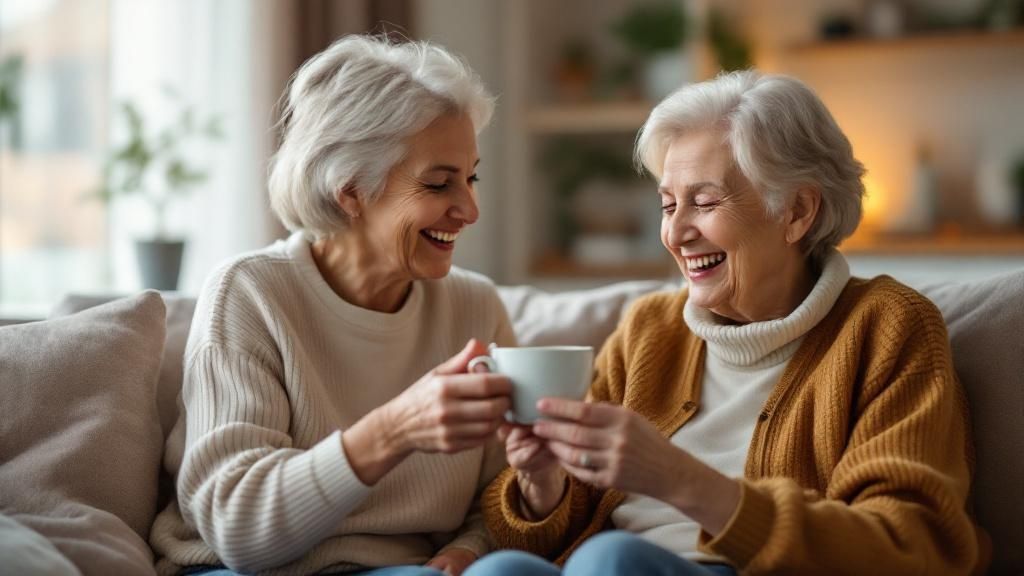
There's a powerful emotional connection to home. It’s where memories are made, routines are established, and life feels most comfortable. This desire to "age in place" isn't just about familiarity; it’s about holding onto a sense of self and control. Professional senior home care is what makes this a safe, practical reality instead of just a wish.
This isn't a niche preference, either. The numbers show it's what most people want. According to AARP, approximately 75% of Americans over age 50 say they want to stay in their homes as they get older (AARP, 2021). This underscores the critical need for reliable in-home care services.
For families across Monterey County, San Benito County, Santa Cruz County, and South Santa Clara County, Central Coast VNA & Hospice has been the go-to nonprofit partner for over 74 years. Our entire mission is built around providing the clinical expertise that allows people to age successfully right where they want to be.
The Real-World Impact of Professional Home Support
Choosing home care over a facility often comes with huge emotional and practical benefits. It means your loved one can stay surrounded by their own memories, pets, and neighborhood connections. This is incredibly important for their well-being and helps avoid the stress of moving to an unfamiliar environment.
But the support from a professional team goes far beyond just meeting basic needs. It’s about building a solid foundation for health and true independence.
At the end of the day, senior home care is about respecting a person's life and choices. It delivers the structured, clinical support required to manage health conditions well, giving families genuine peace of mind and helping seniors live confidently in the one place they love most.
Our services bring expert medical care directly to the front door. A dedicated team, led by a Registered Nurse, can provide a variety of clinical services at home, including:
- Skilled Nursing: Handling tasks like complex medication schedules, wound care, and close monitoring of chronic conditions like heart failure or COPD.
- Rehabilitative Therapies: Physical and occupational therapy to rebuild strength, improve mobility, and reduce the risk of falls.
- Personalized Care Planning: A team effort between the patient, their family, and their doctor to create and work toward specific health goals.
By integrating this level of professional support into the home, Central Coast VNA & Hospice helps seniors do more than just live—we help them thrive. Our focus is on creating a safe environment that encourages long-term wellness. Explore our guide on how to help seniors live at home safely to learn more.
Figuring Out Your Family's Specific Care Needs
Before you can arrange for senior home care to age in place, you first need to figure out what kind of support is actually necessary. This starts with an honest look at your family’s specific situation. It creates a clear picture of where a professional could step in and make a real difference.
It’s a conversation that absolutely must include the senior themselves. Their voice should be at the heart of every decision, respecting their independence and desires.
Feeling overwhelmed at this stage is completely normal. Most families aren't sure where to begin. It often helps to break down the needs into three main buckets: medical support, personal assistance, and general household help.
A personalized care plan is not a checklist; it's a dynamic roadmap created in collaboration with the patient, their family, and their physician. It respects individual preferences while ensuring clinical needs are met with expertise and compassion from our local, nonprofit team.
Working together this way ensures the final plan of care reflects what’s most important to the person receiving it. It’s what transforms the dream of aging in place into a safe, supported reality.
Pinpointing Medical and Personal Care Needs
The most critical area to get right is the medical support, as this requires the expertise of licensed clinicians. This kind of care is absolutely essential for managing health conditions at home and almost always follows a doctor's direct orders.
Ask yourself if your loved one needs help with any of the following:
- Managing Complex Conditions: This could be anything from monitoring vitals for a senior with heart failure to ensuring insulin is administered correctly for someone with diabetes. A Registered Nurse is equipped to handle this level of oversight.
- Post-Surgery or Hospital Recovery: Coming home from the hospital is a vulnerable time. A skilled nurse can manage wound care, give IV medications, and watch for complications to help avoid a trip back to the hospital.
- Medication Management: Simply keeping track of multiple prescriptions is a huge challenge that a clinical team can easily solve.
Personal assistance, on the other hand, is all about the Activities of Daily Living (ADLs). When someone starts struggling with these tasks, it's often the first clear sign that more daily support is needed. These activities include bathing, dressing, grooming, and moving around safely, all of which a professional Hospice Aide can provide under a nurse's supervision.
Real-World Scenarios and Professional Assessments
Let's look at a situation we see often here in Monterey County. An 80-year-old woman is back home, recovering from surgery for a broken hip. Her doctor has ordered home health care to make sure she heals safely and properly.
In this scenario, she would benefit from a team approach:
- Skilled Nursing: A Registered Nurse from Central Coast VNA & Hospice would visit to check on the surgical incision, manage her pain medication, and teach the family how to assist in her care.
- Physical Therapy: A Physical Therapist would design an exercise program to help her rebuild strength and balance, allowing her to walk safely through her home again.
- Occupational Therapy: An Occupational Therapist would show her how to handle daily tasks like getting dressed or bathing safely while her body is still healing.
This is exactly why a professional assessment is so crucial. At Central Coast VNA & Hospice, our experienced clinicians conduct in-depth, in-home evaluations to get the full picture. We work directly with the patient’s physician in Monterey, San Benito, Santa Cruz, or South Santa Clara County to build a truly personalized care plan.
Our goal isn't just to look at the diagnosis—it's to understand the individual's personal goals for independence. You can learn more about how our home health care services make a difference for so many families right here on the Central Coast.
Figuring Out the Finances and Insurance
Let's be honest—for most families, the biggest question mark hanging over senior care is the cost. It can feel daunting, but breaking down the financial side is the first step toward creating a sustainable plan. The goal is to make aging in place a reality, not a source of stress.
The good news? Keeping a loved one at home is often more affordable than moving them into a facility. It’s not just a preference; it’s a practical financial decision. A 2021 study by Genworth found the median annual cost for home health care was significantly less than residential care.
Let's look at a direct comparison.
Comparing Annual Senior Care Costs
| Care Setting | Estimated Annual Cost |
|---|---|
| Home Health Aide Services | $61,776 |
| Assisted Living Facility | $54,000 |
| Nursing Home (Semi-Private Room) | $94,900 |
| Source: Genworth Cost of Care Survey, 2021 |
As you can see, the numbers speak for themselves. While assisted living costs may seem comparable, home care offers one-on-one attention in a familiar environment—a value you can't put a price on.
This financial reality aligns perfectly with what most seniors actually want.
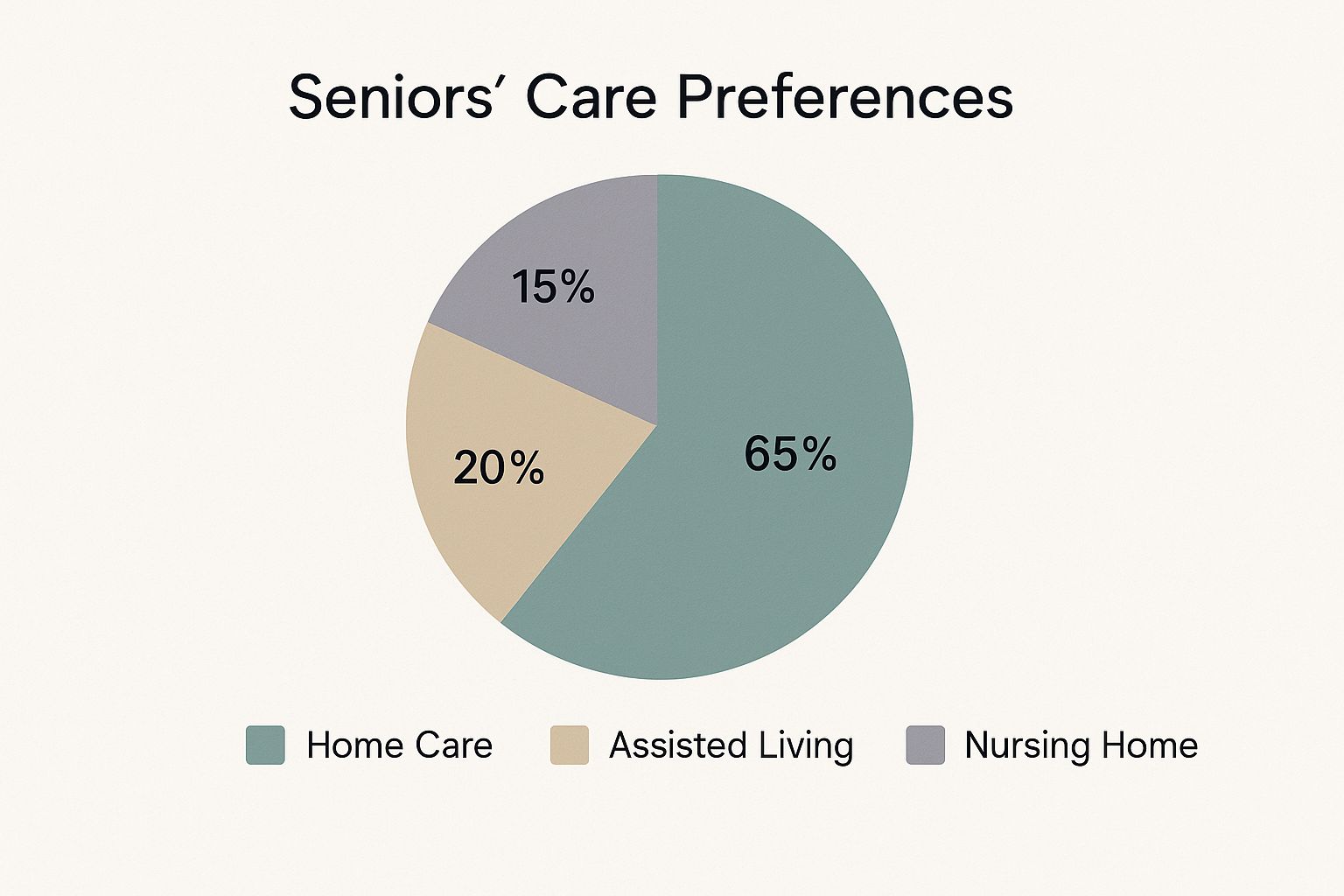
Making this option financially viable is more important than ever.
Understanding Your Coverage Options
So, how do you pay for it? Several resources can help cover the cost of skilled home health care. Getting familiar with them is the key to building a solid financial plan.
- Medicare: This is often the first stop for many families. Medicare can cover intermittent skilled nursing and therapy services when ordered by a doctor and the patient meets specific "homebound" criteria.
- Medi-Cal: As California's Medicaid program, Medi-Cal can cover certain home health services for those who qualify based on income and need.
- Private Health Insurance: Many private plans include benefits for home health care. The amount of coverage depends on your specific policy.
- Long-Term Care Insurance: If you or your loved one planned ahead with a long-term care policy, this is exactly what it was designed for.
How Central Coast VNA & Hospice Can Help
With over 74 years of local, nonprofit service, we at Central Coast VNA & Hospice have helped countless families on the Central Coast work through these financial questions. Our mission has always been to provide compassionate care to everyone who needs it in Monterey, San Benito, Santa Cruz, and South Santa Clara counties.
We’ll help you make sense of your benefits and access the care you need. Our team can verify your insurance coverage and walk you through what services are available under your plan. We’re here to take the guesswork out of it and give you peace of mind.
We firmly believe that financial worries shouldn't stand in the way of receiving excellent medical care at home. That's why we accept Medicare, Medi-Cal, the Central California Alliance for Health, Blue Shield, and a wide range of other private insurance plans. Our intake specialists will work directly with you and your insurance provider to make sure everything is coordinated smoothly.
Planning for Long-Term Financial Health
Thinking ahead is a crucial part of the aging-in-place journey. A little bit of financial planning today ensures that resources will be there when they're needed most. This could mean setting aside savings or looking into safe investments for seniors.
Being proactive gives families the confidence they need to support a loved one's wish to stay at home for the long haul. If you have questions, please reach out. We’re here to help you and your family find the best path forward.
Making the Home a Safe Haven for Aging in Place
For anyone hoping to age gracefully in their own home, making that space safe and functional is non-negotiable. It's about more than just a quick tidy-up. We're talking about thoughtful, practical changes that reduce risks and increase independence.
These aren't massive, disruptive renovations. Think of them as smart tweaks that make everyday life a whole lot easier and safer. When your loved one can move around their home with confidence, you've laid the groundwork for a successful long-term care plan.
Room-by-Room Practical Safety Tips
Often, the simplest changes make the biggest difference. By focusing on the rooms where your loved one spends the most time, you can get some quick wins on the safety front.
- The Bathroom: This is ground zero for falls. Installing grab bars, putting down non-slip mats, and adding a raised toilet seat can be absolute game-changers for safety.
- Living Areas and Hallways: Your main goal here is to create clear, uncluttered paths. Secure any loose rugs with double-sided tape and make sure all cords are tucked safely out of the way.
- The Kitchen: Keep it accessible. Move the dishes, foods, and pots they use most often to lower shelves to eliminate the need for a risky step stool. Good lighting is also a must.
Getting the clutter under control is a huge part of this. For some great ideas, check out these effective decluttering tips for seniors. Little adjustments like these empower seniors by making their home work for them, not against them.
Why a Professional Home Assessment Matters
At Central Coast VNA & Hospice, we know the home environment is just as important as the clinical care we provide. That’s why our Physical and Occupational Therapists are such an essential part of the team. They don't just look at a person's physical health; they look at how that person functions within their own four walls.
A trained therapist brings a clinical eye to the home. They spot the subtle risks that family members, with the best of intentions, might miss—like poor lighting on a stairwell or a favorite armchair that’s become difficult and unsafe to get out of.
During a home visit, our Occupational Therapist might suggest a tool like a long-handled shoehorn to avoid bending. A Physical Therapist will analyze how your loved one moves from the bedroom to the bathroom, ensuring the path is safe. This hands-on, proactive approach is fundamental to preventing falls in the home.
Smart Technology for Extra Peace of Mind
Today’s technology offers some incredible tools that act as a safety net for seniors living alone. These devices are fantastic for adding an extra layer of security, giving both your loved one and your family incredible peace of mind.
This isn't just a niche market; it's a reflection of a major shift in how we approach senior care. Here are a few technologies worth considering:
- Personal Emergency Response Systems (PERS): These are the classic wearable pendants or bracelets with a button that calls for help. They are simple, effective, and life-saving.
- Automated Medication Dispensers: Forgetting medication or taking the wrong dose is a common and dangerous problem. These devices sort and dispense the right pills at the right time.
- Smart Home Devices: Voice-activated lights, thermostats, and even door locks can be a huge help for someone with limited mobility, giving them easy control over their environment.
For families throughout Monterey, San Benito, Santa Cruz, and South Santa Clara counties, our team at Central Coast VNA & Hospice can help you weave these practical strategies into a holistic care plan. By blending professional clinical support with a safe, thoughtfully adapted home, we help seniors live with dignity and independence for years to come.
A Partner for the Entire Journey: CCVNA’s Continuum of Care
When you’re thinking about in-home care, you're not just solving a problem for today. You’re planning for what’s next. A person's health needs rarely stay the same. The real key to aging in place successfully is finding a partner who can adapt right along with you.
This is the very idea our services at Central Coast VNA & Hospice are built on. As the only local nonprofit in our area offering a full continuum of care, we provide consistency and peace of mind from one trusted team. You won’t have to scramble to find a new agency if your loved one’s health changes.
Whether the need is for post-surgery recovery, managing a long-term illness, or providing dignity at the end of life, our team is there for the entire journey. This is our nonprofit mission.
Home Health Care: Bridging the Gap from Hospital to Home
For many families, the journey starts with a need for skilled Home Health care. This isn't long-term assistance; it's short-term, medical support ordered by a doctor to help someone recover safely at home. Think of it as the crucial bridge between intensive medical treatment and getting back on your feet.
Here’s a real-world scenario: A Santa Cruz County resident has a heart attack. After surgery, their doctor orders home health care to ensure their recovery stays on track.
In this situation, our CCVNA team would step in to provide:
- Skilled Nursing: A Registered Nurse visits to check vitals, manage complex cardiac medications, and teach the family about important lifestyle changes.
- Physical Therapy: A Physical Therapist designs a gentle exercise plan to safely rebuild strength and endurance.
- Occupational Therapy: An Occupational Therapist helps them re-learn how to manage daily life—like getting dressed or making a meal—while their body is still healing.
This focused support helps prevent complications and keeps people from ending up back in the hospital. You can see more details about our home health care services and how they work.
Palliative Care: For Comfort and Quality of Life
Sometimes, a person is dealing with a serious, chronic illness like advanced COPD, cancer, or congestive heart failure. They might still be pursuing treatment, but the day-to-day symptoms can become overwhelming. This is exactly where Palliative Care makes a difference.
Palliative Care is an extra layer of support that focuses on providing relief from the symptoms and stress of a serious illness. The goal is simple: to improve quality of life for both the patient and the family, right at home.
A person can receive palliative support at any stage of their illness, even while getting curative treatments. Our specialized team, which includes a Nurse Practitioner and a Medical Social Worker, works directly with the patient’s own doctor to manage symptoms. We also provide crucial emotional and spiritual support.
Hospice Care: Honoring a Final Chapter with Dignity
When an illness progresses and the goal shifts from cure to comfort, Hospice Care begins. It’s not about giving up. It’s a philosophy of care that honors a person’s final chapter by wrapping compassionate support around them and their family.
For over 74 years, our hospice program has been a core part of our nonprofit mission here in Monterey, San Benito, Santa Cruz, and South Santa Clara counties. Our dedicated team—a physician, Registered Nurse, Hospice Aide, Chaplain, and Medical Social Worker—works as one unit. Together, we manage symptoms while providing the emotional and spiritual care that honors a person’s final wishes.
Frequently Asked Questions About Senior Home Care

When you first start looking into senior home care to age in place, it's completely normal to have a long list of questions. This is a big decision for your family, and the responsibility can feel immense. You want to make sure you get it right.
As a local nonprofit with over 74 years of history, our goal at Central Coast VNA & Hospice is to provide clear, reassuring answers. We want to give you the information you need to feel confident and empowered as you move forward.
What is the difference between home health care and personal care?
This is a critical distinction. Home health care is skilled, clinical medical care that must be prescribed by a doctor. It's provided by licensed professionals like Registered Nurses and therapists to help someone recover from an illness or manage a complex health condition.
Personal care, often called "custodial care," is non-medical. This includes assistance with daily tasks like bathing, dressing, and light housekeeping. Central Coast VNA & Hospice specializes in providing expert clinical home health, palliative, and hospice services.
How do we know when it’s the right time for professional home care?
It’s usually not one big event but a series of small, accumulating signs that more support is needed. It might be time to have a conversation about professional care if your loved one is struggling with daily tasks, experiencing more frequent falls, or having trouble managing their medications. It's always better to be proactive; a professional assessment from one of our CCVNA clinicians can give your family a clear picture of the support needed before a crisis hits.
Are CCVNA services available in my area?
Yes. Central Coast VNA & Hospice was founded here and has been a trusted local resource for more than 74 years. Our commitment is to our neighbors. Our dedicated teams proudly serve families and individuals across Monterey County, San Benito County, Santa Cruz County, and South Santa Clara County.
How does the care process begin with CCVNA?
It all starts with a referral. Typically, this comes directly from a physician, a hospital discharge planner, or a specialist who feels you could benefit from skilled medical care at home. Once we get that referral, one of our experienced Registered Nurses will set up an initial in-home visit to conduct a thorough assessment and collaborate with your doctor to build a personalized plan of care.
Can we keep our own doctor if we use CCVNA services?
Of course. The answer is a firm yes. Our job isn't to replace your doctor; it's to become a key part of their care team. Think of our nurses and therapists as an extension of your doctor's practice, bringing their prescribed care plan to life right in your home while keeping them updated on all progress.
Are you ready to learn more about how Central Coast VNA & Hospice can support your family with compassionate, expert care at home? Contact us today to discuss your needs and find out how our continuum of care can help your loved one age in place with dignity and peace of mind. Visit us at https://ccvna.com.