
When you or a loved one is living with a serious illness, it can feel like your entire world has been turned upside down. Between the constant doctor's appointments, a confusing array of medications, and the sheer physical and emotional toll, it’s easy to feel overwhelmed.
This is where palliative home health comes in. It’s a specialized type of medical care that adds an extra, crucial layer of support, all from the comfort of your own home. The focus is simple but profound: to relieve the symptoms, pain, and stress of a serious illness, ultimately improving the quality of life for both you and your family.
Defining Palliative Care at Home
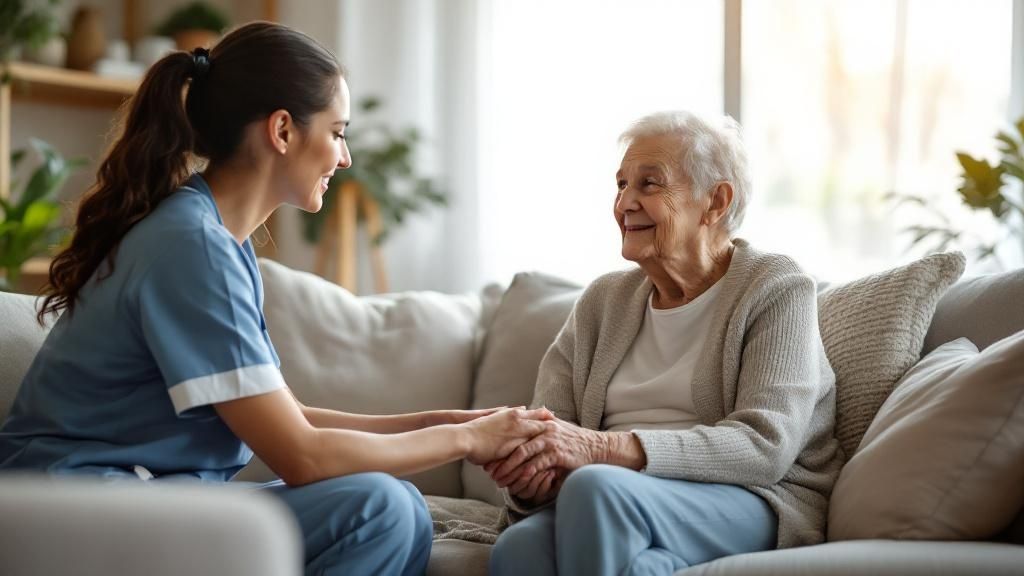
It’s a common and understandable point of confusion, but palliative care is not the same thing as hospice. They are two distinct philosophies of care designed for different stages of a health journey.
The most important difference is this: palliative care is available at any age and at any stage of a serious illness, and you can receive it right alongside treatments meant to cure you. Hospice care, on the other hand, is for individuals who have decided to no longer seek curative treatment and have a life expectancy of six months or less.
Palliative Home Health vs. Hospice Care at a Glance
To help clarify, here's a quick comparison of the two:
| Care Aspect | Palliative Home Health | Hospice Care |
|---|---|---|
| Timing of Care | Can begin at diagnosis and be provided alongside curative treatment. | Begins after stopping curative treatment, typically with a prognosis of 6 months or less. |
| Primary Goal | To improve quality of life and relieve symptoms of a serious illness. | To provide comfort and support at the end of life. |
| Treatment Focus | Works in conjunction with curative treatments (chemotherapy, dialysis, etc.). | Focuses exclusively on comfort care and symptom management; curative treatments are stopped. |
| Patient Eligibility | Anyone with a serious, chronic, or complex illness, regardless of prognosis. | Individuals with a terminal illness and a life expectancy of 6 months or less. |
Understanding this distinction is key for families to access the right support at the right time. Palliative care is about adding support, not taking away hope.
Your Extra Layer of Support
Think of palliative home health as a dedicated support team focused entirely on your comfort and well-being. This isn't about giving up on your recovery; it's about gaining more control over your day-to-day life and finding genuine relief from the burdens of your condition. A palliative care team creates a plan that is clear and individualized, reflecting your needs, preferences, and goals. This focus on the whole person—not just the disease—is what makes this type of care so impactful.
For over 74 years, Central Coast VNA & Hospice has delivered this exact kind of mission-driven, nonprofit care. Our skilled teams of Registered Nurses, Medical Social Workers, and other compassionate professionals serve patients across Monterey County, San Benito County, Santa Cruz County, and South Santa Clara County.
Our primary goal is to improve your quality of life by:
- Managing complex symptoms like pain, fatigue, nausea, and shortness of breath.
- Providing vital emotional and spiritual support for both you and your family.
- Coordinating care between all of your different doctors and specialists to ensure everyone is on the same page.
- Helping you navigate difficult medical decisions so you feel empowered and informed.
This collaborative approach ensures your care is seamless and that your voice is always at the center of the conversation. To learn more, explore the details of our palliative care services.
The Real Benefits of Receiving Care at Home
Navigating a serious illness often means a whirlwind of doctor's offices, hospital stays, and medical tests. It's draining, to say the least. Palliative home health care offers a different path—one that allows you or your loved one to manage symptoms and stress from the most healing place there is: home.
This isn't just about convenience. It’s about getting back a sense of control and normalcy. Being in your own space, surrounded by family, and sticking to familiar routines can dramatically lower stress and anxiety, often leading to fewer ER trips and hospital stays.
Improving Quality of Life Daily
The most significant benefit of in-home palliative support is its focus on your overall quality of life. This goes way beyond just treating pain or nausea with medication. It’s about figuring out how those symptoms are getting in the way of what matters to you, whether that's enjoying a meal or tending to your garden.
At Central Coast VNA & Hospice, our teams of Registered Nurses and Medical Social Workers look at the whole picture. We work not only to ease physical symptoms but also to provide the emotional and practical support that brings back peace of mind and dignity.
The core of palliative home health is its patient-centered philosophy. It empowers you and your family to take a more active role in the care journey, ensuring that your personal values and goals guide every decision.
This personalized care is becoming recognized as a vital part of modern healthcare. The global need for these services is on the rise, with the palliative care market expected to hit USD 18.9 billion by 2032 (Dataintelo, 2024). This trend shows a growing understanding of how supportive care truly helps people living with chronic illness. You can find more details on this trend from the global palliative care market report.
A Collaborative and Supportive Team
Our team approach is all about providing complete, wrap-around support. For our patients in Monterey County, San Benito County, Santa Cruz County, and South Santa Clara County, that means you have a dedicated group of professionals all working together on a single, unified care plan.
Think of this plan as a living document that changes as your needs do. It makes sure everyone—from your family doctor to your CCVNA nurse—is on the same page. This level of coordination is key to managing symptoms well and helping you feel more secure and supported every step of the way. To see how this fits into our broader mission, take a look at our home health care services and get the full picture of the support we offer.
Who Can Benefit From Palliative Home Health?

One of the biggest misunderstandings about palliative care is that it's only for the end of life. That couldn’t be further from the truth. Eligibility for palliative home health isn't about a person's prognosis; it's all about their current quality of life and the challenges of living with a serious illness.
If you or a loved one is living with a condition that causes difficult symptoms and makes daily life a struggle, you are likely a candidate. The whole point is to provide relief and support right now, regardless of what the long-term outlook might be.
Recognizing the Need for Support
It can be tough to admit when you need extra help, but palliative care is specifically designed to be brought in early on in a health journey. It works hand-in-hand with your current medical treatments, adding a layer of support, not replacing them.
You may benefit from palliative care if you are dealing with:
- A serious illness: Conditions like cancer, chronic heart failure (CHF), COPD, kidney disease, dementia, or ALS often bring a heavy symptom burden that’s hard to manage alone.
- Difficult-to-manage symptoms: This can be anything from persistent pain, shortness of breath, and fatigue to nausea, loss of appetite, or anxiety that gets in the way of your day.
- Frequent hospitalizations: If you’re making regular trips to the ER or being admitted to the hospital, palliative care at home can help manage symptoms before they reach a crisis point.
The key thing to remember is that you can—and absolutely should—seek this support while still pursuing treatments meant to cure, like chemotherapy or dialysis. For families across the Central Coast, from Monterey to Santa Cruz County, simply recognizing these signs is the first and most important step toward a better quality of life.
Who Is a Good Candidate?
Palliative home health is for anyone whose physical and emotional well-being is being worn down by a serious medical condition. Think of someone going through cancer treatment who is struggling with severe nausea and fatigue. A palliative team can step in to manage those side effects, making it possible for them to continue their life-saving therapy with far greater comfort.
Or, consider someone with advanced heart failure who experiences constant shortness of breath and the anxiety that comes with it. A palliative team can provide medication management and coping strategies right at home, which often reduces those stressful, late-night trips to the emergency room. This is completely different from end-of-life care, a topic you can learn more about by understanding what hospice care is and how it serves a very distinct purpose.
Ultimately, if an illness is getting in the way of living your life, palliative care can help. The best way to know for sure is to talk with your doctor or contact Central Coast VNA & Hospice directly to see if this supportive service is the right fit for your family.
Meet Your Compassionate Care Team
When you choose palliative home health, you're not just getting a single professional. You're bringing an entire team of dedicated professionals into your corner. This group works in concert to build a care plan that looks beyond physical symptoms to address the emotional, social, and spiritual weight that a serious illness can bring.
At Central Coast VNA & Hospice, this is the heart of what we do. With over 74 years of nonprofit service across Monterey, San Benito, Santa Cruz, and South Santa Clara Counties, we’ve learned that real comfort means caring for the whole person. Think of your team as a circle of support, walking right beside you and your family on this journey.
Who Is on Your Palliative Care Team?
Each person on your team has a unique role and a special set of skills, making sure every part of your well-being is looked after. It's an integrated approach designed so that nothing falls through the cracks and your care feels as seamless as possible.
Your core team will generally include:
- Registered Nurse (Case Manager): This is your go-to person. They’re experts in managing pain and other symptoms, explaining medications, and coordinating all the clinical pieces of your care.
- Medical Social Worker: They provide a steady hand for emotional support and counseling. They also help with the practical side of things, like figuring out insurance or connecting you with helpful community resources.
- Chaplain: Offering nondenominational spiritual support, our chaplains are here to help you and your family find a sense of peace and meaning, whatever your personal beliefs may be.
- Home Health Aide: These compassionate professionals assist with personal tasks like bathing and dressing. Their help preserves dignity and eases the daily physical burden on family members.
Working Together for You
The real power of palliative care is how these different experts come together. For instance, your Registered Nurse might notice that your pain seems worse when you're feeling anxious. They can then pull in the Medical Social Worker to explore coping strategies while the Chaplain offers spiritual comfort, tackling the root of the distress from every angle.
This wrap-around support model is what defines high-quality palliative care. It’s a commitment to your total well-being, ensuring that physical relief is matched with emotional and spiritual peace. For this to work, great communication is essential. The team has to be in constant contact, sharing insights and adjusting the plan as your needs change.
This level of teamwork is becoming more important than ever as families seek out more complete support. In fact, the global palliative care market is projected to hit $265 billion by 2031 (iHealthcareAnalyst, 2024), a clear sign that more people are recognizing the need for this kind of multidimensional care. You can learn more about this trend by reading the full research on the global palliative care market.
Your Palliative Care Journey Step by Step
Starting a new kind of care can feel like a lot to take in, but beginning palliative home health is a clear, supportive process that always puts you first. At Central Coast VNA & Hospice, we walk you through every step, making sure there's no confusion. We want you and your family to feel confident and secure, knowing we're in this together.
It all starts with a simple referral. This can come straight from your doctor, or you or a family member can request it. Once we have it, our team gets in touch to set up an initial conversation. That first meeting is really all about listening to hear about your health challenges and understand your personal goals.
Developing Your Personalized Care Plan
After our initial talk, our interdisciplinary team works together to map out your personalized care plan. This isn't some one-size-fits-all document; it’s a living, breathing roadmap built entirely around what you need and want. The plan outlines exactly how we'll manage your symptoms, how often your Registered Nurse and other team members will visit, and how we'll coordinate everything with your other doctors.
You and your family are at the very center of this planning. Nothing is decided without your input and approval. This plan becomes our shared guide to making your quality of life the best it can be.
This infographic gives a simple snapshot of how we track your progress and adjust your care to keep you comfortable and meet your goals.
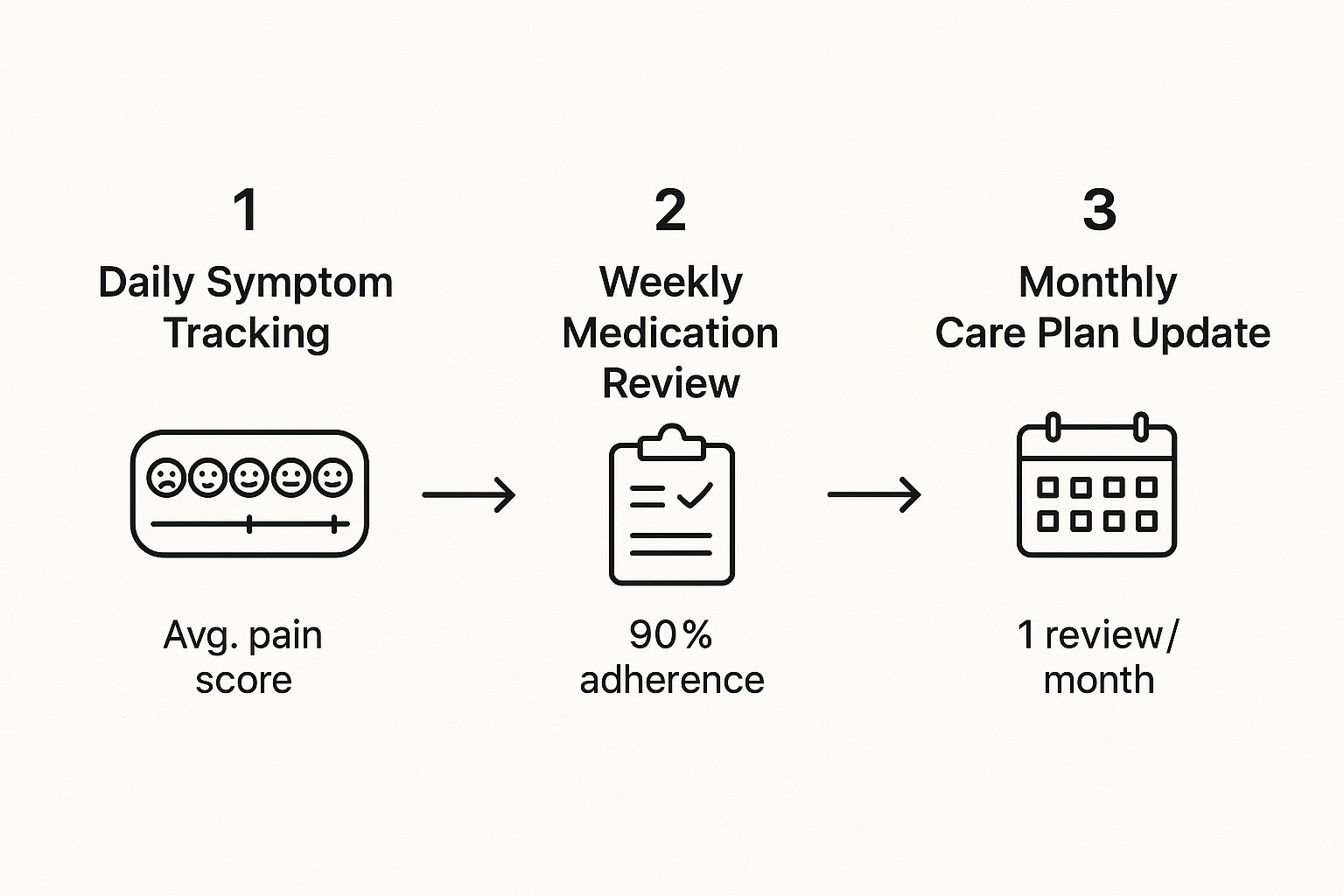
As the image shows, it's a continuous cycle of monitoring symptoms, reviewing medications, and updating your plan. This ensures your care is always in sync with your current needs. For many, an important part of the palliative care journey involves making sure future wishes are understood and honored. Using an end-of-life planning checklist can be a huge help in guiding those important family conversations.
Regular Visits and Ongoing Support
Once your care plan is set, your team will start making regular home visits. These visits are much more than just medical check-ins; they're our chance to build a real, trusting relationship with you. Your Registered Nurse will assess symptoms and manage medications, while other team members are there to provide emotional and practical support.
Your palliative home health team is a consistent, reliable presence in your life. We are your advocates, partners, and a constant source of support, available by phone whenever you need us between scheduled visits. This steady support, delivered right in the comfort of your home in Monterey County, San Benito County, or our other service areas, is what makes the journey manageable.
How Is Palliative Home Health Funded?

When families first consider palliative home health, one of the very first questions that comes up is, "How are we going to pay for this?" It's a completely valid concern. Financial worries should never stand in the way of getting the comfort and support your family needs.
The good news is that palliative care is recognized as a medical specialty, just like cardiology or oncology. This means it's generally covered by Medicare Part B, Medi-Cal, and most private insurance plans. Our team at Central Coast VNA & Hospice is here to help you make sense of your specific coverage and clear up any financial questions you have.
How Insurance Covers Palliative Services
It helps to think about palliative care coverage in the same way you would for any other specialist visit. Your plan helps pay for the services of our expert team, which includes Registered Nurses and Medical Social Workers who work right alongside your primary doctor.
It’s really important to know that this is completely separate from the Medicare Hospice Benefit. Palliative care is a distinct service you can receive while you are still pursuing treatments to cure your illness, and the way it's funded reflects that. Getting this distinction right is key to accessing the proper care at the right time. For more on end-of-life care funding, you can learn more about how hospice care is funded in our detailed guide.
The most important thing to remember is that palliative care is a covered medical service designed to be accessible. For families here in Monterey, San Benito, Santa Cruz, and South Santa Clara counties, our commitment as a nonprofit is to give you clear, straightforward information. We believe in empowering you with the knowledge to make confident decisions about your health and well-being.
Frequently Asked Questions About Palliative Home Health
When you're navigating a serious illness, it’s natural to have a lot of questions. We’ve put together answers to some of the most common ones we hear from families considering palliative home health. Our goal is to give you clarity and confidence as you explore your options.
Can I Keep My Current Doctor?
Yes, absolutely. Think of our palliative team as an extra layer of support for you and your family. We work with your primary doctor and any specialists you’re already seeing, supplementing the trusted medical relationships you've built—not replacing them.
Do I Have to Stop My Other Treatments?
No, you don’t. This is one of the biggest differences between palliative care and hospice. You can receive palliative home health while you’re actively pursuing treatments meant to cure or control your illness, like chemotherapy or radiation.
How Often Will the Palliative Team Visit?
The frequency of our visits is built around you. After our first assessment, we’ll work with you and your family to create a personalized visit plan. If your needs change, we adjust the schedule, and we’re always just a phone call away between visits.
Is Palliative Care Only for Cancer?
Not at all. Palliative care is here to support anyone living with the challenges of a serious illness. We often help people with conditions like heart failure (CHF), COPD, kidney disease, Alzheimer's or other dementias, and ALS (Lou Gehrig's disease).
Who Is on the Palliative Care Team?
Your team is a group of specialists working together for you. It typically includes a Registered Nurse for symptom management, a Medical Social Worker for emotional and practical support, a Chaplain for spiritual care, and a Home Health Aide for personal care assistance.
How Do We Get Started With Central Coast VNA & Hospice?
Getting started is simple. You can ask your doctor for a referral to Central Coast VNA & Hospice for palliative care, or you can just give us a call directly. Our team is ready to walk you through the process and answer any other questions you might have for our service areas in Monterey County, San Benito County, Santa Cruz County, or South Santa Clara County.
Are you ready to add an extra layer of compassionate support to your care journey? The team at Central Coast VNA & Hospice is here to help you live more comfortably and with greater peace of mind. Learn more about our services and contact us today.