
When families face the tough question of hospice care, a common belief is that it’s only for the last few days of life. This is one of the biggest myths. The reality is that hospice is designed to improve quality of life for months, not just hours.
It’s about shifting the focus from trying to cure an illness to maximizing comfort. It helps preserve dignity and create cherished moments with loved ones.
Rethinking Hospice: More Than Just the Final Days
Deciding when to think about hospice is one of the most emotional journeys a family can take. For many, the word "hospice" feels like a last resort. It feels like something you turn to when there are no other options left.
This misunderstanding often keeps people from getting support when it could help the most. Here at Central Coast VNA & Hospice, we have served families for over 74 years. We work across Monterey, San Benito, Santa Cruz, and South Santa Clara counties.
In all that time, we've seen a different truth. Hospice isn’t about giving up; it’s about taking back control. It’s an active choice to prioritize comfort and make life as good as it can be.
Shifting Focus from a Timeline to Quality of Life
The real purpose of hospice is to provide a layer of support around a person with a life-limiting illness. This care addresses physical, emotional, and spiritual needs. Instead of counting down the days, the goal becomes making each day meaningful and comfortable.
This approach benefits the person who is ill. It also offers incredible relief and guidance to the entire family. Many families tell us they're surprised that starting hospice earlier can lead to better outcomes.
Hospice provides:
- Expert Symptom Control: A team of Registered Nurses and physicians works to manage pain, shortness of breath, and other symptoms.
- Fewer Hospital Visits: With expert support at home, many crises can be managed without stressful trips to the emergency room.
- Emotional and Spiritual Support: Our chaplains and medical social workers help patients and families navigate complex emotions and find peace.
- Feeling Empowered: When you choose hospice, you have more say in your care. Your wishes are honored in the comfort of your own home.
Hospice is a Longer-Term Support System
Many families now see that hospice offers valuable support long before the final days. According to the National Hospice and Palliative Care Organization (NHPCO), over 1.72 million Medicare beneficiaries received hospice services in 2020 (NHPCO, 2021). Many received care for several months.
This shows that hospice is becoming a trusted, longer-term option for people with advanced illnesses. If you’re exploring your options, getting the real story is important. We've laid out the facts and busted the myths in our guide, Hospice Isn't What You Think.
Recognizing The Signs That It Might Be Time For Support
Deciding when hospice might be helpful isn't about looking at a calendar. It's about paying attention to real changes in a loved one's health and daily life. Spotting these signs early allows families to explore options before a crisis hits.
Many families in Monterey and Santa Cruz counties wait until the final days because they aren't sure what to look for. But understanding key indicators can bring clarity to a confusing time. Seeing these signs is about recognizing that a different kind of care is needed to improve quality of life.
Clinical Signs To Watch For
A serious illness often leaves clues. While only a doctor can determine hospice eligibility, families can see day-to-day patterns. These signs suggest it’s time to have a conversation about hospice.
Some of the most common things to look for include:
- Frequent Hospital or ER Visits: Repeated hospital stays for the same symptoms often mean the illness is getting harder to control.
- Worsening Symptoms: Pain, shortness of breath, nausea, or fatigue that becomes a constant struggle, even with medical treatments.
- Significant Weight Loss: Unintentional weight loss can be a sign that the body is working much harder to function.
- Decline in Function: A noticeable drop in the ability to move around, get out of bed, or handle daily tasks without help.
This chart helps show how the focus can shift from treatment to comfort-focused support.
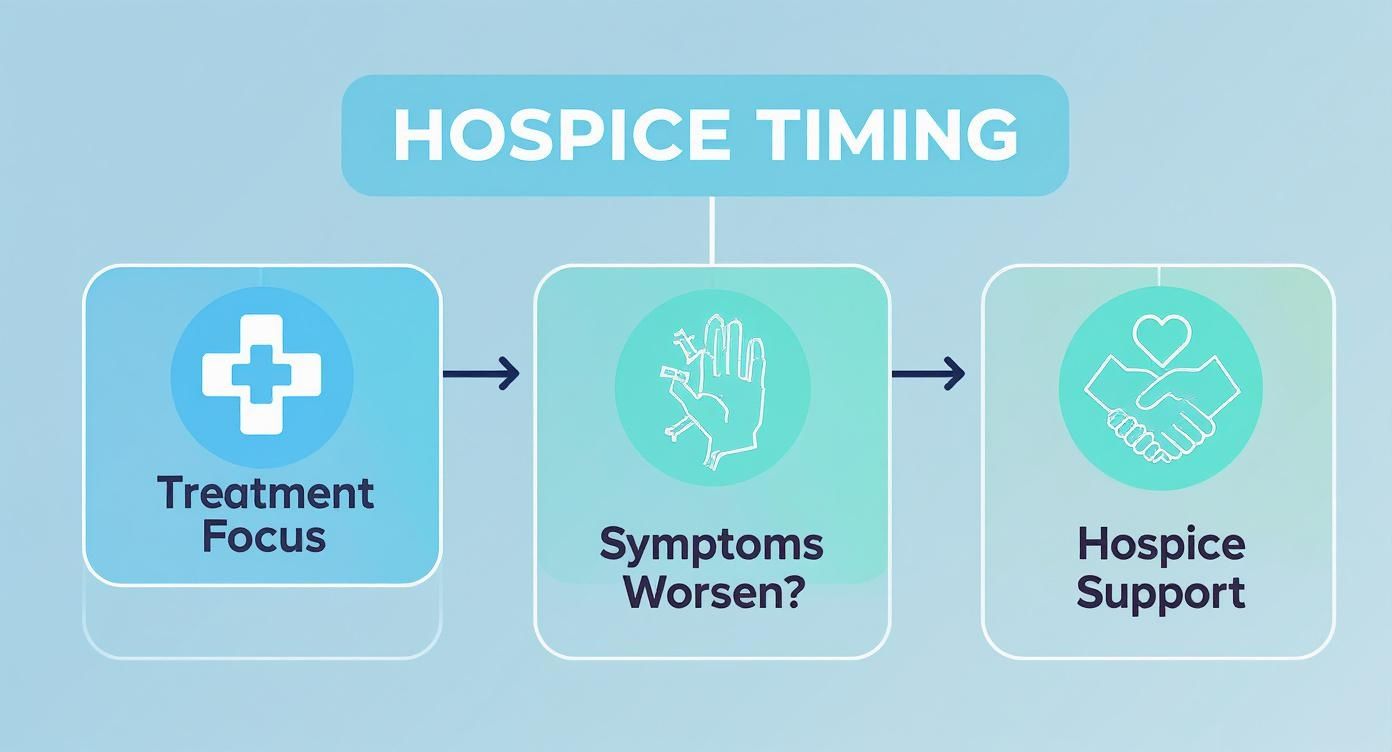
When treatments stop providing relief and symptoms worsen, hospice becomes a path toward comfort.
Personal and Emotional Indicators
Changes in a person’s spirit and daily routines offer important clues. These shifts can be subtle at first. Together, they often show a growing need for a different kind of support.
Pay close attention to these kinds of changes:
- Increasing Need for Help: A growing reliance on others for activities like bathing, dressing, or eating.
- Withdrawing from Hobbies and Social Life: Losing interest in people and passions that once brought joy.
- Spending More Time in Bed or a Chair: A major increase in time spent sleeping or resting, which points to a drop in energy.
- Growing Family Caregiver Strain: The physical and emotional toll on family becomes overwhelming.
Hospice care is designed to support not only the patient but the entire family. Recognizing caregiver stress is crucial, as it acknowledges that the burden of a serious illness is shared.
These personal shifts are just as meaningful as any clinical measurement. To better navigate the complex feelings that arise, families might find resources on understanding loss, grief, mourning, and bereavement helpful.
For a more detailed look at what to look for, you can learn more about how you know when hospice is needed in our helpful guide.
How Early Hospice Care Enhances Quality of Life
Many families feel that choosing hospice means giving up hope. It’s a powerful fear. But embracing hospice is a proactive choice to put comfort, dignity, and cherished time first.

When support starts sooner, the benefits are profound for everyone. We’re not just talking about managing symptoms in the final days. We’re talking about making life better for weeks or even months.
Expert Pain and Symptom Management
One of the greatest gifts of early hospice care is expert symptom management at home. When pain, shortness of breath, or anxiety are under control, a person can engage more with family. Our team of Registered Nurses and physicians are specialists in this area.
This specialized focus can reduce the need for stressful emergency room visits. Instead of reacting to one crisis after another, the care team works to anticipate needs. This ensures stability and peace of mind.
Research shows hospice can reduce ER visits and improve pain management. It can also increase family satisfaction. When care starts earlier, those benefits are stronger.
A Holistic Safety Net for Emotional and Spiritual Needs
A serious illness takes a toll on more than just the body. It deeply impacts emotional and spiritual well-being. Hospice care, especially when started early, provides a multi-layered support system.
This is where the value of a nonprofit provider like Central Coast VNA & Hospice shines. Our interdisciplinary team includes:
- Medical Social Workers who help families navigate complex emotions and guide difficult conversations.
- Chaplains who offer spiritual support tailored to each person’s beliefs, providing a comforting presence.
- Hospice Aides who provide compassionate personal care that preserves dignity and eases the physical burden on family.
This team works together to create a circle of support. Knowing how to provide gentle care is vital, especially for individuals with dementia. Families can find essential care tips for dementia patients to help them connect.
Hospice is about adding life to days, not just days to life. By focusing on comfort and holistic support, we empower individuals to live their remaining time with meaning and purpose.
The care provided by hospice is similar to palliative care. You can learn more about the benefits of palliative care and how it can serve as a bridge to hospice.
Choosing hospice earlier means choosing more time for connection and peace at home. Whether in Salinas, Hollister, or Santa Cruz, our team ensures every patient’s final chapter is lived with dignity.
Understanding Hospice Eligibility and How to Get Started
Figuring out the path to hospice care can feel overwhelming. But it’s often more straightforward than families realize. Having the right information empowers you to make confident decisions.
The main requirement for hospice is a doctor's certification. The doctor must certify that a person has a life-limiting illness with a prognosis of six months or less, if the illness runs its natural course. This is not an expiration date—it's a medical guideline for services to begin.
What the Six-Month Guideline Really Means
It is important to see the six-month timeframe as a flexible benchmark, not a hard deadline. Many people receive hospice care for longer than six months. As long as a physician certifies that the condition remains life-limiting, they will be eligible.
Choosing hospice is never a permanent decision. A person can stop hospice services at any time. If their condition improves or they want to try a new treatment, they can disenroll and re-enroll later.
How to Start the Conversation and Get a Referral
The journey to hospice usually starts with a simple conversation. It can be started by the patient, a family member, or a doctor. The best first step is to talk with their doctor about their condition and care goals.
The process typically looks like this:
- Talk with a Doctor: Share your observations about your loved one’s health. Ask if a hospice consultation would be appropriate.
- Hospice Referral: The doctor can make a referral to a provider like Central Coast VNA & Hospice. You can also contact us directly to ask questions.
- Informational Visit: Our local team can meet with you and your family. We'll explain our services in plain language, with no pressure.
Starting the conversation early is key. An informational visit isn’t a commitment. It’s a chance to get facts and find support from a local team.
Easing Financial Worries with the Medicare Hospice Benefit
One of the biggest reliefs for families is learning that hospice care is typically covered at 100% by Medicare. This coverage is also provided by Medi-Cal and most private insurance plans. It is designed to lift the financial burden so families can focus on quality time.
The Medicare Hospice Benefit generally covers everything related to the terminal illness, including:
- Care from the hospice team (Registered Nurses, Hospice Aides, Social Workers, etc.)
- Medical equipment, like a hospital bed or oxygen
- Medical supplies, such as bandages and catheters
- Medications for pain relief and symptom management
- Emotional and spiritual support for the patient and family
At Central Coast VNA & Hospice, our nonprofit mission means we provide care to everyone who is eligible, regardless of ability to pay. To see the specific criteria, you can explore our guide on hospice eligibility requirements.
Our Legacy of Compassionate Community Care
Choosing a healthcare partner is a deeply personal decision. What sets Central Coast VNA & Hospice apart is our nonprofit mission and deep roots in the communities we serve. For over 74 years, we’ve been a trusted local resource for families across Monterey, San Benito, Santa Cruz, and South Santa Clara counties.
We are part of the fabric of this community. Our legacy is built on a promise to deliver compassionate, high-quality care that honors the whole person. This mission guides every decision we make.
A Team-Based Approach to Comfort and Support
True comfort care demands a coordinated effort from a team of dedicated professionals. At CCVNA, our interdisciplinary team works together. This creates a seamless circle of support around each patient and their family.
Our dedicated hospice care teams include:
- Registered Nurses who are experts in managing pain and other symptoms, making sure patients remain comfortable.
- Hospice Aides who provide gentle, hands-on personal care that preserves dignity.
- Medical Social Workers who offer crucial emotional support and help navigate difficult family conversations.
- Chaplains who provide non-denominational spiritual care, offering a comforting presence.
Our care planning often begins with advance care discussions—not just end-of-life referrals. As a nonprofit rooted in the Central Coast for over 74 years, our teams guide families with compassion and clarity.
More Than Just Care—It’s a Community Commitment
Our commitment doesn't end when a patient's illness does. We understand that grief is a long journey. We offer bereavement support services to loved ones for up to a year after a loss.
Being a nonprofit means our success is measured by the quality of comfort we provide. Every decision is guided by what is best for the patient.
Our long history in areas from Salinas to Hollister gives us a unique understanding of our community's needs. We are your neighbors. To see how this commitment makes a difference, you can read more about how Central Coast VNA & Hospice impacts lives.
Navigating the Conversation About Hospice
Talking about hospice can feel like one of the toughest conversations you’ll ever have. But opening up this discussion sooner can bring relief and clarity. It helps ensure your loved one’s wishes are heard and honored.
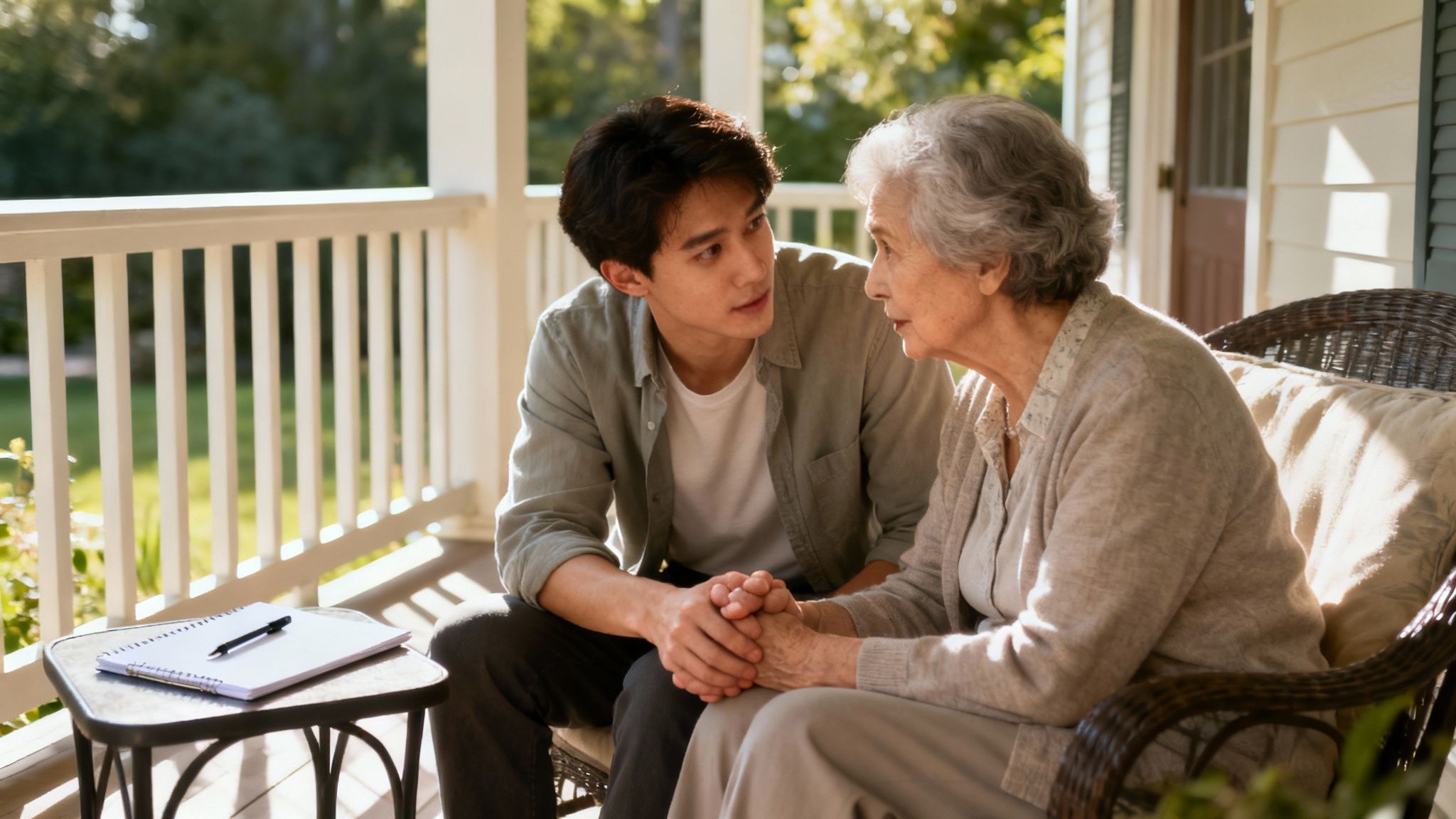
The trick is to approach it with compassion. Focus on shared goals like comfort, dignity, and quality of life. This feels less like an ending and more like planning the best path forward together.
How to Gently Begin the Conversation
Finding the right words is often the biggest hurdle. You don’t have to jump straight to the word "hospice." Instead, you can open a broader chat about their feelings and goals.
Here are a few ways you might start:
- "I've been thinking about what's most important to you. Could we talk about your hopes for the coming months?"
- "I've noticed you've been having some tough days. What would make you feel more comfortable at home?"
- "I was reading about ways to get extra support at home. Would you be open to learning about them with me?"
Tips for a Productive and Caring Discussion
Once the door is open, how you listen is just as important as what you say. The goal is to understand their perspective and validate their feelings. Don't be afraid of pauses or silence.
The most meaningful conversations are not about finding immediate answers. They are about creating a space where fears can be shared and wishes can be spoken.
To make the conversation as supportive as possible:
- Choose the Right Time and Place: Find a quiet, comfortable spot where you won’t be interrupted.
- Listen More Than You Speak: Ask open-ended questions and give them time to respond.
- Focus on Their Wishes: Reassure them that this is about honoring their choices for their own care.
If you’re in Monterey, Salinas, Hollister, or Santa Cruz and wondering if it’s time—reach out. Contact us today for a no-obligation chat. Our local team can answer your questions and help you explore your options without pressure.
Frequently Asked Questions About Hospice Care
1. Does choosing hospice mean we are giving up hope?
Not at all. Choosing hospice isn’t about giving up. It’s about redefining hope to focus on comfort, peace, and meaningful time with loved ones. It’s an active choice to ensure the best possible quality of life.
2. Can a patient still see their regular doctor?
Yes, absolutely. We work closely with your primary care physician and any specialists. Your doctor remains a vital part of the care team and collaborates with our hospice experts to honor your wishes.
3. What if my loved one lives longer than six months?
The six-month prognosis is a guideline for eligibility, not a deadline. Many people receive hospice support for much longer. As long as a physician recertifies the life-limiting illness, care continues based on the patient's needs.
4. Is hospice only for people with cancer?
No, hospice is for anyone with a life-limiting illness. Our teams care for individuals with advanced heart or lung disease, kidney failure, Alzheimer's, dementia, and other serious conditions. The focus is on comfort, whatever the diagnosis may be.
5. Who pays for hospice care?
Hospice is a fully covered benefit under Medicare, Medi-Cal, the VA, and most private insurance plans. This typically includes the hospice team, medical equipment, supplies, and medications. As a nonprofit, Central Coast VNA & Hospice provides care to all eligible individuals, regardless of their ability to pay.
If you have more questions or are wondering if hospice is the right choice for your family, the team at Central Coast VNA & Hospice is here to help. Contact us for a no-pressure conversation to learn more about our services.