
Many people ask, “Is palliative care only for people who are dying?” The short answer is no. This common myth comes from confusing palliative care with hospice care.
They are not the same. Palliative care is a specialized form of support that helps people live better while managing a serious illness. It is not about giving up on treatment.
What Is Palliative Care?
Palliative care is designed for anyone living with a serious illness. Its main goal is to provide relief from symptoms and stress. This care works alongside your regular medical treatments.
Think of it as an extra layer of support. It helps you manage the physical and emotional challenges of your illness. It does not replace curative treatments like chemotherapy or surgery.
An Extra Layer of Support, Not a Replacement
The goal of palliative care is to improve your quality of life. Your doctors focus on treating the disease. The palliative team focuses on you as a whole person.
This diagram shows how palliative care and curative treatment work together. They support you during a serious illness.
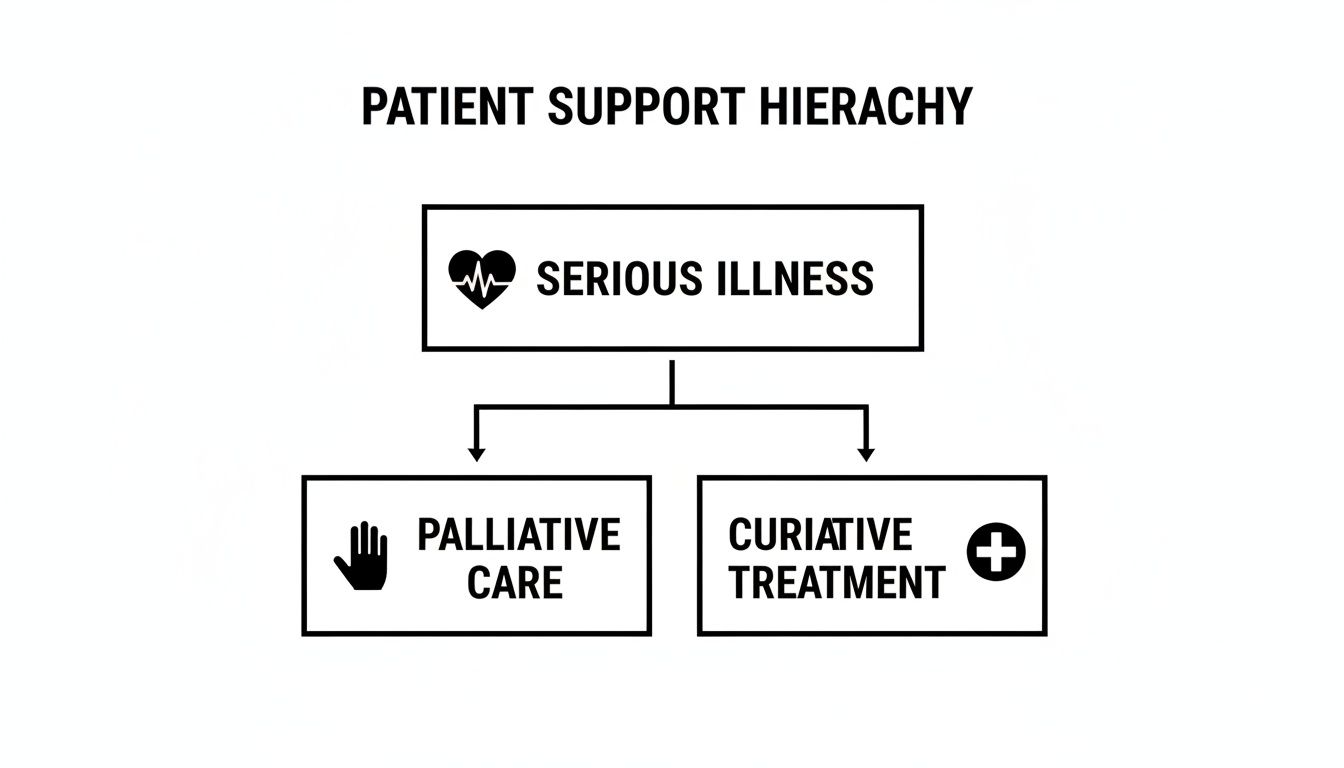
As you can see, these two types of care are not mutually exclusive. They are pillars of support that help you feel your best.
Why You Should Start Palliative Care Early
Waiting to start palliative care is a common misstep. People often delay because they think it means death is near. This delay can lead to unnecessary suffering and fewer care options.
Starting palliative care early gives you an advantage. It helps you get relief from symptoms like pain, fatigue, and anxiety. It also offers emotional and spiritual support.
This support can help you:
- Manage difficult symptoms like pain, nausea, and shortness of breath.
- Reduce stress and anxiety for you and your family.
- Improve communication with your entire healthcare team.
- Feel more in control of your treatment and health choices.
At Central Coast Vna & Hospice, we bring this support to families in Monterey, San Benito, Santa Cruz, and South Santa Clara counties. We believe everyone deserves the comfort and dignity that palliative care provides. You can learn more about the significant benefits of palliative care on our website.
Who Can Benefit from Palliative Care?
Palliative care is for anyone with a serious illness, regardless of their age or life expectancy. The primary goal is to improve your quality of life while you manage your condition.
It is an added resource that complements the care you already receive. You can start palliative support at any time, even while pursuing aggressive treatments.

A Wide Range of Conditions
Palliative care helps people with many long-term illnesses. It is not limited to a specific diagnosis.
Common conditions include:
- Cancer
- Heart disease (like congestive heart failure)
- Lung disease (like COPD)
- Kidney failure
- Dementia or Alzheimer's disease
- Parkinson's disease
- Amyotrophic Lateral Sclerosis (ALS)
The number of people who could benefit from this care is large. Data shows that 95% of people over 60 have at least one chronic illness. Nearly 80% have two or more. Palliative care helps manage these conditions to improve quality of life. For more information, you can review the extensive benefits of palliative care for cancer patients.
The Goals of a Palliative Care Team
A palliative care team works with you, your family, and your doctors. The team may include a Nurse Practitioner, a Registered Nurse, a Medical Social Worker, and a Chaplain.
Their mission is to treat the person, not just the disease. They work to ensure you can live each day to the fullest.
Key goals of the team include:
- Relieving Symptoms: The team provides expert management of pain, shortness of breath, fatigue, nausea, and anxiety.
- Improving Communication: They help you, your family, and your healthcare providers stay on the same page.
- Providing Emotional and Spiritual Support: A Medical Social Worker and Chaplain help you cope with the emotional and spiritual challenges of your illness.
- Coordinating Care: The team helps you navigate the healthcare system and make informed decisions.
At Central Coast Vna & Hospice, our team brings this compassionate care to your home in Monterey County and surrounding communities. We provide support that honors your wishes.
Why Waiting for Palliative Care Is a Mistake
One of the biggest missteps is waiting too long to start palliative care. This delay often comes from the myth that it signals the end of life. Waiting can lead to unnecessary suffering.
When symptoms are not managed early, they can become overwhelming. Pain, fatigue, and anxiety take a physical and emotional toll. Waiting until a crisis hits means you are always reacting instead of being proactive.
This hesitation is rooted in fear. The confusion between palliative care and hospice leads many to believe that starting this support is a step toward dying. It is actually a step toward living better with an illness.
The High Cost of Delayed Comfort
Delaying palliative care means losing valuable time. This is time that could be spent with better symptom control and more meaningful moments. Getting support early gives you the tools to manage your illness on your own terms.
Waiting to start palliative care is like waiting for a storm to pass without an umbrella. The support is designed to shield you, but it works best when you use it from the start.
Unfortunately, this delay is a global problem. An estimated 56.8 million people need palliative care each year. However, the World Health Organization reports that only about 14% of them receive it. You can discover key insights from the WHO's research to learn more.
Don't Miss the Opportunity for a Better Life
When families wait too long, they miss the chance to improve quality of life. By the time many patients get a referral, their symptoms may be severe. This creates a stressful cycle of crisis instead of steady support.
It is important to understand that palliative support is not the same as hospice. While Central Coast Vna & Hospice provides expert hospice services, palliative support is available much earlier. Our guide can help you understand when to consider hospice care.
Starting palliative care early gives you:
- More Control: You have a greater say in your treatment and comfort measures.
- Fewer Hospitalizations: Proactive symptom management at home can prevent emergency situations.
- Better Emotional Support: It gives your family resources to cope from the beginning.
The goal is not to shorten life but to improve the quality of the life you are living. Embracing palliative care early gives you an essential ally in your healthcare journey.
What In-Home Palliative Care Includes
So what does palliative care look like when our team from Central Coast Vna & Hospice arrives at your home? We bring a team-based approach directly to you, whether you live in Salinas, Santa Cruz, or Hollister. Our in-home services are built around caring for you as a whole person.
Expert Symptom Management
Living with a serious illness often means battling difficult symptoms. Our skilled Registered Nurses are experts at managing these challenges.
Our symptom management focuses on:
- Pain Relief: We work with your doctor to control your pain effectively.
- Controlling Nausea and Fatigue: We help manage side effects from treatments, giving you back your energy.
- Easing Shortness of Breath: Our nurses teach strategies to help you breathe more comfortably.
Getting symptoms under control can help you feel stronger. This proactive care often reduces the need for emergency room visits.
Emotional and Spiritual Support
A serious diagnosis affects your mind and spirit. It is normal to feel anxious or overwhelmed. Our team includes professionals trained to help you navigate these emotions.
Palliative care isn’t just about treating physical symptoms. It’s about caring for the whole person—mind, body, and spirit—to bring peace and comfort.
Our Medical Social Workers and Chaplains offer a safe space to talk. This support is shaped by your unique beliefs and values.
This support includes:
- Coping Strategies: Our Medical Social Worker can connect you with resources and provide counseling.
- Spiritual Guidance: Our Chaplains offer support that respects your personal beliefs.
- Family Support: We are here for your whole family, giving them the emotional tools they need.
Care Coordination and Advocacy
The healthcare system can be complicated. A big part of our job is making sure everyone on your medical team is on the same page. We act as your advocate and coordinator.
We ensure communication flows between your primary doctor and specialists. This helps your treatment plan align with your personal goals.
At Central Coast Vna & Hospice, our mission for over 74 years has been to provide this compassionate support. To learn more, explore our guide on palliative home care services.
Palliative Care on the Central Coast
At Central Coast Vna & Hospice, we bring expert palliative care to your front door. For over 74 years, we have been a nonprofit, mission-driven organization. We serve Monterey County, San Benito County, Santa Cruz County, and South Santa Clara County.
We are your neighbors, deeply rooted in the Central Coast. Our process is clear, compassionate, and simple.
Your Local Team of Experts
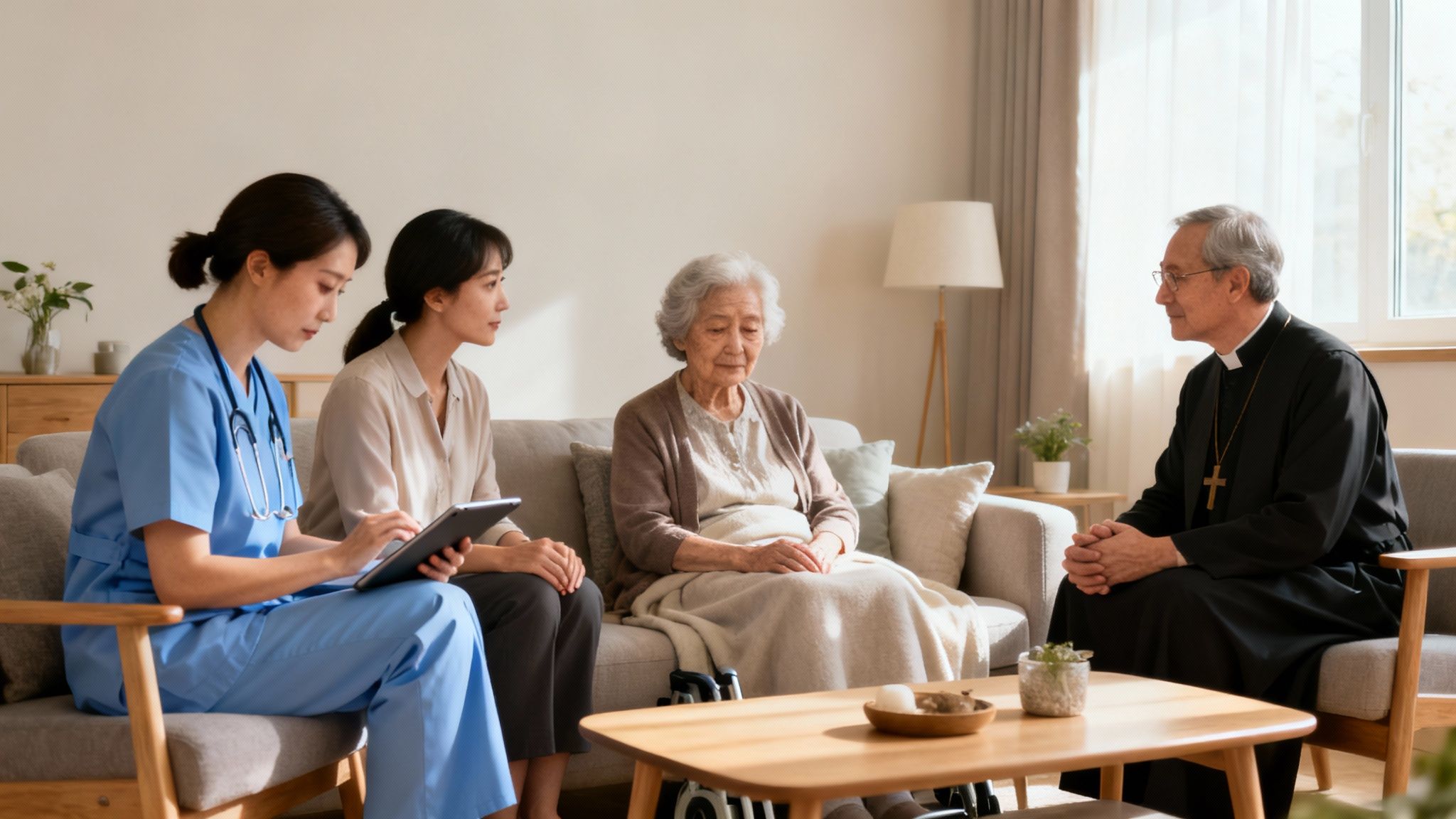
When you choose Central Coast Vna & Hospice, you gain a dedicated team. Our palliative care team collaborates with you, your family, and your doctors.
This team includes:
- A Nurse Practitioner specializing in symptom management.
- A Registered Nurse for ongoing assessment and care.
- A Medical Social Worker for emotional support and resources.
- A Chaplain for spiritual care that honors your beliefs.
This team approach ensures we see you as a whole person. We focus on your physical, emotional, and spiritual needs.
How to Get Started with In-Home Care
Getting started is simple. It all begins with a conversation about your needs.
We bring care to you, allowing you to remain in the comfort and familiarity of your own home. This focus on in-home support is a cornerstone of our compassionate care model.
Here’s what you can expect:
- Initial Contact: You, a family member, or your physician can call us to learn more.
- In-Home Assessment: One of our clinicians will visit you at home to listen to your concerns.
- Personalized Care Plan: We work with you and your doctors to create a care plan focused on your goals.
- Ongoing Support: Our team provides regular visits and is always available to support you.
If you are in Monterey, Hollister, Salinas, or Santa Cruz, our local team can help. We can guide you on whether palliative care is the right next step. You can learn more about why Central Coast VNA is the best choice for palliative care on the Central Coast.
Take the Next Step Toward Comfort and Control
Palliative care is not just for the end of life. This specialized support is about living better, not giving up. It is an extra layer of care that works alongside your regular treatments.
If you or a loved one is worn down by a chronic condition, you don’t have to go through it alone. The right support can improve your quality of life. It allows you to focus on what matters most.
Connect With Your Local Experts
For families on the Central Coast, expert support is available in your community. As a local nonprofit with over 74 years of service, Central Coast Vna & Hospice is dedicated to bringing this vital care to you at home.
Palliative care is a choice for hope—hope for better symptom control, for more good days, and for a stronger support system. Asking for help is a sign of strength.
If you live in Monterey, Salinas, Hollister, or Santa Cruz, our skilled team is ready to help. We work with your doctors to create a care plan that respects your goals.
Don’t wait for a crisis. Reach out to Central Coast Vna & Hospice today. Let us help you find out if in-home palliative care is right for you.
Let's start the conversation:
- Call us: 831‑372‑6668
- Visit our website: Learn more about our palliative care services
Frequently Asked Questions About Palliative Care
Many families have questions when they explore palliative care. Here are clear answers to some common questions we hear.

Will my insurance cover palliative care?
Yes, in most cases. Palliative care is a medical specialty covered by Medicare Part B, Medicaid, and most private insurance plans. Our team at Central Coast Vna & Hospice can help you understand your specific coverage.
Can I keep my own doctor?
Absolutely. Our palliative team works alongside your current doctors and specialists. We do not replace them. We act as an extension of your existing medical team.
How is palliative care different from home health care?
Home health care is usually short-term and focuses on recovery after an event like surgery. Palliative care is long-term support for managing a chronic, serious illness. It focuses on ongoing symptom management and improving quality of life.
Does starting palliative care mean I have to stop my treatments?
No, not at all. You can receive palliative care while you are undergoing curative treatments like chemotherapy. Our support can help you manage treatment side effects, making it easier to continue your care plan.
Who is on the palliative care team?
Our in-home palliative care team is a group of professionals who work together to support you. The team usually includes a Registered Nurse, a Medical Social Worker, and a Chaplain. This group works with your doctors to make sure all your needs are met. For more answers, please visit our palliative care FAQs page.