
Fall is here, and so is the familiar trio of respiratory illnesses: the flu, RSV, and COVID-19. This year on the Central Coast, these viruses are arriving earlier and with more intensity than in recent seasons.
For many, getting sick is a brief inconvenience. But for vulnerable adults—seniors and those with chronic health conditions—even a mild virus can become a serious threat. If you support a loved one in Monterey, San Benito, Santa Cruz, or South Santa Clara County, having clear information is key to keeping them safe at home.
Understanding This Year’s Respiratory Virus Season

This year’s flu season presents unique challenges. Local health officials note an aggressive and early return of seasonal viruses. While many people recover quickly, the outcome can be very different for older adults or those with underlying health issues.
This timing is causing real concern for families. Hospitals are preparing for a potential surge, but many of the most at-risk individuals are aging at home. This makes them more susceptible to complications that could lead to hospitalization.
Why Are Vulnerable Adults at Higher Risk?
As we age, our immune systems can weaken, making it harder to fight off infections. This is especially true for anyone managing a long-term health problem. A respiratory virus acts like a sudden stress test on the body, which can destabilize a previously managed condition.
Patients with heart disease, COPD, dementia, or cancer are especially vulnerable. Even a mild case can lead to serious complications. Many families are unsure what symptoms to watch for or when to call for help.
Key Risks for Vulnerable Adults This Flu Season
This table summarizes the primary health risks facing seniors and individuals with chronic illnesses during the fall respiratory virus season on the Central Coast.
| Vulnerable Group | Primary Flu-Related Risks | Why They Are at Higher Risk |
|---|---|---|
| Adults with Heart Disease | Increased inflammation leading to a higher risk of heart attack or stroke. | The body's inflammatory response to the flu puts extra strain on the cardiovascular system. |
| Adults with COPD or Asthma | Severe breathing difficulties, lung inflammation (pneumonia), and potential hospitalization. | Respiratory infections directly attack the lungs, worsening existing breathing problems. |
| Adults with Diabetes | Difficulty controlling blood sugar levels, which can lead to serious complications. | Illness-related stress hormones can cause blood sugar to spike, disrupting diabetes management. |
| Adults with Dementia or Alzheimer's | Increased confusion, delirium, or a sudden and sharp decline in cognitive function. | Sickness and fever can significantly impact brain function and accelerate cognitive decline. |
This heightened risk is why proactive prevention and early symptom detection are so critical. You can find more practical ways to prepare for a safe and healthy fall season in our guide.
The landscape of respiratory illnesses in California has shifted. For the first time since 2020, the flu is now associated with more deaths than COVID-19, a trend seen on the Central Coast where wastewater data shows rising flu activity.
This major shift underscores the importance of flu prevention. Health experts are clear: the annual flu shot remains the most effective tool for protecting vulnerable adults.
Your Local Partner in Home-Based Care
For over 74 years, Central Coast VNA & Hospice has been a steadfast, nonprofit partner for families across Monterey County, San Benito County, Santa Cruz County, and South Santa Clara County. We are part of this community and understand the unique health challenges our neighbors face.
Our mission is to provide expert, compassionate care that helps people stay safe and comfortable at home. During flu season, our clinicians work with families to prevent illness and manage symptoms before they become emergencies. This focus on prevention, safety, and community is what our nonprofit model is all about.
Creating a Circle of Protection at Home
When you support an older adult or someone with a chronic illness, flu season brings unique worries. One of the most powerful actions you can take is building a "circle of protection" right in their home. This involves simple, proactive habits that dramatically lower their risk of getting sick.
By focusing on a few key areas, you empower your family to keep germs out. This helps your loved one stay safe and comfortable where they belong.
The First Line of Defense: Vaccinations
A strong defense starts with timely vaccinations. The CDC recommends annual shots for the flu and COVID-19. For some older adults, the new RSV vaccine is also an important option. These vaccines teach the immune system to fight specific viruses, often making any resulting illness much milder.
It’s not just about the person you support. Everyone in the household should be vaccinated to create a strong shield of immunity. If you have questions about which shots are right for your family, Central Coast VNA & Hospice offers helpful information on flu shots available from VNA.
Vaccinations are particularly important for:
- Adults aged 65 and older, as their immune systems may be less responsive.
- Anyone with high-risk health conditions like asthma, diabetes, or heart disease.
- Every person living in the same household as someone at high risk to reduce transmission.
Practical Infection Control at Home
Beyond vaccines, simple daily habits make a world of difference. These are common-sense routines that stop germs from spreading.
A clean, safe home is a cornerstone of protecting vulnerable adults. By focusing on hand hygiene and surface cleaning, you can effectively break the chain of infection.
First, handwashing remains the single most effective way to prevent infections. Ensure everyone washes their hands with soap and water for at least 20 seconds. Do this after coming inside, before preparing food, and after coughing or sneezing.
Next, wipe down high-touch surfaces regularly. Viruses can linger on doorknobs, light switches, and remote controls. Using an EPA-approved disinfectant on these spots can stop germs in their tracks.
Improving Ventilation and Managing Visitors
Another effective strategy is improving airflow in your home. Opening windows for a few minutes each day helps disperse virus particles. When that isn’t practical, an air purifier with a HEPA filter can help clean indoor air.
Managing visitors is also key. Don't hesitate to politely ask friends and family to reschedule if they feel unwell. When you have guests, encourage them to wash their hands upon arrival. You can find more ideas in these nursing home infection control strategies, many of which can be adapted for home use.
How to Recognize Early Warning Signs
For vulnerable adults, the flu doesn't always present with classic symptoms like high fever and body aches. The first signs can be subtle. Learning to spot these atypical symptoms is one of the most critical things families on the Central Coast can do this fall.
When someone has a chronic illness, their body's response to infection can be muted. Instead of a high fever, the body might signal distress in quieter ways. Family members can become detectives, watching for small changes in behavior or health.
Beyond the Common Cold
It's vital to know the difference between a minor bug and something more serious. While a simple cold might cause a runny nose, flu symptoms in a vulnerable adult can look very different.
Keep an eye out for these subtle but crucial warning signs:
- Sudden Confusion or Delirium: A sharp, unexplained shift in mental state can be one of the first signs of infection in older adults.
- Worsening of a Chronic Condition: If a loved one’s breathing with COPD suddenly gets worse, the flu could be the trigger.
- Loss of Appetite or Dehydration: Refusing food or water is often an early red flag.
- Unusual Weakness or Dizziness: A sudden onset of severe fatigue or feeling faint needs immediate attention.
This infographic offers a quick guide for deciding when it's safe for visitors to come into the home.
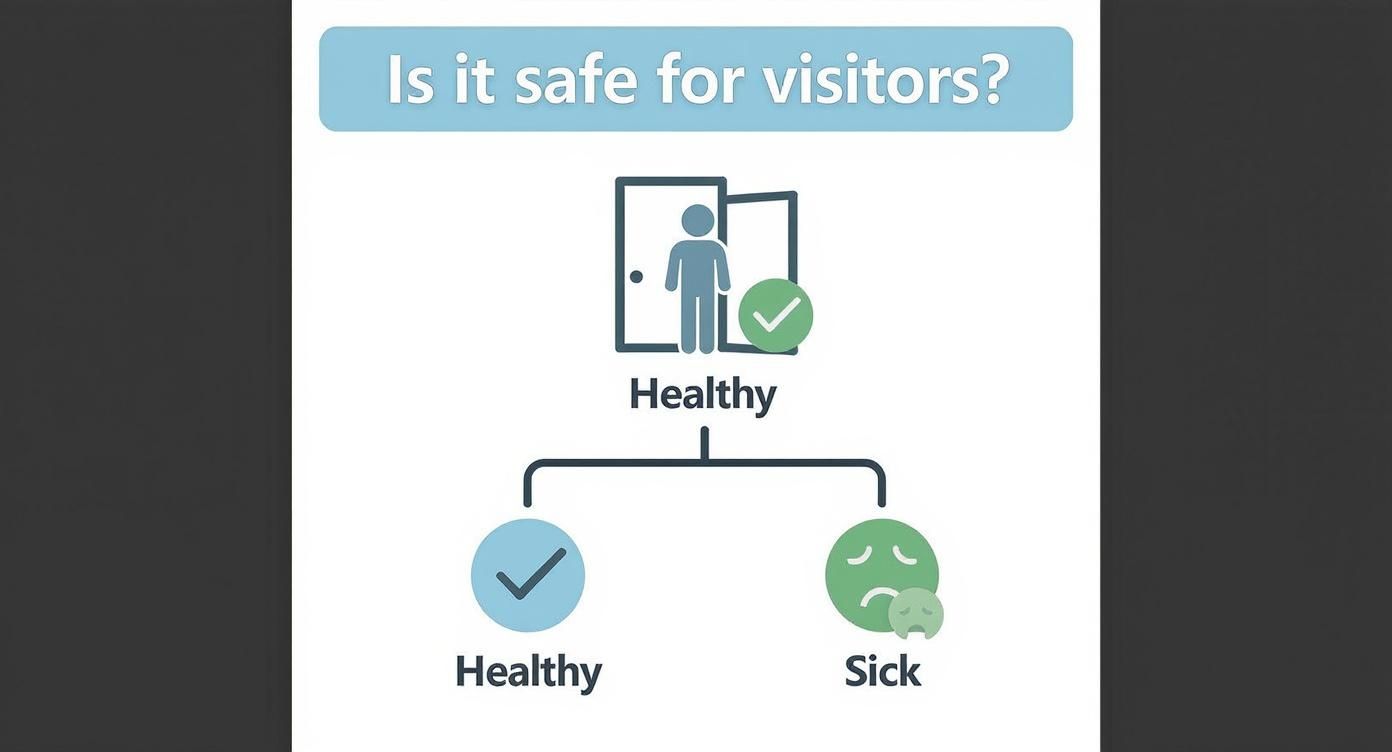
The main takeaway is simple: preventing germs from entering the house is the most effective way to protect a vulnerable loved one.
When to Seek Help
Knowing when to call for help can prevent a minor illness from becoming a major health crisis. These changes are often subtle, which is why understanding the 5 warning signs that elderly parents may need home health care can be helpful.
Here's a quick guide to help you decide on the next steps when you notice concerning symptoms.
Symptom Guide: When to Call for Help
| Symptom Category | Manage at Home (Contact Provider) | Seek Emergency Care Immediately |
|---|---|---|
| Breathing | Mild cough or congestion that isn't worsening rapidly. | Difficulty breathing, shortness of breath, chest pain or pressure. |
| Mental State | Slight lethargy but remains alert and oriented. | Sudden confusion, delirium, extreme drowsiness, or inability to wake up. |
| Fever | Low-grade fever that responds to fever-reducing medication. | High, persistent fever that doesn't improve with medication. |
| Hydration | Reduced appetite but still taking fluids. | Signs of severe dehydration (no urination, dizziness when standing). |
| Chronic Conditions | Minor, manageable flare-up of an existing condition. | Severe worsening of a chronic condition (e.g., uncontrolled blood sugar). |
Always trust your instincts. If something feels seriously wrong, it's better to be safe and seek help right away.
Acting quickly is essential. Early intervention with antiviral medications, prescribed by a doctor, can significantly reduce the severity of the flu and prevent complications like pneumonia, especially in high-risk individuals.
The flu's impact is staggering. According to the CDC, the 2022-2023 season led to an estimated 360,000 flu-related hospitalizations nationally, with adults 65 and older being one of the hardest-hit groups. These numbers underscore why spotting early symptoms is so crucial.
A general understanding of infection indicators can also be helpful. For instance, knowing what causes high white blood cells can offer insight into how the body is fighting an illness. If you notice worrying signs, contact your loved one’s primary care provider immediately.
The Role of Home Health Care During Flu Season

When flu season hits the Central Coast, local providers are often overwhelmed. This can make it tough for families to get the support they need. In these moments, professional home health care becomes an essential lifeline.
For families across Monterey, San Benito, Santa Cruz, and South Santa Clara counties, clinical support at home adds a critical layer of protection. This proactive care is key to managing health and preventing a crisis before it starts.
Proactive Monitoring and Early Intervention
One of the biggest challenges is spotting symptoms before they worsen. The trained eye of a skilled clinician makes all the difference. A Registered Nurse from Central Coast VNA & Hospice can bring that expert monitoring right to your home.
Our team is equipped to deliver safe, compassionate care where patients are most comfortable. VNA clinicians monitor high-risk patients closely, manage symptoms early, and coordinate with physicians to prevent unnecessary ER visits.
Our skilled clinicians can:
- Assess symptoms and immediately report changes to the patient’s physician.
- Administer treatments like IV fluids or prescribed medications at home.
- Educate families on what to look for and how to manage care.
This professional oversight provides priceless peace of mind. To see the full scope of this support, you can learn more about our home health care services.
A Nonprofit Partner Rooted in the Community
For over 74 years, Central Coast VNA & Hospice has been a nonprofit, community-first healthcare provider. Our deep local roots and mission-driven focus mean our priority is always the patient, not profit. That commitment is vital when the local healthcare system is stretched thin.
Our long-standing relationships in Monterey, San Benito, Santa Cruz, and South Santa Clara counties allow for faster response and continuity of services. Our team includes Registered Nurses and therapy services for recovering patients.
As a nonprofit, our goal is to provide high-quality, accessible care. We offer 24/7 on-call support, so families have a direct line to a clinician day or night if a concern arises.
This constant availability is a cornerstone of our care model. It gives families reassurance that they are never alone.
Navigating Respiratory Illness Risk at Home
The overlapping threats of the flu, COVID-19, and RSV create a complicated health puzzle. This risk makes early detection and treatment more crucial than ever. Home health professionals help families navigate these challenges safely.
Antiviral medications work best when started soon after symptoms appear. Our clinical team can help arrange for timely testing and ensure clear communication with doctors so that treatments can begin without delay. As our community faces these threats, the best defense is vaccination, early treatment, and staying informed.
Ultimately, having a dedicated clinical professional provides stability and expert guidance. This support not only leads to better patient outcomes but also empowers families with the confidence to care for their loved ones safely.
Navigating Palliative and Hospice Care Options
When someone is living with a serious illness, the flu can be a serious threat. A respiratory infection can worsen symptoms and lead to stressful hospital stays. For families on the Central Coast, knowing what support is available can make all the difference.
At Central Coast VNA & Hospice, we provide a full spectrum of care designed to offer comfort and dignity at home. Two services that are especially important during flu season are palliative care and hospice care. They each play a unique role in a person’s health journey.
Understanding Palliative Care
Palliative care is specialized medical support focused on providing relief from the symptoms and stress of a serious illness. Its goal is to improve quality of life for both the patient and their family. A common myth is that palliative care is only for the end of life, but this is untrue.
This care can start at any stage of an illness and works alongside curative treatments. For someone with a chronic condition, palliative care during flu season might mean getting help with breathing difficulties at home. It is an extra layer of support that partners with a person’s regular doctors.
The Central Coast VNA & Hospice palliative care team includes expert clinicians who help patients:
- Manage complex symptoms like shortness of breath, fatigue, pain, and anxiety.
- Improve communication between the patient, their family, and their healthcare providers.
- Align treatment choices with the patient’s personal goals.
By focusing on comfort, palliative care can help prevent exhausting trips to the emergency room. You can learn more about palliative care for seniors on the Central Coast and how it supports families.
Compassionate Hospice Care at Home
As an illness progresses, a person's goals might shift toward comfort and peace. This is where hospice care provides a special kind of support. Hospice is a philosophy of care that honors a person’s wish to live their final months with dignity, free from pain, and surrounded by loved ones.
Hospice care is not about giving up. It’s about shifting the focus to ensuring the best possible quality of life for the time that remains.
Central Coast VNA & Hospice provides this compassionate end-of-life care across Monterey, San Benito, Santa Cruz, and South Santa Clara counties. Our dedicated hospice team is made up of Registered Nurses, Hospice Aides, Chaplains, and Medical Social Workers. This team also provides invaluable emotional and practical support for the family.
During flu season, having this expert team on call 24/7 brings profound peace of mind. Families can call their hospice nurse for immediate guidance at home. This allows the focus to remain on comfort and honoring the patient’s wishes with grace.
Your Trusted Health Partner on the Central Coast
This flu season, being prepared is your family's best defense. For vulnerable loved ones at home, proactive planning and quick action are everything. As a nonprofit with over 74 years of service, Central Coast VNA & Hospice is rooted in the well-being of our community.
We help families across Monterey, San Benito, Santa Cruz, and South Santa Clara counties navigate the challenges of fall and winter. We are your partner in creating a continuum of care that ensures your loved one gets the right support at the right time.
Proactive Planning for Peace of Mind
Waiting for a crisis creates stress and rushed decisions. Planning ahead empowers your family to act swiftly if illness strikes.
A good plan includes:
- Knowing who to call for medical advice when symptoms appear.
- Understanding how in-home clinical support can prevent a hospital trip.
- Discussing care preferences with your loved one before an emergency.
Taking these steps creates a clear roadmap. It reduces uncertainty and ensures your loved one’s care aligns with their wishes.
Our mission is to help people stay safe and comfortable at home. We offer expert home health, palliative care, and hospice services to provide the peace of mind your family deserves.
If you have questions about protecting a vulnerable adult this flu season, please get in touch. Contact Central Coast VNA & Hospice today to learn how our expert teams can support your family.
Frequently Asked Questions About Flu Season
1. Who is most at risk for serious flu complications on the Central Coast?
Adults aged 65 and older and individuals with chronic health conditions like COPD, heart disease, or diabetes are at the highest risk. Their immune systems may have a harder time fighting off infections, leading to severe illness, hospitalization, or worse.
2. What are the key differences between palliative care and hospice care?
Palliative care can be provided at any stage of a serious illness and alongside curative treatments to manage symptoms and improve quality of life. Hospice care is for individuals in the final months of life when curative treatment is no longer the focus, emphasizing comfort and dignity at home.
3. What is the first thing I should do if my vulnerable parent shows flu symptoms?
Isolate them from others if possible, ensure they are getting plenty of fluids, and encourage rest. Most importantly, contact their primary care provider immediately, as antiviral medications are most effective when started within the first 48 hours.
4. How does Central Coast VNA & Hospice help prevent hospital visits during flu season?
Our clinical teams provide expert monitoring and symptom management at home. By identifying and addressing potential problems early, our Registered Nurses coordinate with the patient’s physician to adjust care plans, often preventing the need for an emergency room visit. Our 24/7 on-call support means help is always available.
5. What counties does Central Coast VNA & Hospice serve?
As a local, nonprofit organization with over 74 years of service, we are proud to provide compassionate home health, palliative, and hospice care to families throughout Monterey County, San Benito County, Santa Cruz County, and South Santa Clara County.
If your family needs guidance on how to manage chronic illness or protect a vulnerable loved one this season, VNA is here. Learn more about our home health and hospice services and find the peace of mind your family deserves.