

10 Things to Know When Considering Hospice Care for a Loved One
When your family member or loved one has a terminal illness, hospice care allows them to live their remaining days in comfort at home. The ability to stay in a familiar environment provides peace and a sense of calm to a person with a terminal illness, and it allows them to enjoy a better quality of life during their last days. When considering hospice care service in Monterey CA and the surrounding areas of Hollister and Central Coast counties, the following tips will help you plan and know what to expect.
What Hospice Care Includes
CCVNA offers these hospice services to residents of Central Coast, Monterey County and Hollister counties who have a life-limiting illness. Hospice care includes personal care for the patient. For example, a nurse's aide may assist the patient with getting dressed, sitting up or bathing. Visiting and vocational nurses assist with wound care, administration of pain medication and administration of IV hydration. Hospice social workers help patients and their families with community resources, such as spiritual and bereavement counseling. Hospice care also includes dietary, pharmacy, beauty, pet therapy and speech therapy services.
Customized Care
Each person's situation is different. Some terminal illnesses cause patients to be in a lot of pain. Pain management is an integral part of hospice care. Some patients need special nutritional or hydration plans. For example, after a stroke, a person may have dysphagia. Hospice care includes nutritional counseling to ensure that a patient's dietary needs are met through oral or intravenous nutrition and hydration. As a person's condition changes or worsens, their care plan is updated to reflect their current needs. All of the hospice providers are specially skilled in caring for patients at the end of life.
Coordination of Care
Hospice care includes coordination of services. Each patient is paired with a care coordinator. They may be an administrator or a social worker. This person coordinates the schedules of providers who come to the patient's home. The care coordinator handles all of the scheduling and billing, so patients and their families don't have to worry about pre-authorization or other tasks.
Duration of Services
If a doctor states that your loved one has less than six months to live, it's time to arrange hospice care service in Monterey CA. According to the Centers for Medicare and Medicaid Services, most insurers, including Medicare, pay for up to six months of hospice care. Your loved one's doctor will need to complete documentation verifying the terminal nature of the illness so that hospice care can begin at the right time.
Medical Equipment Is Covered
Many patients in hospice need medical equipment for palliative care. Bandages, dressings and catheters are included in hospice care. Patients who need durable medical equipment, such as a walker or wheelchair, can get what they need. A patient's need for medical supplies and equipment is handled by the care coordinator, and they do the ordering and set up delivery of the products to the patient's home. This relieves families of the need to order and retrieve equipment.
Quality of Life Assessments
An important part of hospice care is ensuring that the patient and their family are receiving what they need. Because the goals of hospice are to help a person live as well as possible for the remaining time they have and to address their and their family's needs, patients receive regular quality of life assessments. These assessments address every facet of care, including physical, emotional, mental and spiritual care. If a patient reports that any of these areas are declining, action is taken to remedy the situation.
Respect for the Patient's Wishes
Hospice care focuses on the wishes of the patients. If a patient does not want oxygen, hydration or any other type of care, their wishes are respected. Hospice allows families and caregivers to spend enjoyable time with their loved one instead of dealing with paperwork and red tape. With a patient's physical, emotional and spiritual needs addressed, they and their families can focus on what is important to them.
Patients Preserve Their Dignity
In hospice care, patients are not subjected to painful tests or embarrassing procedures. Hospice patients don't have to deal with frequent blood draws, loud machines or interruptions in the middle of the night for vital signs. They don't have to undergo any invasive procedures. Preservation of dignity is a main consideration for many families when planning hospice care for their loved ones.
Reduce the Financial Burden on Family
Many families worry about the cost of caring for a loved one who has a terminal illness. Hospitals and nursing homes are expensive, and many families can't afford them. Hospice care is covered under Medicare Part A, which is also called original Medicare. Private insurers also cover hospice care. Under hospice supervision, a patient's end-of-life care costs are significantly lower. Care coordinators can help families estimate their share of costs for hospice care service in Monterey CA.
Families and Caregivers Benefit, Too
Caring for a person with a terminal illness is an exhausting undertaking. If this care is left to just one or two people without medical training, they and the patient may suffer. With hospice care, patients and their caregivers and families benefit. Caregivers get a break every day when the nurse, homemaker, therapist or doctor visits. This allows the caregiver to attend to their own personal and healthcare needs. Families juggling the care of their loved one with other needs, such as work and childcare, may feel relief knowing that their loved one is in capable hands. These services may reduce the risk of caregiver burnout and improve the patient's quality of life, explains the Cleveland Clinic. Short-term respite care also gives caregivers a chance to take a break during the day so that their stress levels don't get too high.
To learn more about hospice care for a loved one, contact us at CCVNA today.

Bereavement and Grief Counseling: How Support Groups Can Help After Losing a Loved One
What You May Not Have Known About Bereavement and Grief but Probably Should
While the sadness felt due to losing a family member or close friend is difficult, it needn't consume your life. And such a loss needn't color your otherwise bright sunny days with dark gray and ominous-looking clouds either, say many bereavement and grief counselors across the U.S. For those not familiar with bereavement and grief counseling, it is a form of psychotherapy that aims to help individuals process and better cope with the emotions and full-on psychosomatic symptoms that usually stem from losing a loved one. Some of the most common ones include the following:
- Shock and numbness
- Guilt
- Anger
- Fatigue
- Overwhelming sadness
- Stress
- Anxiety
- Depression
Who Should Consider Bereavement and Grief Counseling?
Deciding whether or not to partake in bereavement and grief counseling, like any other form of psychotherapy, is a personal choice. After all, everyone processes and copes with the loss of a loved one differently. While some can cope with their emotions on their own, some might need a little help. And the individuals who might need such help can amount to many when you factor in the annual death rate in the U.S. According to an article published in the Journal of the American Medical Association (JAMA), an esteemed peer-reviewed medical journal, more than 3 million Americans died in 2020. And we can all reasonably conclude that many of the friends and family members of the deceased found themselves having to process and find ways to work through the grief they were feeling. That said, studies show that most people are willing to seek professional help when the loss of a loved one starts to impact their day-to-day life.
5 Signs That Might Suggest You Need Bereavement and Grief Counseling
When it comes to losing a loved one, the loss can be so profound that it can affect judgment to the extent that grief-stricken individuals don't realize they are drowning in negative, harmful emotions. If this is something that resonates with you, here are five signs that might suggest you need bereavement and grief counseling:
1. Finding it exceedingly difficult to move on - While there is no set amount of time that an individual should mourn the loss of someone close to them, mourning that seemingly has no end might suggest it is time to seek help. According to most counselors, this would constitute extreme grieving that goes on for more than one year.
2. An inability to process the loss of a loved one at all - In contrast to those who find it difficult to move on, some people seemingly never process or come to terms with the fact that they have lost a close friend or family member. And this can be just as concerning and often points to the need for professional help.
3. Grief starts to interfere with your work-life - After losing a friend or family member, it can be a challenge to get back into the proverbial swing of things at work. And this is not uncommon; however, if someone's grief is so severe that it takes a toll on their work performance to the extent they receive disciplinary warnings or get demoted, it would be a good idea to look into counseling.
4. Feeling chronically depressed - Most will agree that there is a considerable difference between a temporary low mood and full-on depression. That said, the latter often requires help from a bereavement and grief counselor to overcome, especially if those feelings of depression start to give way to self-harm or suicidal ideations.
5. Loss of something other than a friend or family member - While the thrust of this article has focused on the loss of human life, some people need help overcoming other sources of pain and sorrow. Studies show that, aside from the loss of a friend or family member, individuals will seek help from support groups or a counselor if any of the following results in them becoming grief-stricken:
- The loss of a beloved pet
- Divorce or separation
- Family trauma
- Job loss
- Losing one's home due to financial reasons or a natural disaster
- Aging, illness, or disease
What Happens During a Counseling Session With a Bereavement and Grief Counselor?
If you have never been part of any support groups or have partaken in any form of counseling with a licensed therapist, doing either after losing someone near and dear to you can seem daunting. Some might even argue that professional counseling might seem like the more daunting of the two when compared to attending support groups where everyone is struggling with a similar loss and can lean on one another for support. That said, bereavement and grief counseling is a branch of psychotherapy discipline traditionally carried out by licensed psychologists or psychiatrists. However, in some support groups, individuals can take advantage of a less structured form of psychotherapy by talking through their feelings with other members. The benefit of counseling sessions with a psychologist or psychiatrist is that these professionals are well-versed in helping individuals overcome the five most common stages of grieving as per the Kübler-Ross grief model. These five stages are as follows:
- Denial
- Anger
- Bargaining
- Depression
- Acceptance
It is worth noting that, in extreme cases, individuals who are working with a psychiatrist might be prescribed antidepressants or other medications to help elevate their mood. Indeed, everyone handles grief differently, and seeking help from a licensed mental health professional ensures you get access to a treatment modality that is right for you.
Bottom Line
All in all, whether you're grieving the loss of a friend, family member, or the ending of a relationship that has run its course, bereavement and grief counseling can help you feel whole again. And many cases, counseling sessions for this form of psychotherapy are covered by insurance. With that in mind, if you or someone you know are experiencing any of the tell-tale signs of extreme grief, consider speaking with a mental health professional today.

On the Fence About Getting a Vaccine? Learn How Immunizations Can Help Prevent These 10 Serious Illnesses
PLEASE NOTE: Central Coast VNA Community Services has discontinued the travel immunization program. As the community immunizers it has been a privilege to provide this vital service of disease prevention and healthy travel to our communities.
Vaccinations have become an important factor in the prevention of serious diseases that can lead to potentially deadly complications. However, you might be concerned about issues such as safety. Some people are against immunizations and have no problem telling everyone their opinions. With the advent of the internet, those voices may seem to be everywhere, causing doubt to bloom in your mind. However, your health care provider relies on medically backed research for vaccine safety and effectiveness. It's important to put your trust in professionals over social media. Without these preventative measures, you'd be more at risk of developing many serious conditions that could negatively impact your life.
Lifelong Vaccinations
Once you receive these immunizations and the required boosters, you're protected for the remainder of your life.
Polio
Polio can affect the brain and the central nervous system, often causing breathing difficulties, paralysis or even death. Thanks to widespread vaccinations, polio is no longer a problem in the United States. However, it's a small world due to travel. Vaccines can keep you from getting polio from travelers of other countries where the disease is still active.
HPV
Human papilloma virus has been linked to certain types of cancer in both men and women. Although your body may be able to fight this virus on its own, long-term cases cause cellular changes. These alterations can lead to the development of cancer over time. It can be spread through any type of sexual contact. There are several cancers that have been attributed to this virus. They are those of the cervix, vagina, vulva, rectum, penis, mouth and throat. The HPV vaccine has been shown to help prevent up to 90 percent of these types of cancers.
Pneumonia
Bacterial pneumonia often occurs as a complication of other viral infections, especially those that affect the respiratory tract. This illness can land you in the hospital. Additionally, if the bacteria reach the blood stream, this can lead to a deadly infection called sepsis. There are currently two pneumonia vaccinations available that fight against 13 or 23 strains of the bacteria. For some patients, getting both of these immunizations provides the best protection.
Repeated Immunizations
These vaccines require regular boosters, sometimes annually, in order to remain effective in the prevention of disease.
Pertussis
Also known as whooping cough, pertussis affects the lungs and can lead to death, especially in children. The newer vaccines provide less risk of side effects, but the provided immunity can wane over time. Over the last few years, pertussis cases have increased. Although there are multiple reasons for this, lack of vaccination appears to be one of the underlying factors. You can get continued protection from this disease that's trying to make a comeback with a tetanus booster.
Tetanus
Unlike most of the other diseases reduced by vaccination, tetanus is not spread from human to human. However, you can contract this possibly deadly virus through your everyday environment if it enters through broken skin. The intense muscle contractions caused by the virus can be so severe as to break bones. Regular boosters are needed to maintain protection from this excruciating disease.
Influenza
Thousands of people die each year due to the flu and related complications. Different viruses are more active from year to year. It's important that you're immunized annually to prevent the predicted strains that will be most prevalent each season. Some people are reluctant to visit a flu clinic since a few people claim they became ill after being vaccinated. This is not the case; symptoms that resemble the flu are just signs that your body is developing immunity against the virus.
COVID-19
Advanced medical research has given humanity its first chance at fighting off a plague through the preventative use of vaccines. Doctor's offices, clinics and pharmacies offer the COVID vaccine in Salinas and other local areas. You should have no problem finding a provider close by. While it's understandable to be hesitant due to all of the misinformation being spread on social media, it's important to listen to the advice and experience of your health care provider as a reliable resource.
Travel Vaccinations
There are several vaccines for traveling to Mexico or other countries, and these are just a few that are recommended.
Rabies
Did you know that rabies is 100 percent fatal? Although not as prevalent in the United States, this virus is still seen regularly in many countries. In Mexico, feral dogs roam freely and can be very aggressive, so get protection before you go. Once you've been infected, it's too late to get vaccinated.
Hepatitis A
Close contact with an infected person or consuming food or water in unsanitary areas can lead to contracting Hepatitis A. This is a very contagious disease that can cause inflammation of the liver. The more time you spend in a risky region, the greater the likelihood you'll come in contact with this virus. Vaccinations can prevent the virus from damaging your liver. Additionally, you can get vaccinated within two weeks of getting the virus.
Typhoid Fever
Although rare in the United States, typhoid fever is prevalent in underdeveloped countries. While the vaccine provides limited protection, it can prevent serious complications. Once you've contracted the virus, there's a small chance that you could become a lifetime carrier.
Addressing Your Concerns
Talk to your health care provider for any additional concerns you may have. This is what researchers know about vaccines:
- They are safe and effective for most people, and the benefits typically far outweigh the risks.
- Vaccines don't cause the disease they're meant to prevent. Only inactive or partial viruses are used in the manufacture of immunizations.
- Researchers haven't found a connection between childhood immunizations and autism. This lifelong developmental disability is typically detected at the same age as childhood vaccinations are given. However, the ingredient in question, thimerosal, hasn't been used in children's vaccines since 2001.

Health Matters - VNA & Hospice Article
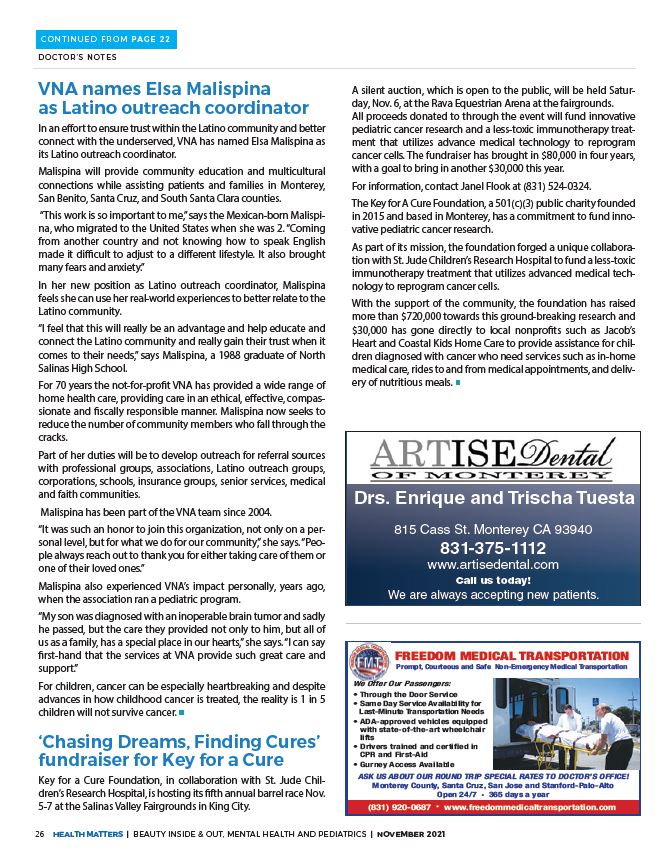
VNA names Elsa Malispina as Latino outreach coordinator
 In an effort to ensure trust within the Latino community and better connect with the underserved, VNA has named Elsa Malispina as its Latino outreach coordinator.
Malispina will provide community education and multicultural connections while assisting patients and families in Monterey, San Benito, Santa Cruz, and South Santa Clara counties.

VNA offers monthly grief support group for South Monterey County residents
Article posted at King City Rustler.com
GONZALES — Grieving is a natural part of life, and impacts each individual journey physically, emotionally and spiritually.
While every loss is unique, Central Coast VNA and Hospice Grief and Loss Program offers a free monthly support group in South Monterey County called New Beginnings, which is designed to help participants share, bond and commiserate.
The program — funded in part by Hospice Giving Foundation, and in partnership with Taylor Farms Family Health and Wellness Center — provides a non-judgmental, fully confidential and supportive environment to share feelings of pain and loss. Individual support is also available, and great efforts are made to reach out to the South Monterey County bilingual community.
The no-cost support group is offered to older adults who have experienced a significant loss of someone in their life. The purpose is to learn about the grieving process and share experiences that help with the emotion of isolation.
The group meets every third Thursday of the month from 4 to 5 p.m. at the Taylor Farms Family Health and Wellness Center, 850 Fifth St. in Gonzales, a part of Salinas Valley Memorial Healthcare System.
For more information, contact VNA’s Latino Community Outreach Coordinator Elsa M. Malispina or Spiritual Care Coordinator Osa Massen at 831-241-3834.
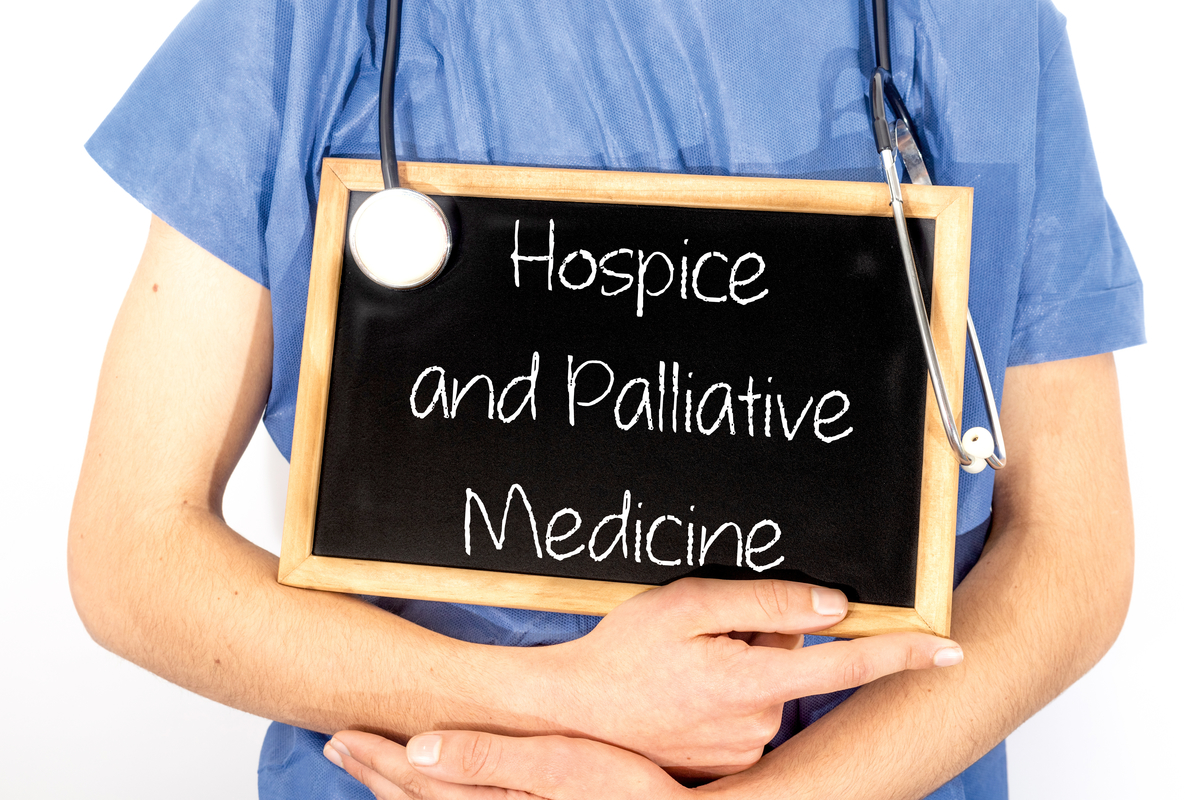
7 Questions You May Have About the Difference Between Hospice vs Palliative Care
Seniors and people with long-term illnesses may wonder what their medical care will look like as their health declines. There are many options for people with serious illnesses, including hospice and palliative care. Hospice and palliative care are similar, but hospice is usually 100% covered if a patient qualifies for it.
1. Who Is Eligible for Palliative Care?
An individual who is in any stage of a serious illness can seek palliative care. The goal of palliative care is to relieve symptoms in someone who is suffering from a long-term medical condition. It doesn’t matter whether other doctors are exploring a cure for your condition. You can receive palliative care for a chronic, complex, terminal or non-terminal illness.
Some people seek palliative care to keep them comfortable as they recover from major surgery. Others may choose it to help manage side effects from chemotherapy treatments. Palliative care is available for people with a wide range of illnesses, from multiple sclerosis to kidney disease.
2. Who Is Eligible for Hospice Care?
A patient who has a serious illness with a prognosis of fewer than six months to live is eligible for hospice care. A doctor must certify the prognosis based on the typical path of the illness.
The medical condition is usually defined as terminal when treatments are no longer working or the patient chooses to discontinue aggressive treatments. In other words, hospice care is only available toward the expected end of a patient’s life, when the patient is no longer undergoing active curative treatments.
Hospice doesn’t always mean that it’s the end. It can boost a patient’s health and well-being. If the patient’s situation improves and their life expectancy is extended, they will no longer be eligible.
3. What Does a Palliative Doctor Do Differently Than Other Doctors?
The goal of a palliative doctor is to keep a patient comfortable. A patient who is in palliative care may have a team of medical professionals working with them on a treatment plan. But those are not the palliative doctors.
The palliative doctors focus on easing symptoms and side effects of the medical condition or medications. They’re not treating the illness. They’re helping the patient to maintain a high quality of life despite the illness.
Palliative professionals may include doctors and non-medical team members who work together to support the patient’s medical, physical, psychological and personal needs. They coordinate with the treatment team to provide continuity of care and help the patient understand their diagnosis and management plan.
4. When Should You Enter Hospice or Palliative Care?
Many patients wait until the last minute to begin hospice care. Choosing this type of care may feel like a death sentence. However, delaying the decision may hinder a patient’s ability to maximize their quality of life in this final stage.
Deciding to seek hospice care doesn’t mean that there is no hope. This specialized care enhances well-being and comfort. When patients feel better, they are more empowered, satisfied and fulfilled.
The best time to enter hospice is different for every situation. If a patient is eligible, they should enter when their quality of life would be improved by this type of care.
You can opt for palliative care at any stage of an illness. Many patients choose palliative care when they need additional support and coordination to manage their condition. There is no time limit for palliative services.
5. Can You Leave Hospice Care Voluntarily?
Hospice care is intended for people who are expected to live no longer than six months. However, a patient’s situation can change. The prognosis could shift, extending the patient’s life expectancy. In that case, hospice care would be discontinued. It would be available again if the condition deteriorated and the patient regained eligibility.
You can choose to discontinue hospice care at any time and for any reason. Hospice benefits that are covered by a patient’s health care plan may be revoked when these services are terminated, however. In that case, you could opt for palliative care and pay out of pocket or through your insurance plan.
6. Can You Use Palliative and Hospice Care Simultaneously?
You can’t use hospice care at the same time that you’re actively undergoing therapeutic treatment for your medical condition. However, you can receive palliative and hospice care at the same time.
Many of the services that are offered under hospice care are intended to keep the patient comfortable. Therefore, they’re inherently palliative. Moreover, they’re hospice benefits that are covered under Medicaid and most insurance plans.
7. Where Can You Get Hospice and Palliative Care?
Both types of care can be provided at home or in a facility and on an inpatient or outpatient basis. Because it’s important to maximize the patient’s comfort, hospice and palliative services are often offered at home. A patient may also move into a facility or receive services at a nursing home or residential care facility.
In either case, a variety of professionals make up the care team. These include your primary care physician, nurses, home health care workers, social workers and physical therapists. Spiritual and psychological counselors are often involved in palliative care. In hospice, volunteers may offer additional services to improve patients’ well-being, such as massage and pet therapy.
A hospice or palliative care coordinator will manage this medical team to keep the patient well-informed and at ease. Most people have many questions about initiating this type of care. Reach out to a VNA care coordinator to learn more about palliative care in Monterey CA and the surrounding areas.
How and Where to Get the Covid Vaccine in Salinas
PLEASE NOTE: Central Coast VNA Community Services has discontinued the travel immunization program. As the community immunizers it has been a privilege to provide this vital service of disease prevention and healthy travel to our communities.
Getting vaccinated against COVID-19 will help protect yourself and the people closest to you. With multiple providers offering the vaccine in and around Salinas, you should be able to receive the covid immunization without disrupting your schedule. A nationwide effort among healthcare professionals is providing free, easy access to vaccines. Once you’ve read this basic guide, you’ll have no trouble finding and taking the Covid vaccine in Salinas.
Eligibility for Covid Vaccine in Salinas
Everyone in California age 12 and up is eligible to receive a free covid vaccine. This applies to absolutely everybody regardless of insurance or immigration status. Don’t hesitate to get the vaccine because of any lack of proper documentation. The priority now is to vaccinate as many people as possible. You can join millions of Californians in protecting yourself against the virus and helping to bring this brutal pandemic to an end.
Where to Get Your Covid Vaccine in Salinas
There are many locations offering the covid vaccine in Salinas itself and throughout Monterey County. Doctors’ offices, urgent care clinics, and many pharmacies provide the vaccine for free. There are also several mass vaccination sites set up around the area. Another option is to visit the Central Coast VNA, which offers vaccines to residents of Hollister Counter, Monterey County, and the Central Coast. All these vaccination providers strive to make the process quick and easy.
How to Get Your Covid Vaccine
With vaccines widely available, you have some flexibility in how you arrange your immunization. Whether you'd prefer to make an appointment or simply show up for a shot when the mood strikes, you'll have no trouble getting the vaccine
Make an Appointment
You can schedule an appointment at most vaccine centers. To book a slot with Central Coast VNA, simply give the reception a call. You can also schedule appointments at most pharmacies and clinics. The government’s “My Turn” website is a great tool for discovering your options and booking an appointment.
Walk-In Options
Many vaccination clinics can provide instant jabs to walk-in patients. This means you can receive the covid immunization whenever you have a few minutes available. This walk-in option is great for anyone with a busy or unpredictable schedule.
What to Bring
It’s important to remember that you will be able to receive the covid vaccine even if you do not bring any documentation. All the same, you can make the process easier for everyone by bringing along a photo ID and, if you have one, an insurance card. These documents will allow the provider to quickly record your immunization and charge it to your insurance company.
Make sure you’re wearing a mask as you enter the clinic. You’ll be required to keep your mouth and nose covered as long as you’re in the facility. You should also consider bringing a book, magazine, or electronic device to keep you entertained if you have to wait.
Which Covid Vaccine You’ll Receive
Not all providers have the same vaccine available. Some may have multiple options to choose from, while others will only offer a single brand. You can call a vaccine center to ask about which vaccines they’re providing.
Pfizer, Moderna, and Johnson & Johnson are the principal vaccines administered in California. It’s worth noting that all three have been proven safe and effective in clinical trials. Whichever vaccine you take, you’ll be protecting yourself and your loved ones from the dangers of COVID-19.
What to Expect
Receiving the covid vaccine is usually a quick and easy process, no more arduous than getting a standard travel immunization. If you walk into a mass vaccination site, you may have to wait in line. If you’ve got an appointment at a smaller provider, then you’ll likely be able to start the process right away.
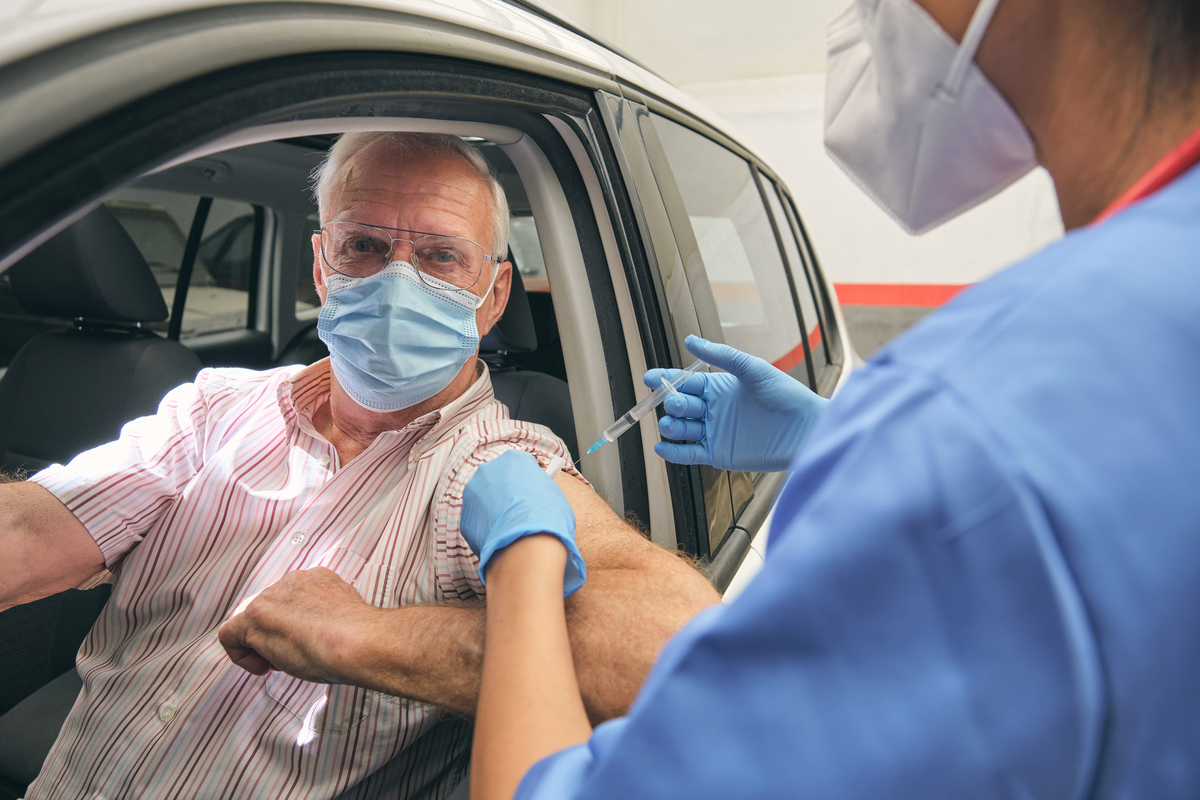
First, an employee at the facility will explain the details and potential side effects of the vaccine. Then, you’ll sign a consent form and answer questions about any allergies you may have to medications. Once the providers have reviewed your answers and deemed your vaccination safe, you’ll receive the jab in your upper arm.
After getting the vaccine, most recipients are asked to wait 15 minutes before departing the clinic. This is to ensure no unexpected side effects develop. People with a history of allergic reactions to vaccinations may be asked to wait 30 minutes. Once the required amount of time has elapsed, you’ll be free to go on your way.
You’ll receive a vaccination card detailing the type, date, and location of your vaccination. If you got the single-dose Johnson & Johnson vaccine, this card will serve as your official record of vaccination. If you received the two-dose Moderna or Pfizer vaccines, save the card and present it to the provider when you come back for your second shot.
Receiving Your Second Dose
For the two-dose Moderna and Pfizer vaccines, you’ll need a second dose to receive the full level of protection that the immunizations can provide. You should be able to schedule your second dose in person while receiving the first jab. Otherwise, you can call to make an appointment by phone.
Learn More About the Covid Vaccine
The past 18 months have been difficult, and you’re far from alone if you’re feeling overwhelmed. All of a sudden, things like coronaviruses and vaccines have become central parts of life in America. To understand the situation and make the right decisions for you and your family, it’s always best to keep yourself informed. You can learn more about the covid vaccine from the WHO and the CDC. Armed with all the latest information, you’ll be ready to protect yourself and your loved ones from this harrowing disease.
5 Reasons to Sign-Up for a CPR Class Right Now
CPR, or cardiac pulmonary resuscitation, is a life-saving procedure performed during emergency situations, including when a person’s heart stops beating. The American Heart Association explains that performing CPR doubles or triples the likelihood of survival after a person has an incident of cardiac arrest. If you are a resident of the Central Coast, there are a number of reasons to consider CPR classes Monterey CA. After learning the benefits of attending a CPR class, you are sure to enroll right away.
1. CPR Classes Boost Confidence
According to the American Heart Association, approximately 80 percent of cardiac arrest events occur at home. If you are going through a normal day, you want to be prepared if one of your loved ones suddenly needs to be resuscitated. After attending CPR classes Monterey CA, you will be confident in your abilities to perform the correct procedures to save someone’s life. Instead of becoming emotional and scared when the person around you has a heart attack, you will be able to remain calm and to assist.
2. You Can Help Anywhere
Although most heart attacks occur at home, you may be at a restaurant, store, or any location when someone suffers a cardiac arrest. Having knowledge about CPR means that you can assist wherever you go. This is helpful to a person who is having a medical emergency, especially when there is no doctor in the area. When an emergency arises, you can spring to action and offer comfort to people who need it the most. As you perform CPR, you may possibly keep a person alive until further medical support has time to arrive.
3. Receive Hands-On Training at CPR Classes
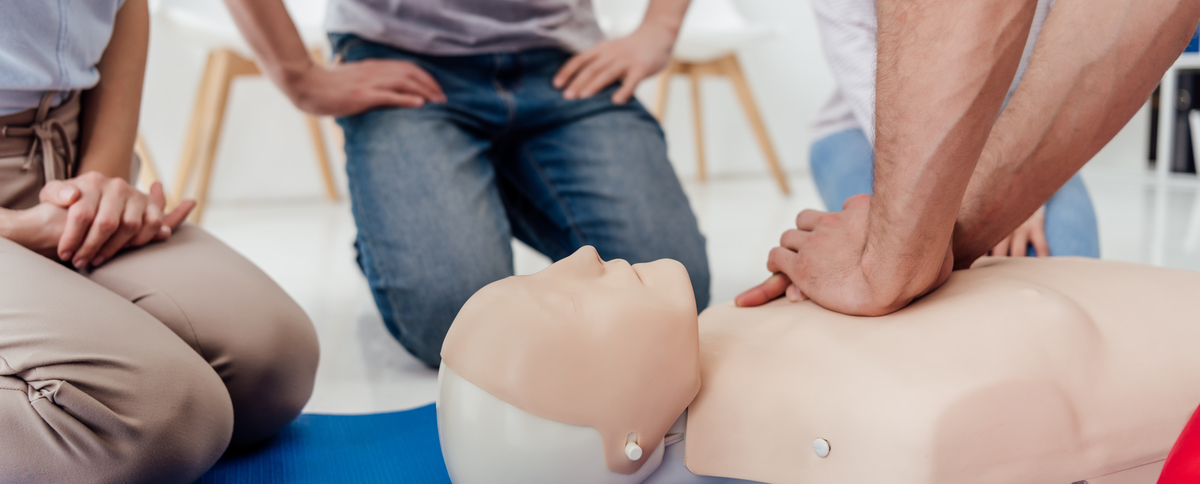
Attending CPR classes Monterey CA offers the ability to receive hands-on training from first responders who have real-life experience in the field. Although many people learn skills online, there is nothing better than learning face-to-face with nurses, paramedics, and other medical professionals. It is crucial to learn how to handle a multitude of potential situations that involve an unconscious individual or someone who is intensely sick. Being able to practice life-saving techniques on dummies or other devices gives you a realistic feel of an emergency and how to proceed with successful results.
4. Increase Your Value at Work or as a Volunteer
It is scary to think about a co-worker suddenly taking a heart attack. However, it can happen. Being CPR certified makes you extremely valuable. Literally, you have the power to save a life. Your skills will provide great support in the workplace.
CPR class are smart for people of all ages and may open new job opportunities. For example, it will help a younger person gain employment as a lifeguard. Someone looking to provide childcare in a daycare or a private setting will benefit from training as well. These are just a few of the jobs that require CPR certification.
Also, having knowledge about how to perform CPR may provide you with the opportunity to become a volunteer in your community. It is especially helpful to know CPR when you wish to work with the elderly. Even if you won’t be providing direct medical care, it is always helpful to be prepared in times of emergency.
If you have aging parents and take on homecare duties, CPR training is a valuable tool as well. It prepares you to step into the role of caretaker and allows your parents to enjoy the freedom of remaining out of a nursing home setting. Nobody wants to think about situations when CPR is necessary. However, being ready is an important part of your family's safety plan.
5. Learn How to Use an Automated External Defibrillator
An automated external defibrillator is a portable device that is used in emergency situations to shock the heart so that regular rhythm is restored. These units should be run by individuals who understand their usage and placement on another person. Thanks to proper operation, a person who is experiencing a sudden cardiac arrest may be saved. In fact, a person's heart must be regulated quickly. The chance of survival decreases up to 10 percent for each minute that passes without a normal rhythm. During a typical CPR course, you will learn to use this device effectively.
People of all experience levels can enroll in CPR classes Monterey CA. They provide a solid insight into this life-saving technique and its applications during times of emergency. The above reasons are just a few motivating points that should make you enroll in a class immediately. If you live in Hollister, Monterey County, or Central Coast, it is possible to play an active role in the services provided by CCVNA. For more information, contact us today.
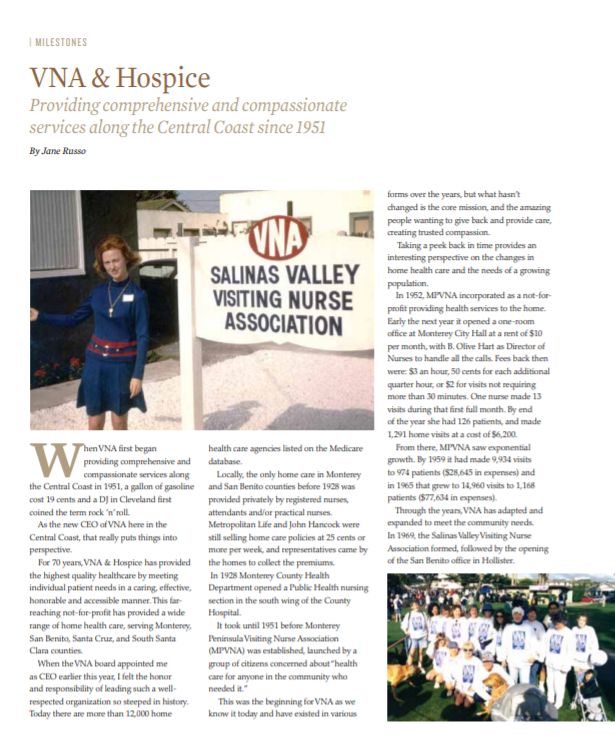
VNA & Hospice Featured in Coastal Grower Summer 2021
VNA & Hospice
Providing comprehensive and compassionate
services along the Central Coast since 1951
When VNA first began providing comprehensive and compassionate services along the Central Coast in 1951, a gallon of gasoline cost 19 cents and a DJ in Cleveland first
coined the term rock ’n’ roll.
(download full article below, page 58)
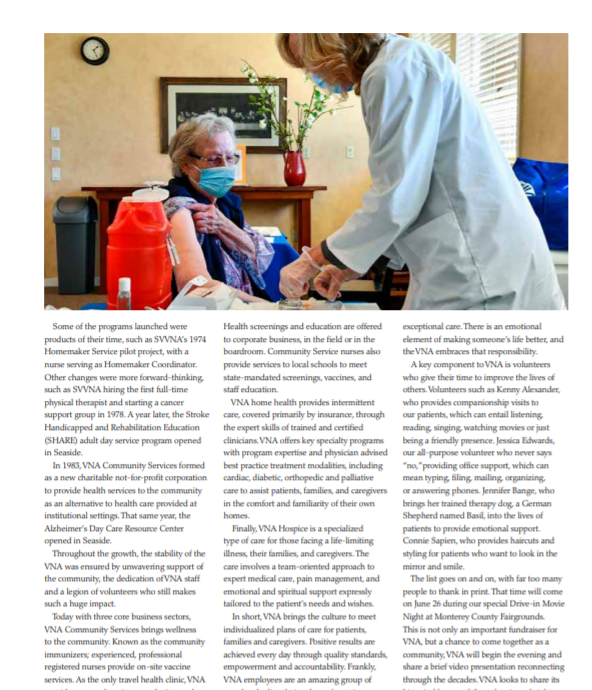
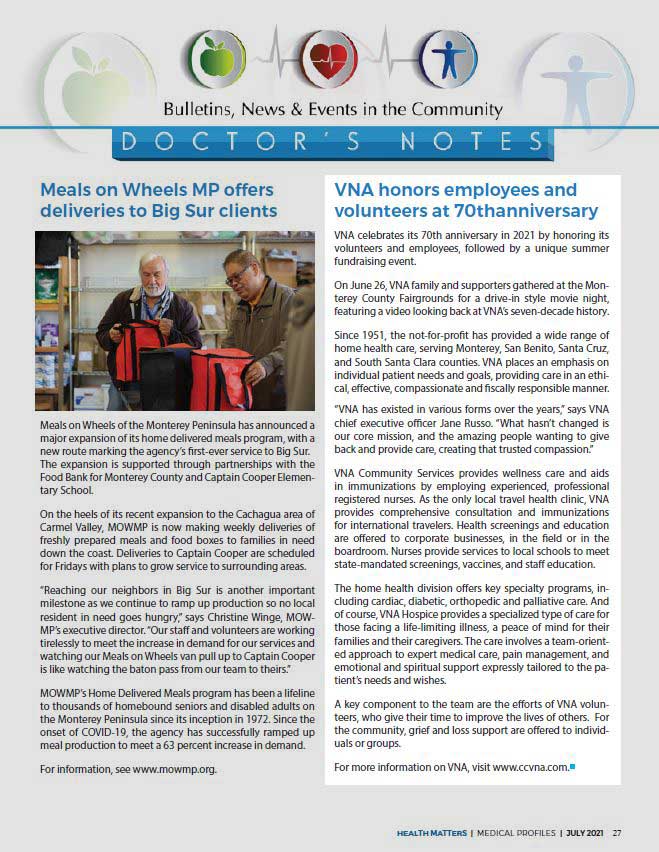
Health Matters Features VNA & Hospice 70th Anniversary
Health Matters Features VNA & Hospice 70th Anniversary
VNA Celebrates its 70th anniversary in 2021 by honoring its volunteers and employees, followed by a unique Summer fundraising event. Read more...
On June 26, VNA family and supporters gathered at the Monterey County Fairgrounds for a drive-in style movie night, featuring a video looking back at VNA’s seven-decade history.
Since 1951, the not-for-profit has provided a wide range of home health care, serving Monterey, San Benito, Santa Cruz, and South Santa Clara counties. VNA places an emphasis on individual patient needs and goals, providing care in an ethical, effective, compassionate and fiscally responsible manner.
“VNA has existed in various forms over the years,” says VNA chief executive officer Jane Russo. “What hasn’t changed is our core mission, and the amazing people wanting to give back and provide care, creating that trusted compassion.”
VNA Community Services provides wellness care and aids in immunizations by employing experienced, professional registered nurses. As the only local travel health clinic, VNA provides comprehensive consultation and immunizations for international travelers. Health screenings and education are offered to corporate businesses, in the field or in the boardroom. Nurses provide services to local schools to meet state-mandated screenings, vaccines, and staff education.
The home health division offers key specialty programs, including cardiac, diabetic, orthopedic and palliative care. And of course, VNA Hospice provides a specialized type of care for those facing a life-limiting illness, a peace of mind for their families and their caregivers. The care involves a team-oriented approach to expert medical care, pain management, and emotional and spiritual support expressly tailored to the patient’s needs and wishes.
A key component to the team are the efforts of VNA volunteers, who give their time to improve the lives of others. For the community, grief and loss support are offered to individuals or groups.