
Choosing a hospice provider is one of the most important decisions a family can make. It is a choice that shapes the final chapter of a loved one's life. It focuses on comfort, dignity, and peace. As we look toward 2026, the standards for quality hospice care are clearer than ever.
It’s no longer just about medical services. It's about delivering compassionate and holistic support that honors a person's journey. Families across the Central Coast of California need reliable information. This guide will help you spot quality care.
This article focuses on five key areas. We will cover the importance of a coordinated care team, transparent quality data, and 24/7 support. We'll also discuss personalized care plans and official accreditations. With these tools, you can make an informed choice.
1. Look for Transparent Quality Metrics and Patient Satisfaction Scores
When choosing a provider in 2026, quality metrics matter more than ever. Trustworthy providers are open about their performance. They share data from patient and family satisfaction surveys.
Families can review Medicare star ratings and CAHPS (Consumer Assessment of Healthcare Providers and Systems) scores. These scores show how other families rated their experience. Providers with transparent quality data, like Central Coast VNA & Hospice, build trust by showing these results.
According to the National Hospice and Palliative Care Organization (NHPCO), over 1.72 million Medicare beneficiaries received hospice services in 2020 (NHPCO, 2021). This highlights how many families rely on these services and the importance of verified quality. You can learn more about how an interdisciplinary team works in hospice care to deliver this quality care.
What to Look For in Quality Data
High-quality providers don't just collect feedback; they use it. They make real changes based on what families say. This shows a commitment to getting better.
Here are signs of a quality-focused provider:
- Publicly Shared Scores: They share their CAHPS scores and Medicare star ratings on their website or upon request.
- High Satisfaction Rates: Their scores are consistently high, showing that patients and families feel well-supported.
- Clear Improvement Plans: They can explain how they use feedback to improve their services, such as staff training or new communication tools.
Why Verified Metrics are a Non-Negotiable
Verified data gives you an unbiased look at a hospice’s performance. It helps you compare providers on key areas. These areas include pain management, emotional support, and communication.
A hospice confident in its care will share its scores proudly. They see family feedback as a gift, not a critique. This transparency is a key sign of quality.
Actionable Questions to Ask
When evaluating a hospice provider, dig deeper. Use these specific questions:
- Can you share your most recent CAHPS Hospice Survey results with me?
- How do your scores compare to state and national averages?
- Can you give me an example of a change you made based on family feedback?
- What is your process for handling a complaint or concern?
2. Choose a Provider with Local Roots and Community Ties
Where your hospice provider comes from matters. In 2026, the difference between a local nonprofit and a national chain is clear. Local providers often have a stronger connection to the community they serve.

Unlike national chains with rotating staff, a local agency’s clinicians live and work in the same community. For over 74 years, Central Coast VNA & Hospice has served Monterey County, San Benito County, Santa Cruz County, and South Santa Clara County. This local connection builds trust and ensures better continuity of care. You can learn more about compassionate hospice pain management delivered by a local team.
What Local Roots Look Like
A provider with deep community ties is more than just a business. It is a dedicated partner in the local healthcare system. They are invested in the well-being of their neighbors.
A locally grounded provider often has:
- A Stable, Local Team: The Registered Nurses, Hospice Aides, and Chaplains are from the area and are committed to serving their community long-term.
- Strong Local Relationships: They have established partnerships with local doctors, hospitals, and community organizations.
- Nonprofit, Mission-Driven Focus: Many local providers are nonprofits. They reinvest their resources into patient care and community programs, not shareholder profits.
- Community Board of Directors: Their leadership is often made up of local community members who ensure the organization stays true to its mission.
Why Local Matters for Your Care
Choosing a local provider means you are more likely to receive personalized care. The team understands the local culture and resources. This leads to a more seamless and supportive experience.
A local, nonprofit provider like Central Coast VNA & Hospice puts patients first. Their mission is to provide comfort and dignity, not to generate profit. This focus is a core part of their identity.
Actionable Questions to Ask
Understand a provider’s connection to your community. Use these questions to learn more:
- How long has your organization been serving our community?
- Are your clinical team members employees, or are they contractors?
- Is your agency a nonprofit or a for-profit company?
- Who serves on your board of directors? Are they from our local area?
3. Confirm They Offer True 24/7 Clinical Support
A terminal illness does not follow a 9-to-5 schedule. A crisis like unmanaged pain or breathing difficulties can happen at any time. Quality hospice care in 2026 means having access to real clinical support, 24/7.
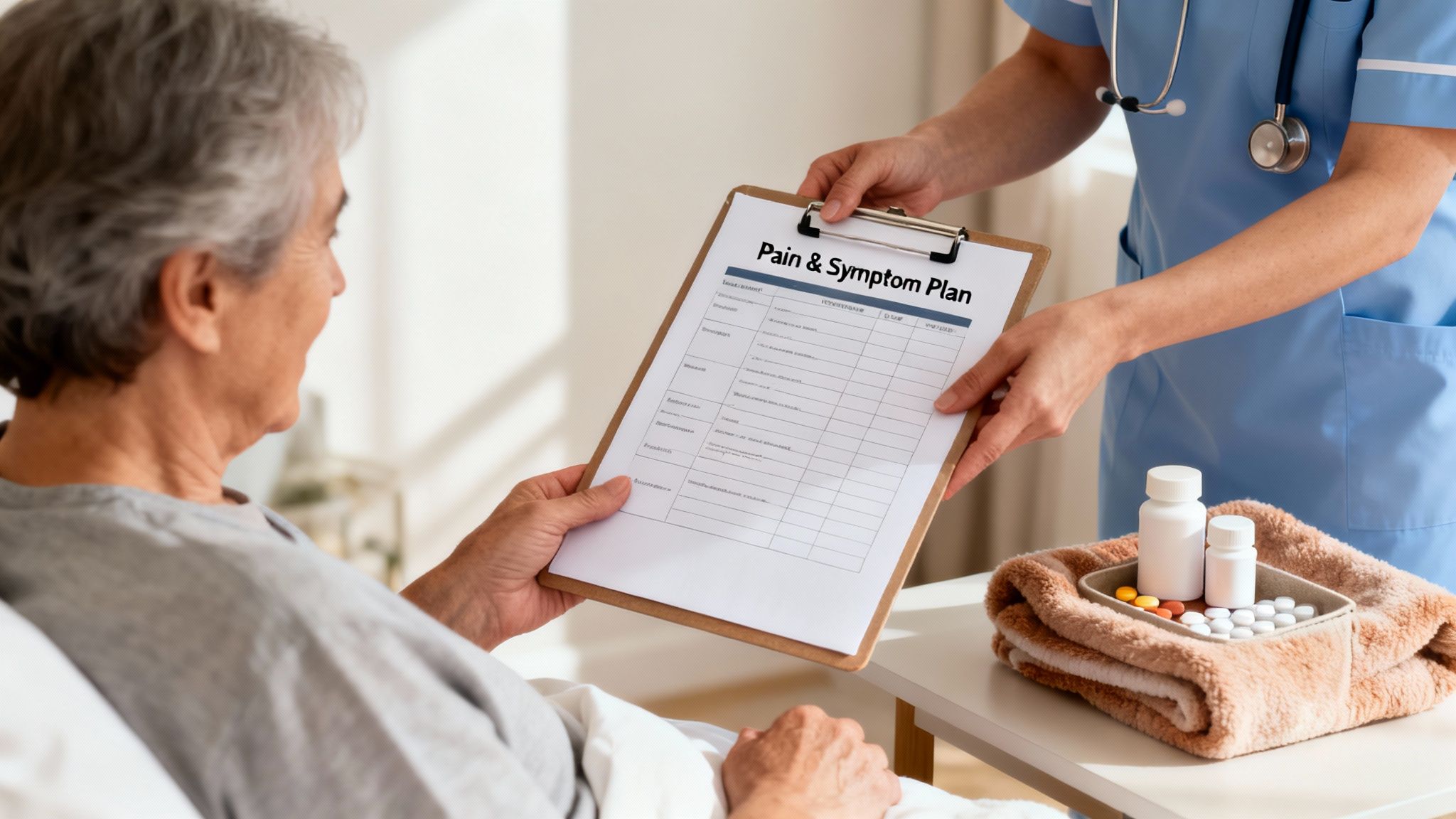
True 24/7 support means you can reach an experienced hospice Registered Nurse by phone at 3 a.m. It is not an answering service that takes a message. It is an active clinical safety net for patients and families. You can learn how trust, transparency, and testimonials help in choosing the right hospice for your loved one.
What 24/7 Support Looks Like
Round-the-clock availability provides great peace of mind. It prevents late-night trips to the emergency room. It also empowers families to manage symptoms at home with confidence.
High-quality 24/7 support includes:
- After-Hours Triage by a Registered Nurse: When you call, you speak directly with a nurse who can provide immediate guidance.
- On-Call Staff for Home Visits: The provider has nurses and other staff available to make urgent visits at night or on weekends.
- Fully Staffed Hospice Shifts: For patients with complex needs, some providers offer continuous care with staff present in the home.
- A Clear Emergency Plan: The team gives you clear instructions on who to call and what to do if a crisis occurs.
Why Constant Availability is Non-Negotiable
Waiting for help when your loved one is in distress is stressful. A quality hospice understands this. They build their services to be responsive whenever a need arises.
Central Coast VNA & Hospice offers fully staffed hospice shifts and on-call support 24/7. This ensures that expert help is always just a phone call away. This commitment is a hallmark of excellent care.
Actionable Questions to Ask
Get specific about after-hours support. Use these questions to understand what a provider truly offers:
- If I call after hours, who will answer the phone? Will it be a Registered Nurse?
- What is your average response time for a nurse to arrive at our home for an urgent need?
- Do you offer continuous care in the home if symptoms become severe?
- What kind of support is available on weekends and holidays?
4. Ensure Care Plans are Tailored to the Individual
Every patient is different. Their journey, values, and goals are unique. Quality hospice providers in 2026 recognize this and create care plans that are tailored to each person.

One-size-fits-all care is not quality care. The best providers use an interdisciplinary team. This team includes a physician, Registered Nurse, Hospice Aide, Medical Social Worker, and Chaplain. They collaborate with the family to shape care with them, not for them. To learn about how hospice care is funded, this link provides helpful information.
What a Personalized Care Plan Looks Like
A tailored care plan goes beyond medical orders. It reflects the patient's personal goals, culture, and preferences. It is a living document that changes as the patient's needs change.
A personalized plan should include:
- Patient-Centered Goals: The plan is built around what is most important to the patient, whether that's being pain-free or being able to enjoy a final family gathering.
- Cultural and Spiritual Respect: It honors the patient’s background, beliefs, and traditions.
- Family Involvement: The hospice team actively listens to the family and includes their insights and concerns in the plan.
- Regular Team Meetings: The full care team meets often to discuss the patient’s progress and adjust the plan as needed.
Why Personalization is a Sign of Quality
Personalized care shows that a provider sees the patient as a whole person, not just a diagnosis. It ensures that the care provided is meaningful and respectful. This approach helps maintain the patient’s dignity and sense of control.
At Central Coast VNA & Hospice, our interdisciplinary teams work closely with families. We listen to their stories and honor their wishes. This collaboration is at the heart of our compassionate care model. You can find more information here: guidance for culturally inclusive hospice care.
Actionable Questions to Ask
Find out how a provider tailors their care. Use these questions to see if they are a good fit:
- How will my loved one and our family be involved in creating the care plan?
- How often does the care team meet to review and update the plan?
- Can you give an example of how you have adapted a care plan to meet a patient's unique cultural or personal wishes?
- Who is our main point of contact on the care team?
5. Verify Accreditation and Awards
Not all hospice providers are held to the same standards. Official accreditations and awards are important signs of quality. They show that a provider has met rigorous national standards for patient safety and care.

Look for accreditations from organizations like The Joint Commission. These are not just logos on a website. They reflect a provider's commitment to consistent, measurable excellence in care. Awards like "Hospice Honors" also show that a provider is recognized as a national leader.
What Accreditations and Awards Mean
Achieving these honors is a difficult process. It requires a hospice to undergo a thorough review of its policies, procedures, and patient outcomes. It is proof of a deep commitment to high-quality care. A crucial aspect of personalized care, especially in end-of-life settings, involves understanding how staff are trained to provide specialized care tips for dementia patients or others with unique needs.
Indicators of excellence include:
- The Joint Commission Accreditation: This is considered the gold standard in healthcare accreditation.
- Community Health Accreditation Partner (CHAP) Accreditation: Another highly respected accrediting body for home and community-based care.
- Hospice Honors Recognition: An award given to hospices that score above the national average on patient and family satisfaction surveys.
- We Honor Veterans Program: Shows a commitment to meeting the unique needs of veterans at the end of life.
Why This Verification Matters
These credentials provide an extra layer of assurance. They confirm that an independent organization has reviewed the hospice and found it to meet high standards. This can give you confidence in your decision.
Central Coast VNA & Hospice is proud to be accredited by The Joint Commission. This reflects our long-standing dedication to providing the best possible care to the communities we serve. It is a key part of our promise to our patients and their families.
Actionable Questions to Ask
Ask providers about their credentials. Their answers will tell you a lot about their commitment to quality.
- Is your hospice accredited by The Joint Commission or another national body?
- Have you received any recent awards or recognition for patient care?
- How do you use the accreditation process to improve your services?
- Are your clinicians certified in hospice and palliative care?
Your Local Partner in Compassionate, Quality-First Care
Choosing a hospice provider is a deeply personal decision. By using these five ways to spot quality care, you can make an informed choice. Look for transparent quality data and a provider with local roots. Ensure they offer true 24/7 support and personalized care plans. Finally, verify their accreditations.
These steps empower you to find a partner who will honor your loved one with dignity. The right hospice provides a full support system for the entire family. It lifts burdens and offers peace of mind.
For families in Monterey, Santa Cruz, Salinas, or Hollister, Central Coast VNA & Hospice is here to help. For over 74 years, our nonprofit mission has guided our work. Our local team is dedicated to providing compassionate, quality-first care.
Choosing a hospice is an act of love. Let it also be an act of informed confidence. Contact Central Coast VNA & Hospice to learn how our quality-first, locally grounded approach can support your family in 2026.
When you're ready to find a partner who exemplifies the highest standards of care, Central Coast VNA & Hospice is here to help. Our local, nonprofit team has been providing compassionate, quality-first care on the Central Coast for over 74 years. Contact us today to learn more about our services and let us support your family on this journey. Learn more about our services.
Frequently Asked Questions (FAQs)
1. What is the difference between palliative care and hospice care?
Palliative care can be provided at any stage of a serious illness and can be given alongside curative treatments. Hospice care is for patients with a terminal illness who are no longer seeking curative treatment and focuses on comfort and quality of life. Central Coast VNA & Hospice provides both as part of our Continuum of Care.
2. How is hospice care paid for?
Hospice care is covered by Medicare, Medicaid, and most private insurance plans. As a nonprofit, Central Coast VNA & Hospice provides care to everyone who needs it, regardless of their ability to pay.
3. Can hospice care be provided at home?
Yes, most hospice care is provided in the patient's home. It can also be provided in nursing homes, assisted living facilities, or a hospital. Our team at Central Coast VNA & Hospice specializes in providing expert hospice care at home.
4. What does the hospice interdisciplinary team do?
The team works together to meet all of the patient's needs—physical, emotional, and spiritual. The team includes a physician, Registered Nurse, Hospice Aide, Medical Social Worker, Chaplain, and volunteers who create and manage a personalized care plan.
5. How quickly can hospice services begin?
Once a referral is made and the patient is determined to be eligible, services can often begin within 24 to 48 hours. Contact Central Coast VNA & Hospice to learn more about starting hospice care in Monterey County or our other service areas.