
When a loved one starts hospice, families often ask, "Who's in charge of their medical care now?" Many people worry that choosing comfort means losing medical oversight from a doctor.
This is a common fear, but the reality is just the opposite. Medical care doesn't stop; it changes its focus. Instead of treatments to cure an illness, your loved one gets an entire team of specialists focused on comfort and quality of life at home.
Your New Medical Team After Starting Hospice
A big myth about hospice is that you give up medical supervision. In reality, you bring in a dedicated team to lead your loved one’s care plan. This team approach often provides more responsive and personal support than traditional healthcare.
Once hospice begins, this specialized team manages everything related to the patient’s terminal illness. This is a trusted model of care. According to the National Hospice and Palliative Care Organization (NHPCO), over 1.72 million Medicare beneficiaries received hospice services in 2020 (NHPCO, 2021).

This shift in medical management can feel like a big change. Here's a simple way to see how the focus of care changes.
How Medical Management Changes With Hospice
| Care Aspect | Before Hospice (Curative Care) | After Starting Hospice (Comfort Care) |
|---|---|---|
| Primary Goal | Curing the disease and prolonging life | Managing symptoms and maximizing quality of life |
| Primary Manager | The patient's primary care physician or specialist | The hospice interdisciplinary team, led by the hospice physician |
| Focus of Care | Aggressive treatments, hospitalizations, lab tests | Pain relief, emotional support, and personal comfort |
This table shows the move from a cure-focused mindset to a comfort-focused one, with a new team leading the way.
Introducing the Core Medical Team
At Central Coast VNA & Hospice, our team is built on patient-centered care refined over 74+ years of nonprofit service. The primary medical managers for your loved one will include:
- The Hospice Physician: This doctor has special training in end-of-life medicine and is often called the Medical Director. They create the patient's plan of care and lead the entire team.
- The Registered Nurse (RN): The RN is your case manager and main point of contact. They make regular home visits, check on symptoms, give medications, and teach the family how to provide care.
- The Hospice Aide: This certified professional provides hands-on personal care. They help with things like bathing and dressing to maintain a patient's comfort and dignity.
This team structure ensures that medical, emotional, and practical needs are all met. You can learn more in our guide on what happens when someone starts hospice care.
If a patient cannot make their own medical choices, the care team works with their legal representative. It's helpful for families to understand legal matters, like the Role of Guardians in Planning End-of-Life Wishes, to honor their loved one's choices.
The Role Of The Hospice Physician And Nurse
One of the most common worries we hear is that choosing hospice means giving up the patient's doctor. This myth often causes families to wait too long to get the support they need. The truth is, hospice care enhances medical supervision with a team of licensed professionals.
When a patient joins Central Coast VNA & Hospice, their medical care shifts to our specialized team. This model is at the heart of the U.S. hospice system, which serves millions of Americans each year. You can discover more insights about hospice care statistics to see how vital this support is.

The Hospice Physician: The Symptom Relief Expert
Think of the hospice physician as the expert for your loved one's care. This doctor is a specialist in pain and symptom management. They design and oversee the entire plan of care to make sure it works effectively.
The hospice physician works closely with every team member, especially the Registered Nurse. They review the patient’s progress and adjust medications to maximize comfort. While not in the home daily, their medical oversight guides every action the team takes.
The Registered Nurse: Your Hands-On Guide
The Registered Nurse (RN) is your family's case manager and main contact. They are the physician's eyes and ears in the home. The RN makes regular visits to check on symptoms, provide treatments, and update the rest of the team.
Our nurses are also compassionate teachers. They show family members how to handle daily care with confidence, like giving medications or knowing what to do if a new symptom appears. To learn more about the role of skilled nursing care, visit our blog.
At Central Coast VNA & Hospice, our medical team provides 24/7 on-call support. A licensed clinician is always a phone call away, ready to provide guidance or make an in-home visit. Families are never on their own.
Together, the hospice physician and nurse form a powerful partnership. This teamwork ensures medical care is thoughtfully tailored to your loved one’s unique needs. Their skills bring peace of mind to families across Monterey, San Benito, Santa Cruz, and South Santa Clara counties.
How Your Family Doctor Stays Involved
A big worry for families is losing a trusted family doctor. This is an understandable concern. This physician knows your loved one’s history and has built a relationship with them. Many people wrongly believe that hospice means saying goodbye to that doctor.
The truth is, hospice doesn't replace your doctor. It adds a team of specialists to work alongside them. It's a partnership, and you have a say in how your physician stays involved in the care plan.
Your Doctor Can Be Part of the Team
When hospice begins, your family doctor can stay on as the attending physician. In this role, they become a key collaborator with the hospice team. The doctor you know and trust continues to provide guidance and stays informed about your loved one's condition.
The hospice team will manage the day-to-day symptoms related to the terminal illness. This includes things like pain, shortness of breath, or anxiety. At the same time, your attending physician can help manage other health issues not related to the hospice diagnosis.
For example, if your loved one is on hospice for heart disease but also has diabetes, the hospice team will manage heart-related symptoms. Meanwhile, your family doctor can consult on their diabetes care, working with our experts.
At Central Coast VNA & Hospice, we respect the relationships patients have with their physicians. We welcome them as partners in care across Monterey, San Benito, Santa Cruz, and South Santa Clara counties.
A Focus on Collaboration and Comfort
Think of it this way: the hospice team brings expertise in comfort, while your family doctor brings a deep understanding of your loved one’s health history. We communicate regularly with the attending physician to give updates and discuss the care plan.
This teamwork ensures that medical decisions are seamless and honor the patient’s goals. By working together, the hospice team and family doctor create a strong support system. You aren't losing a doctor—you're gaining a whole team.
Understanding Your Full Interdisciplinary Team
The hospice physician and nurse manage your loved one’s direct medical needs. But they are part of a much larger team. Hospice is designed to support the whole person—not just physical symptoms.
This complete approach is where Central Coast VNA & Hospice shines. We bring together specialists who address the emotional, spiritual, and practical needs of the patient and family. This reflects the nonprofit mission we’ve upheld on the Central Coast for over 74 years.
More Than Just Medical Experts
The full care team includes professionals with unique and essential skills. Their roles are just as vital as the medical staff in managing care.
- Medical Social Worker: Our licensed social workers are expert guides. They help families with issues like advance care planning, connect them to community resources, and offer counseling.
- Chaplain: Spiritual care is a core part of hospice for people of all faiths and beliefs. Our chaplains provide a listening ear and support that honors your family’s personal values.
- Hospice Aide: Our certified Hospice Aides provide gentle, hands-on personal care. They assist with daily activities like bathing and dressing, which helps maintain comfort and dignity.
- Volunteers: Our specially trained volunteers offer companionship and a break for families. They might sit with a patient, read a book aloud, or simply provide a quiet, comforting presence.
This diagram shows how the entire hospice team works with your loved one's own doctor.
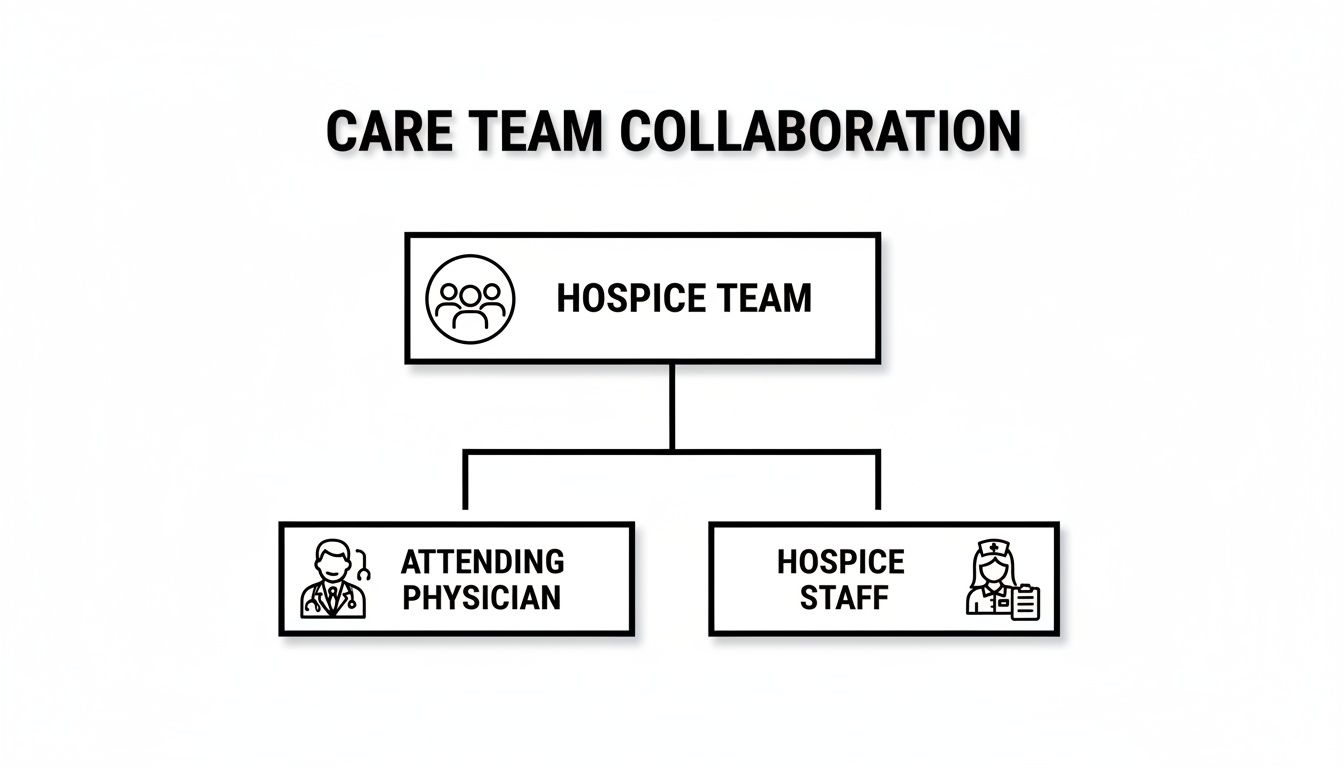
The key is partnership. The hospice team and attending physician work together closely, ensuring every aspect of care is covered.
At Central Coast VNA & Hospice, our interdisciplinary team meets regularly to discuss each patient’s needs. This ensures coordinated support for families in Monterey County, San Benito County, Santa Cruz County, and South Santa Clara County.
This team model means you are gaining a complete circle of support. For a deeper look, you can explore our family's guide to hospice care at home.
Managing Symptoms And Medications Around The Clock
A great comfort of hospice is knowing that expert medical help is always available. Families often fear being alone during a crisis in the middle of the night. With hospice, that anxiety is replaced by reassurance.
Once hospice begins, our team takes the lead on managing all medications and symptoms related to the terminal illness. Our goal is to keep the patient as comfortable as possible, 24 hours a day, seven days a week.
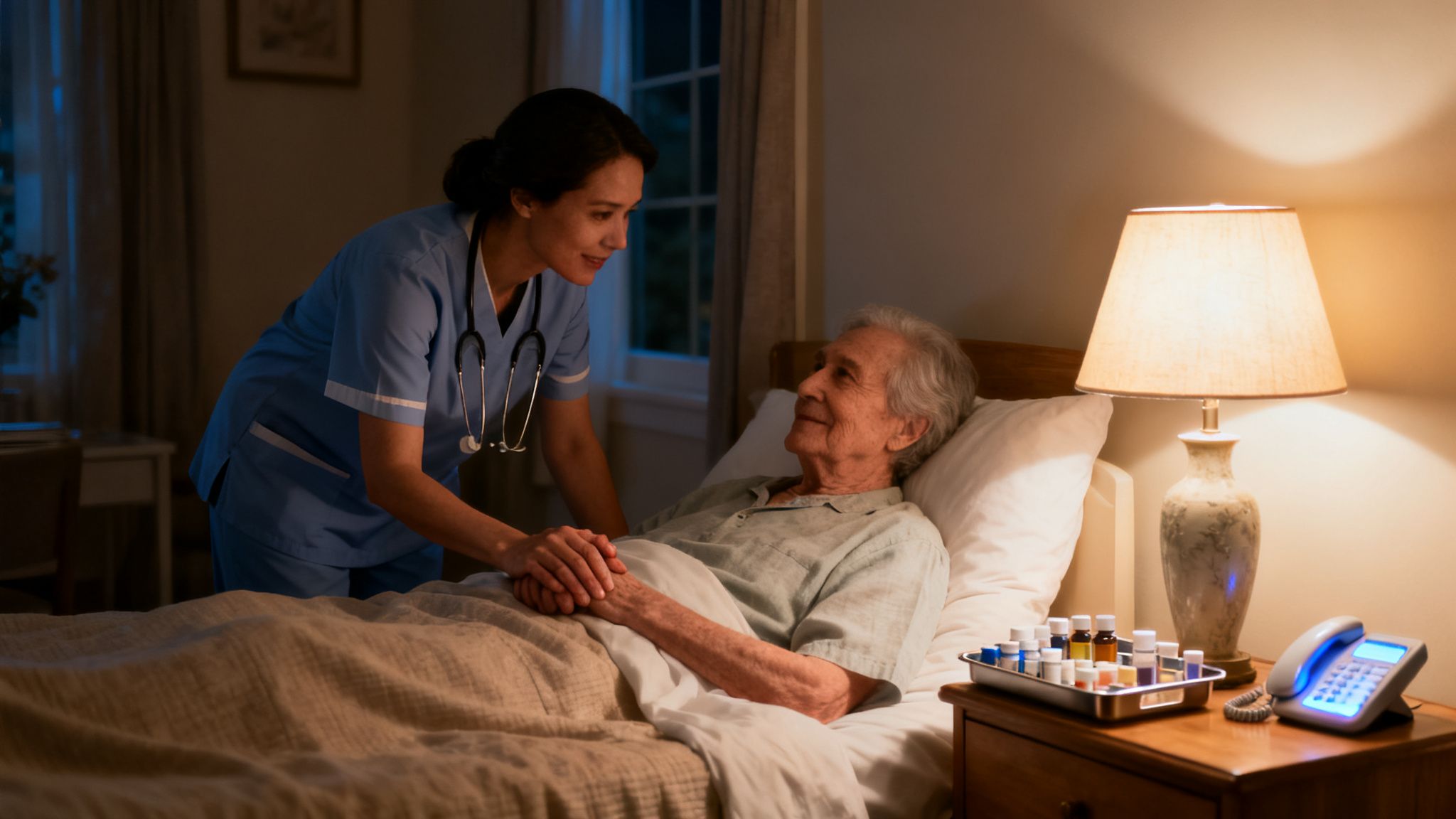
Around-The-Clock Clinical Support
This constant availability is a key part of hospice care. It allows patients to remain comfortably at home and avoid stressful trips to the emergency room.
At Central Coast VNA & Hospice, our clinical team is always on call. If a new symptom like pain appears at 2 a.m., you just call our number. A Registered Nurse will be on the line to walk you through it.
If needed, a nurse can make an in-home visit—day or night—to assess the situation and adjust treatments. This responsive care model means families in Monterey, Santa Cruz, and San Benito counties are never without expert help. You can read more about our specialized pain and symptom management services.
Expert Medication Management
Managing medications at the end of life can feel overwhelming. The hospice team simplifies this process. They work with the hospice physician to create a medication plan focused on comfort.
The team then coordinates with a pharmacy to have all prescriptions delivered to the home. They continuously monitor symptoms and adjust medications as needed. This proactive approach prevents crises and ensures peace and dignity.
This constant watchfulness is central to who manages medical care after starting hospice. It’s not just about having a plan; it’s about having a team ready to act at a moment’s notice.
How Central Coast VNA & Hospice Coordinates Your Care
A dedicated team manages medical care after starting hospice, not just one person. At Central Coast VNA & Hospice, our approach is built on 74+ years of nonprofit service to our local communities. The best care comes from a team that works together, with your family at the center.
Our interdisciplinary team meets regularly. We discuss each patient's progress and adjust the care plan to meet their changing needs. It's a truly collaborative process that puts your loved one first.
A Seamless Continuum of Care
This coordinated approach is what we are all about. As a local provider offering a full continuum of care, we provide smooth transitions from home health to palliative care and, when the time is right, to hospice care.
This means you work with a familiar, trusted organization every step of the way. You can read more about the difference this makes in our stories about how Central Coast VNA & Hospice impacts lives.
Our deep roots in Monterey County, San Benito County, Santa Cruz County, and South Santa Clara County drive us. We are your neighbors, committed to providing compassionate care to the communities we call home. You can learn more about the importance of teamwork and care coordination here.
Every family’s journey is unique, and our team is here to listen. We honor your loved one's wishes by creating a care plan that reflects their goals for comfort and dignity.
If you’re in Monterey, Hollister, Salinas, or Santa Cruz and have questions about hospice care, our local experts can help. We want families on the Central Coast to feel supported, not overwhelmed.
Contact Central Coast VNA & Hospice today at (831) 375-9882 to learn how our team can support your family. We’ll walk you through what to expect and how our medical team stays involved every step of the way.
Frequently Asked Questions About Hospice Medical Care
It is normal to have questions when considering hospice. Understanding the practical side of medical care can bring peace of mind. Here are some common questions we hear from families.
Who is in charge of medical care in hospice?
The hospice interdisciplinary team manages medical care. This team is led by a hospice physician and includes a Registered Nurse, Hospice Aide, and other professionals. They work together to manage symptoms and create a plan focused on comfort.
Can we keep our family doctor after starting hospice?
Yes, absolutely. Your family doctor can choose to stay involved as the "attending physician." In this role, they collaborate with the hospice team and remain a valued partner in your loved one’s care.
Who pays for medications after hospice starts?
The Medicare Hospice Benefit typically covers medications related to the terminal illness. The hospice team orders these medications and has them delivered to your home. Prescriptions for other conditions are usually still covered by your original insurance plan.
What happens if there is a medical emergency at night?
Instead of calling 911, you call the hospice team directly. Central Coast VNA & Hospice provides 24/7 on-call support from a Registered Nurse. A nurse can provide guidance over the phone or make an in-home visit, day or night, to manage the situation.
Does hospice mean stopping all medical treatments?
No. Hospice care shifts the focus from curing an illness to providing comfort. Medical care continues, but the goal is to manage symptoms and improve quality of life. Any treatment that makes the patient feel better is an important part of hospice care.
At Central Coast VNA & Hospice, our team is always here to provide clear answers and compassionate support. If you have more questions about hospice care in Monterey, San Benito, Santa Cruz, or South Santa Clara counties, contact us today at (831) 375-9882 or explore our services at https://ccvna.com.