
When you hear the term "heart failure," it can sound scary. But it does not mean the heart has suddenly stopped working.
Instead, think of it like a pump that has grown weaker over time. It still works, but it cannot pump blood as well as it used to. For seniors, heart failure means the heart muscle is weak and struggles to pump blood efficiently.
This condition is common in older adults. Understanding its early signs is the first step toward managing it well. Often, it begins with small changes you might think are just normal aging. These can include unusual fatigue, shortness of breath, or swelling in the legs and ankles. Noticing these changes is key to living a good quality of life. For a deeper clinical understanding, it's also helpful to know how the heart is divided into different cardiac segments for diagnostic accuracy.
Why Early Recognition Matters
Spotting the symptoms of heart failure in elderly loved ones early allows for timely medical help. This can slow down how fast the condition gets worse. With the right care plan, seniors can continue living safely and comfortably at home.
Central Coast VNA & Hospice offers a complete continuum of care to support families. With over 74 years of nonprofit service, our mission is to provide compassionate, expert care. We serve Monterey County, San Benito County, Santa Cruz County, and South Santa Clara County. We offer:
- Home Health: A skilled Registered Nurse comes to your home to check symptoms and manage medications.
- Palliative Care: This specialized support focuses on relieving discomfort and improving quality of life at any stage.
- Hospice Care: We provide compassionate end-of-life care when comfort is the main goal.
Recognizing heart failure symptoms is not just about finding a medical issue. It’s about opening the door to support that can make a huge difference. Proper heart failure management helps seniors keep their independence and dignity.
Recognizing the Most Common Heart Failure Symptoms
When the heart does not pump strongly, the body sends signals that something is wrong. Learning to spot these signs is the most important step in managing heart failure. These signs often appear slowly and are a result of the heart's struggle to circulate blood.
One of the first things people notice is shortness of breath, also called dyspnea. An older adult might feel winded after simple tasks, like walking to the mailbox. This happens because the weak heart cannot keep up with the body’s need for oxygen, causing fluid to back up into the lungs.
This next infographic shows how common shortness of breath is. It also shows the different ways it can appear.
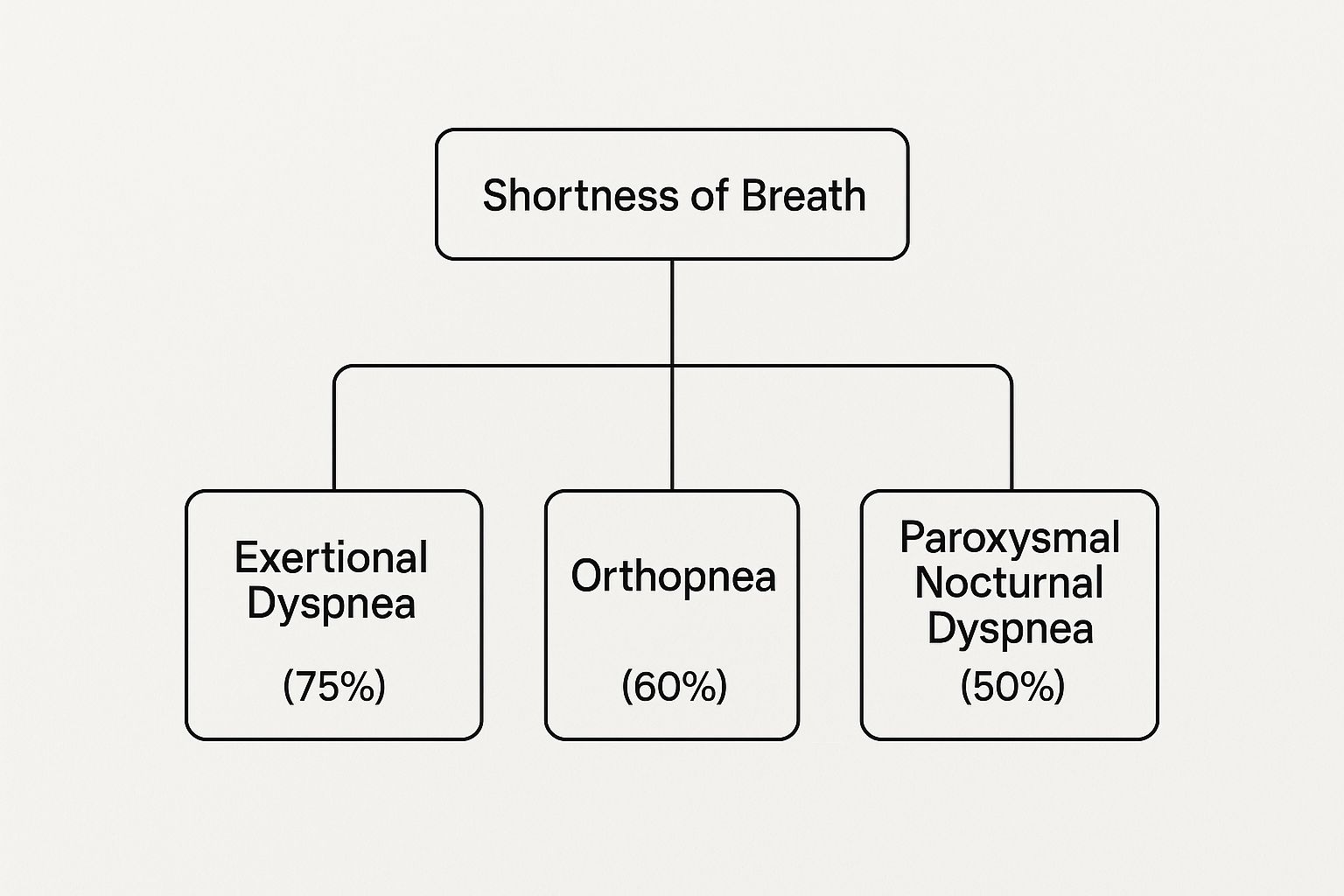
As you can see, feeling breathless during activity is the most common issue. It is also a major problem for people when they are simply lying down.
Fluid Buildup and Swelling
Another key sign of heart failure is noticeable swelling, or edema. This is caused by the body holding onto extra fluid. When the heart cannot pump blood forward well, it backs up in the veins. This pressure pushes fluid out of the blood vessels and into body tissues.
You will typically see this swelling in certain places:
- Legs, ankles, and feet: Shoes might feel too tight, or you may notice an indent in the skin after pressing it.
- Abdomen: The belly area can feel bloated, swollen, and a little tender.
- Sudden weight gain: Gaining a few pounds in a couple of days is a red flag for fluid buildup, not fat.
This same fluid can also go into the lungs. This leads to a persistent cough or wheezing that gets worse at night when lying flat. It is a direct result of the heart struggling to manage the body's fluid.
To make these connections clearer, here is a simple breakdown of the most common symptoms and their causes.
Common Heart Failure Symptoms and Their Causes
| Symptom | What It Looks or Feels Like | Why It Happens (Simple Explanation) |
|---|---|---|
| Shortness of Breath | Feeling winded with activity or when lying down. | The heart can't pump blood well, causing fluid to back up in the lungs. |
| Swelling (Edema) | Puffy legs, ankles, feet, or a swollen belly. Sudden weight gain. | Poor blood flow causes fluid to leak from blood vessels into body tissues. |
| Persistent Cough | A hacking, "wet" cough or wheezing, often worse at night. | Fluid from the lungs (pulmonary edema) irritates the airways. |
| Fatigue | Feeling unusually tired or weak, even after rest. | The body isn't getting enough oxygen-rich blood to the muscles and organs. |
| Rapid Heartbeat | A racing, fluttering, or pounding feeling in the chest. | The heart beats faster to try to make up for its weak pumping action. |
Understanding these links can help you spot the signs early. It also helps you explain them clearly to a healthcare provider.
Changes in Heart Rhythm
A rapid or irregular heartbeat is another key symptom. It can feel like your heart is racing, fluttering, or skipping beats. This happens because the heart is working overtime. It beats faster to try to circulate enough blood.
These feelings can be scary. However, they are the heart’s attempt to keep up with the body's needs. It's important to know the difference between these feelings and other heart problems. You can learn more by reading about the major symptoms of a heart attack.
Heart failure is a major global health issue. It affects an estimated 64 million people worldwide. As the condition gets worse, these symptoms often become more severe, making daily life harder.
Spotting Subtle Symptoms Often Mistaken for Aging
Not every sign of heart failure is dramatic. Many of the earliest warnings are quiet and easy to dismiss as just a part of getting older. Learning to recognize these subtle clues is key to getting help when it matters most.

One of the most common but overlooked symptoms is a deep, lasting fatigue. This is not just feeling a little tired. It is a deep exhaustion that stays even after a full night of rest. When the heart is not pumping strongly, it cannot get enough oxygen-rich blood to the body, leaving a person feeling drained.
Changes in Appetite and Cognition
A sudden loss of appetite or feeling of nausea can also be a quiet signal. If the heart struggles to pump, the digestive system gets less blood flow. This can make eating feel like a chore.
You might also notice moments of confusion, memory loss, or cloudy thinking. This can be scary for families to see, but there is a physical reason for it. Reduced blood flow to the brain can affect how well a person thinks, creating what some call "brain fog."
"My father just wasn't himself. He lost interest in his favorite foods and seemed to get confused during conversations. We thought it was just age, but it was his heart trying to tell us something was wrong."
Often, it is the mix of these symptoms that points to a bigger problem. These subtle changes can disrupt daily life. This is where having support at home is so important. Understanding how to care for elderly parents at home can help you create a safe environment.
Another surprising sign is an increased need to urinate at night, called nocturia. This happens for a specific reason:
- During the day, the weaker heart cannot send enough blood to the kidneys.
- Because of this, the kidneys do not filter out extra fluid from the body very well.
- At night, when the person lies down, gravity helps blood flow back to the heart more easily.
- This improved circulation "wakes up" the kidneys, which start working to process the fluid that built up during the day.
This cycle disrupts sleep. It also adds to the feeling of deep fatigue.
When symptoms interfere with daily comfort, palliative care can help. Central Coast VNA & Hospice offers palliative care services in Monterey County and nearby areas. We focus on managing these symptoms to improve quality of life at home.
When Heart Failure Symptoms Get Worse
Heart failure is a progressive condition. This means symptoms can change and get worse over time. Often, specific triggers can cause a sudden decline. Understanding them is the first step to helping your loved one stay as healthy as possible.
These changes are often caused by everyday things. A diet too high in salt can make the body hold onto fluid, straining the heart. Forgetting to take medications can also upset the balance needed to control symptoms. Even a simple cold can make heart failure symptoms worse.

Knowing When to Call for Help
It is very important to know the difference between a small change and a serious warning sign. This knowledge lets you act with confidence. Being prepared is a big part of preventing hospital readmissions, a major goal for managing a chronic illness at home.
You should call the doctor if you notice:
- A sudden weight gain of 2-3 pounds in 24 hours or 5 pounds in a week.
- More swelling than usual in the legs, ankles, or belly.
- Increased trouble breathing during normal daily activities.
- A persistent dry, hacking cough that seems to be getting worse.
These signs often mean the heart is working too hard. A simple change in medication or diet might be all that is needed. Getting a medical professional involved early can stop a small problem from becoming a big one.
But some symptoms need immediate, emergency attention. If your loved one has severe shortness of breath while resting, chest pain, fainting, or sudden confusion, you should call 911 right away.
How In-Home Care Provides Support
This is where the support of Central Coast VNA & Hospice can make a real difference. Our skilled clinicians work with families across Monterey, San Benito, and Santa Cruz counties to monitor these very changes.
- Home Health: A Registered Nurse can visit the home to check vital signs, track weight, and make sure medications are taken correctly.
- Palliative Care: For those who need more help managing symptoms, our palliative team focuses on relieving discomfort.
- Hospice Care: When goals shift to comfort, our hospice team provides compassionate care and support for the whole family.
Heart failure is the top reason older adults are hospitalized. Studies have found that mortality rates after a hospital stay can be as high as 13.7% within a year (NHPCO, 2021). You can read more about these findings on heart failure trends.
How Professional In-Home Care Can Help
For many families, managing heart failure at home can feel like a full-time job. It's easy to feel overwhelmed with medication schedules, symptom tracking, and daily support. This is where professional in-home care steps in, offering help and peace of mind.
At Central Coast VNA & Hospice, our nonprofit, mission-driven team gives your loved one compassionate support at home. Our skilled clinicians, from Registered Nurses to Hospice Aides, partner with you to manage this condition. We are proud to serve families across Monterey County, San Benito County, Santa Cruz County, and South Santa Clara County.
Expert Monitoring and Symptom Management
Having a clinical expert regularly check on your loved one is a huge relief for families. A Registered Nurse can track vital signs, look for fluid retention, and assess breathing. This helps catch small problems before they become emergencies.
Our clinicians work with your loved one's doctor to create a personal care plan. This often includes:
- Medication Management: Taking the right doses at the right times is key to keeping the heart working well.
- Symptom Tracking: We watch for increased swelling, sudden weight gain, or worsening shortness of breath.
- Dietary Guidance: Our team provides education on low-sodium diets to help prevent fluid buildup.
This hands-on support is proven to reduce stressful hospital visits. By managing symptoms at home, we help your loved one stay stable.
Bringing skilled nursing care into the home changes how families handle chronic illness. It shifts the focus from reacting to crises to providing proactive, compassionate support that improves daily comfort.
Education and Support for the Whole Family
Heart failure affects the entire family, not just one person. Our clinicians take time to educate everyone involved. This gives you the knowledge and confidence to provide support. We will explain which symptoms to watch for and what to do if they appear.
This partnership means you never feel alone. Whether your loved one needs the skilled support of home health, the symptom relief of palliative care, or the comfort of hospice, our team is there. We offer a full continuum of care that adapts as your family’s needs change.
We believe in empowering families with information. You can learn more about our dedicated home health care for congestive heart failure patients to see how we tailor our services. This commitment is central to our 74+ year legacy of nonprofit service to the Central Coast community.
Partnering with a Trusted Local Health Provider
Spotting the signs of heart failure in an elderly loved one is the first important step. It opens the door to getting them the compassionate support they deserve. We know this journey can feel overwhelming, but you do not have to walk it alone.
Having a trusted local partner can make all the difference. It helps in managing symptoms and improving your loved one's quality of life.
For over 74 years, Central Coast VNA & Hospice has been a steadfast, nonprofit healthcare provider in our community. We serve families across Monterey, San Benito, Santa Cruz, and South Santa Clara counties. Our services range from in-home health to palliative and hospice care. Our mission is to provide expert, dignified care that honors your family's needs.
Heart failure is a growing health challenge for older adults. Cases have more than doubled across the globe since 1990. You can discover more about these public health findings. This shows why it is so important to recognize symptoms early and get the right care.
If you have concerns about an older adult in your life, we are here to help. Contact Central Coast VNA & Hospice today to learn how our compassionate team can support your family.
Frequently Asked Questions
When a loved one is diagnosed with heart failure, you may have many questions. Getting clear, simple answers is the first step toward feeling more in control. Here are some of the most common questions we hear from families.
Our goal is to give you the information you need. We want you to understand what is ahead and how the right support can help.
Does heart failure mean the heart is about to stop?
No, not at all. This is a common fear, but heart failure means the heart muscle has weakened. It is not pumping as well as it used to. Think of it as a long-term condition, like diabetes, not a sudden event. With good medical care and support, many seniors live with heart failure for years.
Can heart failure symptoms be reversed or cured?
While there is no cure for heart failure, the symptoms can be managed and often improved. The right medications, a low-salt diet, and regular medical care can make a big difference. These steps can reduce swelling, make breathing easier, and improve a person's quality of life at home.
How can I tell if my mom's fatigue is just old age or heart failure?
This can be tricky. But the fatigue from heart failure is often a deep, lasting exhaustion that does not get better with rest. Look for other clues. Is the fatigue paired with other symptoms of heart failure in elderly adults, like shortness of breath, new ankle swelling, or a cough that won't go away? If she is too tired for her usual activities, it's time to talk to her doctor.
What kind of professional help is available at home?
In-home care provides a great layer of support. A Registered Nurse from Central Coast VNA & Hospice can visit your home to manage medications and watch for symptom changes. Palliative care is another type of support that focuses on relieving the pain, symptoms, and stress of a serious illness. It can be provided right alongside other medical treatments to improve comfort.
When should we consider palliative care or hospice?
Palliative care is a helpful resource that can be started at any stage of heart failure. Its main goal is to make your loved one feel better by managing symptoms. Hospice care is for when the focus shifts from trying to cure the condition to maximizing comfort and quality of life. This usually happens when a doctor believes life expectancy is six months or less.
At Central Coast VNA & Hospice, we're here to help you navigate these challenges with both compassion and clinical expertise. If you have more questions or feel you need support, please reach out. We can help you understand how our home health, palliative, or hospice care can make a positive difference for your family.