
When a serious illness touches your family, it can feel overwhelming. Home care palliative care is a special kind of medical support. It is designed to bring calm and control back into your life.
This care focuses on relieving symptoms, pain, and stress. The goal is to improve the quality of life for both the patient and the family. This all happens in the comfort of home.
Understanding Palliative Care at Home
Palliative care is not about giving up. It is about living as fully as possible.
Think of your current doctors as your "treatment team." A palliative care team works alongside them as your "comfort team." They manage symptoms like pain, fatigue, and anxiety to help the patient feel as good as possible.
People often confuse palliative care with hospice. They are not the same. Palliative care can start when you are diagnosed, even while you get treatments to cure your illness. Hospice care is for when curative treatments are no longer an option.
To help clear things up, here’s a quick comparison.
Palliative Care vs Hospice Care At a Glance
This table breaks down the main differences. It helps you understand which path is right for your family.
| Aspect | Palliative Care | Hospice Care |
|---|---|---|
| Timing | Can begin at any stage of a serious illness, from diagnosis onward. | Typically begins when life expectancy is six months or less and curative treatments have stopped. |
| Treatment Goal | To relieve symptoms and improve quality of life alongside curative treatments. | To provide comfort and support when a cure is no longer the goal. |
| Location | Home, hospital, or long-term care facility. | Primarily at home, but also available in dedicated hospice facilities or nursing homes. |
| Insurance | Covered by Medicare Part B, Medicaid, and most private insurance plans. | Covered by the Medicare Hospice Benefit, Medicaid, and most private insurance. |
Understanding this difference is important. Palliative care adds an extra layer of support to your current medical care.
A Growing Need for Comfort Care
The need for this kind of compassionate support is growing. According to the World Health Organization, an estimated 56.8 million people, including 25.7 million in the last year of life, are in need of palliative care each year.
This trend shows how vital it is to have expert care providers in our communities. At Central Coast VNA & Hospice, our mission is to bring this support to your doorstep. We are a nonprofit, mission-driven provider with over 74 years of service.
Why Home-Based Care Matters
Receiving care at home feels different because it is different. Being in a familiar place has a positive impact on a patient's well-being. It also gives families peace of mind.
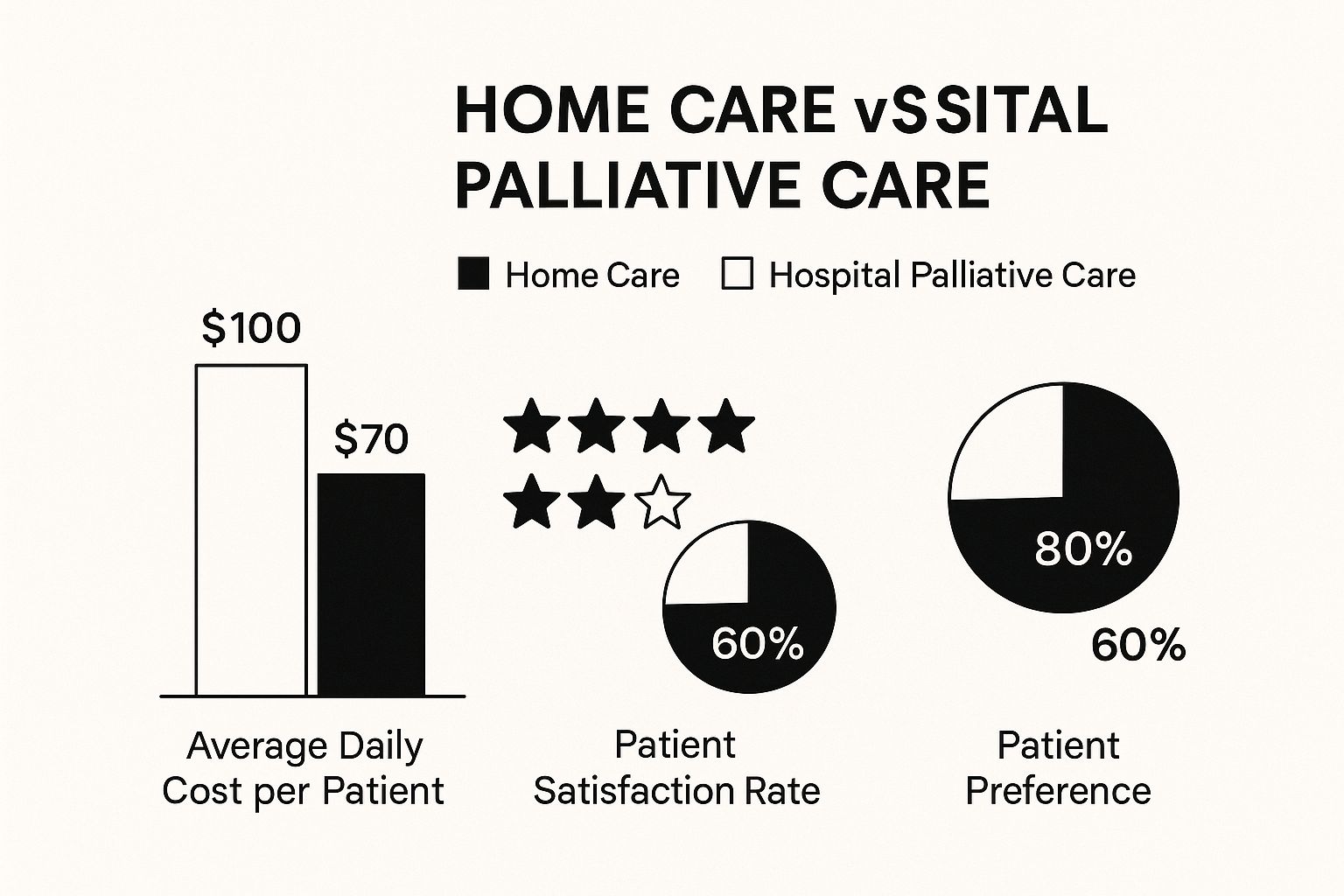
Patients often prefer being at home. They also report higher satisfaction with their care. Our 74+ years of experience show that a healing environment is a loving environment.
Central Coast VNA & Hospice is the trusted local nonprofit. We serve Monterey County, San Benito County, Santa Cruz County, and South Santa Clara County. To learn more, explore our detailed guide on what is palliative care.
Who Can Benefit From Palliative Care
Palliative care is for anyone living with a serious illness. It helps people who need more comfort and a better quality of life. It is an extra layer of care to help people live with dignity and control.
Imagine someone managing a chronic condition. They might struggle with constant pain, fatigue, or anxiety. Home care palliative care can make a world of difference in these situations.

Common Conditions We Support
Palliative care can help with almost any serious illness. Bringing this care into the home allows people to face these challenges in a familiar setting.
For our neighbors in Monterey County and Santa Cruz County, our teams often support individuals with:
- Congestive Heart Failure (CHF): We help manage symptoms to improve daily comfort.
- Chronic Obstructive Pulmonary Disease (COPD): Our focus is on easing breathing difficulties.
- Cancer: We work to address pain, nausea, and other side effects of treatment.
- Dementia and Alzheimer's: We provide comfort and safety for patients and families.
- Kidney Disease: The goal is to ease symptoms like pain and lack of appetite.
- Neurological Conditions: For illnesses like Parkinson's or ALS, we focus on symptom management.
Palliative care focuses on the person, not just the diagnosis. It is about managing the symptoms that get in the way of life.
Beyond the Diagnosis
The decision to start palliative care is about its impact on daily life. Frequent emergency room visits are a strong sign that more support at home could help.
Palliative care is for any age and any stage of a serious illness. Its main purpose is to relieve symptoms and improve quality of life. This helps both the patient and the family.
This focus on the whole person is at the heart of what we do at Central Coast VNA & Hospice. For over 74 years, our nonprofit has served the communities of Monterey, San Benito, Santa Cruz, and South Santa Clara counties. We see how compassionate care at home can transform a person's experience.
Is Palliative Care Right for Your Family?
Ask yourself these questions. Does your loved one struggle with:
- Uncontrolled pain or discomfort?
- Frequent hospitalizations?
- Symptoms from a chronic illness that are harder to manage?
- Stress and anxiety related to their condition?
If you answered yes, home care palliative care could be a valuable resource. It brings an expert team to help make each day the best it can be. This support works with your doctors to add another layer of focused care.
Meet Your Compassionate Care Team
Great palliative care is a team effort. A group of professionals works together to support your family. They meet your loved one's physical, emotional, and spiritual needs.
This team-based approach is how we provide care at Central Coast VNA & Hospice. We treat the whole person, not just the illness. Our team builds a care plan that honors your family’s values and goals.
Your Core Support Professionals
Each patient's team is shaped around their specific needs. A few key members form the heart of our palliative care services. They play a vital role for families across Monterey County and San Benito County.
- Registered Nurse (RN): The RN is the clinical expert for managing pain and other symptoms. They coordinate with your doctor to handle medications and educate your family.
- Medical Social Worker: Your Medical Social Worker is your guide. They connect you with community resources, help with insurance questions, and offer emotional support.
- Chaplain: Our chaplains offer a comforting presence. They listen without judgment and provide guidance for patients and families.
- Hospice Aide: These professionals help with daily living tasks. From bathing to preparing a light meal, their hands-on support preserves a patient’s dignity. You can learn more about the support provided by a hospice aide in our detailed guide.
This team-based model ensures no need is overlooked. It’s a complete circle of support designed to bring you peace of mind.
A Growing Recognition of Team-Based Care
The value of this team-based approach is recognized worldwide. As more people live with chronic conditions, the demand for palliative care is rising. This shows a global shift toward understanding the importance of quality of life for patients.
The palliative care team ensures your family receives support that addresses every aspect of well-being. This includes physical comfort, emotional peace, and practical help.
For over 74 years, Central Coast VNA & Hospice has pioneered this model in Santa Cruz County and South Santa Clara County. As a local nonprofit, our focus is on the well-being of our communities. Our team members are your neighbors, dedicated to providing expert care at home.
How Palliative Care Improves Daily Life
When a serious illness enters your life, a “good day” can feel distant. Palliative care brings those good days back. It offers real, everyday improvements for the patient and their family.
Expert home care palliative care starts with getting symptoms under control. This means less pain and more restful sleep. It gives you the energy for things that matter, like spending time with loved ones.

Reducing Stress and Restoring Control
One of the biggest reliefs for families is fewer stressful trips to the hospital. A dedicated team monitors symptoms at home. This proactive approach helps keep your loved one comfortable where they want to be.
Having a consistent team also improves communication. The palliative team makes sure everyone is on the same page. This clarity helps families feel more confident and in control.
At Central Coast VNA & Hospice, this is the heart of what we do. We provide expert care that brings peace of mind to families across Monterey and San Benito County.
Supporting the Whole Family
A serious illness affects the entire family. Loved ones often take on demanding roles. Palliative care extends its support system to them, too.
Our team provides education and hands-on guidance. We also offer emotional and spiritual support to help reduce anxiety. Finding ways to support caregiver mental well-being is a key part of the plan.
The goal is to lift the burden so families can focus on quality time together. This support helps preserve relationships and create positive memories.
Bringing Comfort Home: A Real-Life Scenario
Think of a family in Santa Cruz County caring for a father with advanced COPD. Constant trips to the ER for breathing emergencies left everyone on edge. His days were consumed by worry.
When they started palliative care with Central Coast VNA & Hospice, things changed. A Registered Nurse began visiting to fine-tune his medications. A Medical Social Worker helped them find community resources.
With his symptoms managed, his energy returned. The family was no longer living in fear. This is the real difference home care palliative care makes.
Navigating Insurance and Eligibility
Figuring out how to pay for home-based palliative care can feel stressful. The good news is these services are usually covered by major insurance plans.
You don't have to sort this out alone. For families in Monterey County and San Benito County, our team is here to help you understand your benefits.
Understanding Your Coverage Options
Paying for palliative care is often more straightforward than people think. Visits from a Registered Nurse or a Medical Social Worker are considered medical care.
Here’s a quick look at common coverage options:
- Medicare Part B: This part of Medicare covers doctor visits and outpatient services. Palliative care generally falls under this.
- Medi-Cal: California's Medicaid program also covers palliative care services.
- Private Insurance: Most commercial health insurance plans include benefits for palliative care.
Our team at Central Coast VNA & Hospice can help you confirm your plan’s details. This way, there are no surprises.
Who Is Eligible for Palliative care?
Eligibility is about a person’s need for support. The main requirement is a diagnosis of a serious or chronic illness. The focus is on managing symptoms, not on a person's prognosis.
The first step is a referral from a physician. This ensures the palliative team can work with your primary doctor. You can learn more in our simple guide to Medicare home care eligibility.
Receiving a palliative care referral is not about giving up. It is about adding another layer of expert support to your team.
Access to this support isn't always easy. This makes it more important to have trusted local providers like Central Coast VNA & Hospice.
As a nonprofit organization with over 74 years of experience, our mission is to ensure everyone in our service areas can access compassionate care. We are here to answer your questions. Contact us today for a personal consultation.
How to Get Started with Palliative Care
Taking the first step to ask for more support can feel hard. We understand. Our goal is to make starting home care palliative care as simple as possible.
This guide will walk you through how to begin. Central Coast VNA & Hospice is here to support your family every step of the way.

The First Step: A Conversation with Your Doctor
The path to palliative care begins with your loved one’s doctor. Palliative care is designed to work with their current medical treatments. Your doctor provides the referral that lets our team get involved.
When you talk to the doctor, be open about the challenges at home. Mention uncontrolled symptoms or frequent ER trips. A simple statement like, "We would like to explore palliative care for extra support," is a perfect way to start.
Connecting with Central Coast VNA & Hospice
Once the doctor agrees, they will send a referral to our team. You can also contact us yourself. We can then coordinate with your physician’s office.
Here’s how you can connect with us:
- Call Our Team: A phone call is an easy way to start. Our staff can answer your questions and explain what comes next.
- Request a Consultation: We can arrange a meeting to discuss your family’s specific needs.
- Coordinate with the Doctor: Let us know who your loved one’s physician is. We can reach out to make the referral process seamless.
Our commitment is to make this transition as smooth as possible. We work with medical providers throughout Monterey, San Benito, Santa Cruz, and South Santa Clara counties.
Your Local Partner in Compassionate Care
For over 74 years, Central Coast VNA & Hospice has been the trusted nonprofit provider of home care palliative care. Our local roots mean we are deeply committed to the well-being of the communities we serve.
If you are looking for support, our compassionate team is ready to help. To find out more, explore our resources on finding palliative care near me. Please contact us today to learn how we can support you.
Frequently Asked Questions (FAQs)
1. Is palliative care only for the end of life?
No, not at all. Palliative care can begin at any stage of a serious illness, right from diagnosis. It works alongside curative treatments to improve quality of life. Hospice care is for the end of life when curative treatments have stopped.
2. How is home palliative care different from home health care?
Home health care is typically short-term, skilled care to help a patient recover after a hospital stay or surgery. Home palliative care is long-term support focused on managing symptoms and stress from an ongoing, serious illness to improve quality of life.
3. Can we keep our own doctors?
Yes, absolutely. The palliative care team is an extra layer of support. They work closely with your primary physician and specialists to coordinate care.
4. Who decides when palliative care should start?
The decision is a conversation between you, your loved one, and your doctor. It usually starts when symptoms become difficult to manage. A physician’s referral is needed to begin services.
5. How often will the palliative care team visit?
The visit schedule is based on your family's specific needs and the care plan you create with the team. It is flexible and can change as your needs evolve. Our team is always a phone call away between visits.
For over 74 years, Central Coast VNA & Hospice has been the trusted nonprofit partner for families needing compassionate, expert care at home. As a mission-driven provider, we are committed to our Continuum of Care, guiding families from home health to palliative care and hospice. If you have more questions or believe your family could benefit from our support, please reach out to us. Learn more about our comprehensive services at https://ccvna.com.