
Starting a conversation about hospice care can feel difficult. But it is one of the most important talks you can have to honor your loved ones. It ensures they experience dignity and peace.
For Latino families, this means providing comfort that respects deep values. These values include familismo (the central role of family) and respeto (respect for elders). It is important to remember that hospice is not about giving up. It is about adding quality of life to every day that remains.
Welcoming Latino Families to the Hospice Conversation
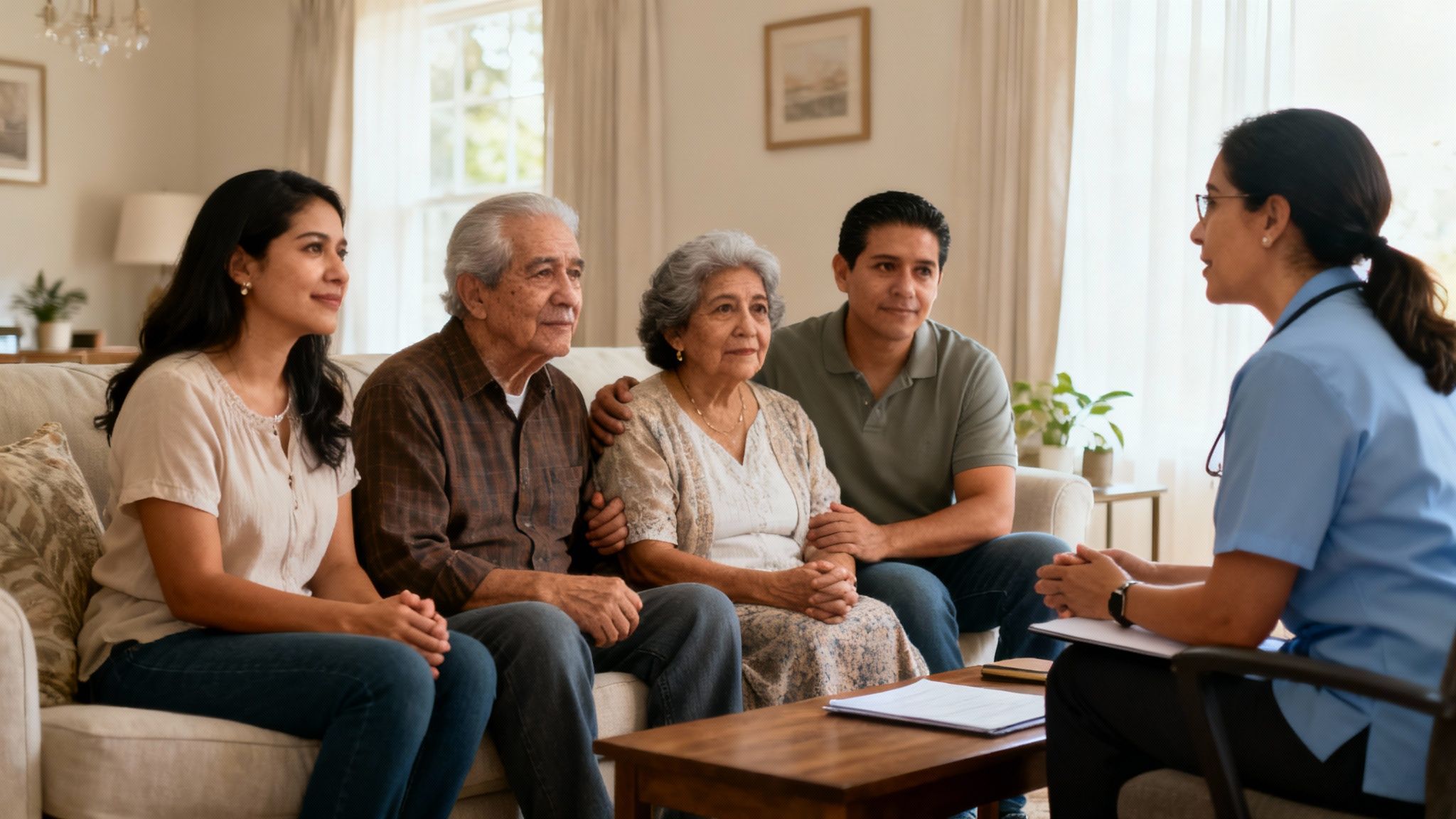
For many in the Latino community, talking about end-of-life care brings up many emotions. It is natural to feel unsure when these topics come up. Understanding what hospice offers can turn fear into a feeling of empowerment for your family.
Hospice care is not about ending treatment. It is a shift in focus toward comfort, peace, and dignity when a cure is no longer the goal. This approach puts the patient and family at the center of every decision. It makes sure their wishes are heard and honored.
Honoring Family Values and Traditions
Quality hospice care recognizes that every family is unique. For Latino families, this often means understanding a few key principles. A compassionate hospice team respects these important values.
- Family-Centered Decisions: Important choices are often made together, with input from multiple family members. A good hospice team will work with the entire family to create a care plan everyone understands.
- Respect for Elders (Respeto): Honoring the wisdom of older family members is a cornerstone of the culture. Hospice care is designed to preserve dignity and ensure your loved one's voice is the most important one.
- Spiritual and Emotional Support: Faith can be a powerful source of comfort. Hospice teams include chaplains and social workers who can coordinate with your family’s priest or spiritual advisor.
At Central Coast VNA & Hospice, we believe that providing compassion without barriers means meeting you where you are. For over 74 years, our nonprofit mission has been to serve the diverse communities of Monterey County, San Benito County, Santa Cruz County, and South Santa Clara County.
What Does Hospice Care Look Like?
Hospice is a circle of support that comes to your home. It is a team approach that includes a Registered Nurse, a Hospice Aide, a Social Worker, and a Chaplain. They all work together to manage symptoms and provide comfort.
The goal is to allow your loved one to live their final months with peace and quality of life. They can be surrounded by the people who matter most. Choosing hospice is a decision to embrace comfort. You can explore our guide on what hospice care is to learn more.
Bridging Communication Gaps in End-of-Life Discussions
Conversations about end-of-life care are never easy. They can feel technical, which is the last thing a family needs. This is especially true when cultural values like familismo (family-centeredness) and respeto (respect) are key.
Finding the right words is hard enough without a language barrier. This is why having a care team that can speak Spanish is a necessity. It is the only way to ensure every family member’s voice is heard and understood.
Speaking from the Heart, in Your Own Language
When a loved one is seriously ill, you should not have to translate your fears and questions. A Registered Nurse or Social Worker who speaks Spanish can immediately put everyone at ease. It allows the conversation to flow naturally.
At Central Coast VNA & Hospice, our team includes Spanish-speaking clinicians. We serve families throughout Monterey County and neighboring communities. We also provide professional translation to ensure communication is always clear and compassionate.
A lack of understanding about end-of-life options is a hurdle for many. According to a national survey, Hispanic respondents were far more likely to say they had 'never heard of' palliative care. This gap is tied to communication barriers and a lack of culturally relevant information.
Turning Difficult Talks into Meaningful Connections
Imagine a family gathering to talk about their father’s care plan. Instead of a doctor using complex terms, a Spanish-speaking hospice nurse sits with them. She listens as each person shares their hopes and fears.
This culturally sensitive approach accomplishes several key things:
- It Honors the Family Unit: The conversation includes everyone, reinforcing the value of familismo.
- It Preserves Dignity: The patient is addressed with respeto, ensuring their voice is the most important one.
- It Clarifies Misconceptions: The team can gently clear up myths about hospice, explaining it as a choice for comfort.
Some practices are exploring multilingual AI solutions to help reduce misunderstandings. This technology can support clear communication in healthcare.
True compassion means listening with an open heart. When we can speak to you in your language, we build a bridge of trust that makes all the difference.
Clear and empathetic communication is the foundation of inclusive hospice care. It turns a stressful process into a supportive journey. Central Coast VNA & Hospice is dedicated to providing families with the information they need. You can read more about our commitment to healthcare access for Spanish-speaking families.
Integrating Cultural Values and Family Dynamics
Your family's traditions and beliefs deserve to be at the heart of any care plan. True compassion in hospice is about honoring the values that bring comfort and meaning to your family. For many Latino families, this means embracing core principles that shape every decision.
At Central Coast VNA & Hospice, our approach is built on respect for these traditions. We know that for families here in Monterey and San Benito Counties, healthcare is a family affair. This understanding guides everything we do.
Embracing Familismo and Group Decision Making
In Latino culture, the concept of familismo is powerful. It places the family at the center of life, especially during illness. Decisions are rarely made by one person alone.
The whole family unit comes together to talk through options. Our hospice team is experienced in facilitating these important family meetings. We ensure everyone has a chance to ask questions and share their thoughts.
The Importance of Personalismo
Another core value is personalismo, which emphasizes warm, personal relationships. Trust is everything, and it starts with a genuine connection. Our clinicians, many of whom are Spanish-speaking, take time to know you and your family.
This is about creating a safe, comfortable space where you feel heard. When a Registered Nurse from Central Coast VNA & Hospice visits your home, they are a trusted partner. They are not just a clinician.
This infographic shows how our team works to honor family traditions and beliefs.
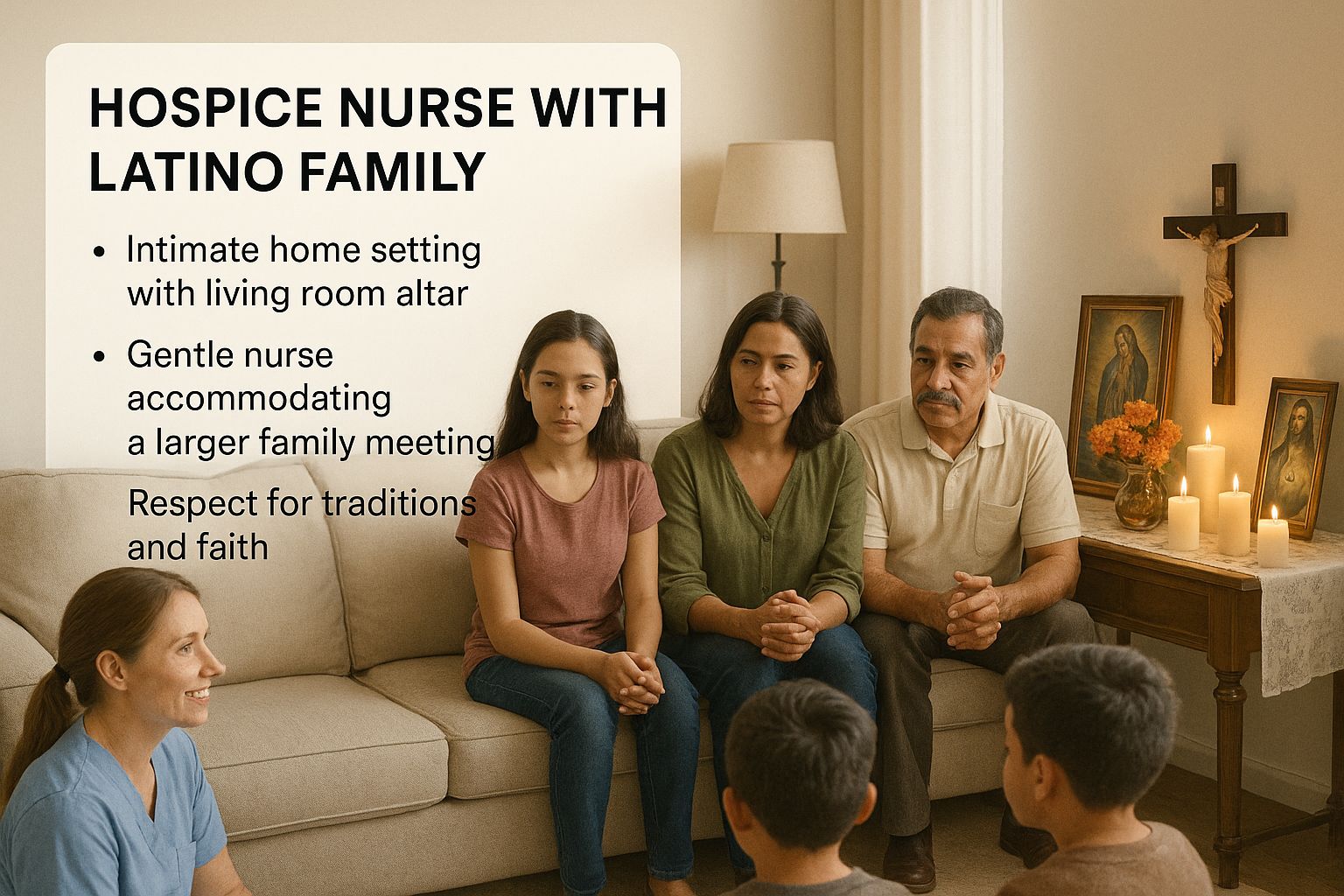
As you can see, culturally inclusive care fits into family life. It respects both personal relationships and sacred traditions.
Honoring Faith and Spirituality
Faith often provides strength and comfort during the end-of-life journey. For many Latino families, religious traditions are woven into the experience of illness. These practices are essential for spiritual peace.
Our hospice team is committed to supporting your spiritual needs. We understand the importance of coordinating with your family's priest, pastor, or other spiritual advisors.
At Central Coast VNA & Hospice, our Chaplains support people of all faiths. Their role is to provide comfort, listen without judgment, and honor the spiritual practices that are meaningful to you.
This collaboration ensures your spiritual care is seamless and aligned with your beliefs. The goal is to create an environment where faith is actively supported. Learn more about our commitment to spiritual care in hospice.
Here is a quick look at how a hospice team can support key Latino cultural values.
How Hospice Can Honor Your Family's Values
| Cultural Value | What It Means for Your Family | How Your Hospice Team Can Help |
|---|---|---|
| Familismo | The family unit is the primary source of support and decision-making. Important health choices are made together, not by the individual alone. | By facilitating family meetings, providing clear information to everyone involved, and respecting a designated family spokesperson. |
| Personalismo | Trust is built through warm, personal, and respectful relationships rather than formal, institutional ones. You want to know the people caring for your loved one. | By assigning consistent care team members who take time to connect, listen, and build genuine rapport with the entire family. |
| Respeto | Respect for elders and authority figures is paramount. This includes showing deference and courtesy to older family members and healthcare providers. | By addressing family members with respect, actively listening to elders' wisdom and concerns, and communicating with politeness and humility. |
| Fe y Espiritualidad (Faith & Spirituality) | Religious faith and spiritual rituals provide immense comfort, hope, and meaning, especially during difficult times. | By coordinating with priests or pastors, accommodating religious ceremonies, and offering chaplaincy services that honor your specific beliefs. |
By integrating these cultural values, we provide hospice care that feels supportive and familiar. It is about making sure your family’s traditions are celebrated as part of providing compassionate care.
Overcoming Common Barriers to Hospice Care
Even when a family sees the benefits of hospice, real-world worries can get in the way. Concerns about cost, insurance confusion, and fears about immigration status are valid. Addressing these questions with clear, honest answers is the first step.
Many families are relieved to find out that hospice care is typically fully covered. This support is a standard benefit under Medicare Part A, Medi-Cal, and most private insurance plans. As a local nonprofit serving Monterey, San Benito, Santa Cruz, and South Santa Clara Counties for over 74 years, we are committed to caring for everyone, regardless of their ability to pay.
Our mission is simple. No family should walk this path alone because of financial hardship.
Addressing Financial and Insurance Questions
The thought of medical bills can cause stress. The good news is that hospice coverage is designed to lift that weight. When a patient enrolls in hospice, their insurance plan generally covers a wide range of services.
This coverage usually includes things like:
- Medical Equipment: Hospital beds, oxygen, walkers, and other items are provided.
- Medications: All medications related to the terminal illness and for managing symptoms are covered.
- Supplies: Things like bandages, catheters, and other medical supplies are included.
- Clinical Team Visits: Regular in-home visits from the Registered Nurse, Hospice Aide, Social Worker, and Chaplain are part of the plan.
Hospice allows families to focus on sharing time together without the pressure of bills. Many common worries come from misinformation. You can learn more by disproving hospice care myths to calm any concerns.
Your energy should be focused on your loved one’s comfort, not on figuring out complicated medical bills. Our team is here to help you understand your benefits and get the care you deserve.
Immigration Status and Confidentiality
For some families, a big fear is that seeking medical care could affect their immigration status. It is critical to understand that your medical information is confidential and protected by law. Seeking any healthcare, including hospice, has no impact on immigration proceedings.
At Central Coast VNA & Hospice, our number one priority is your family’s well-being. Every member of our team is bound by strict privacy rules like HIPAA. We work to create a safe space where you can receive care without fear.
Fears about immigration status, finances, and language are major reasons for the care gap. According to the National Hospice and Palliative Care Organization (NHPCO), Hispanic patient enrollment in hospice has risen, but these barriers still prevent many from seeking care (NHPCO, 2023).
Our promise is to provide compassionate care to everyone in our Central Coast communities. We believe everyone deserves dignity, comfort, and peace at the end of life.
Your Culturally Inclusive Hospice Team
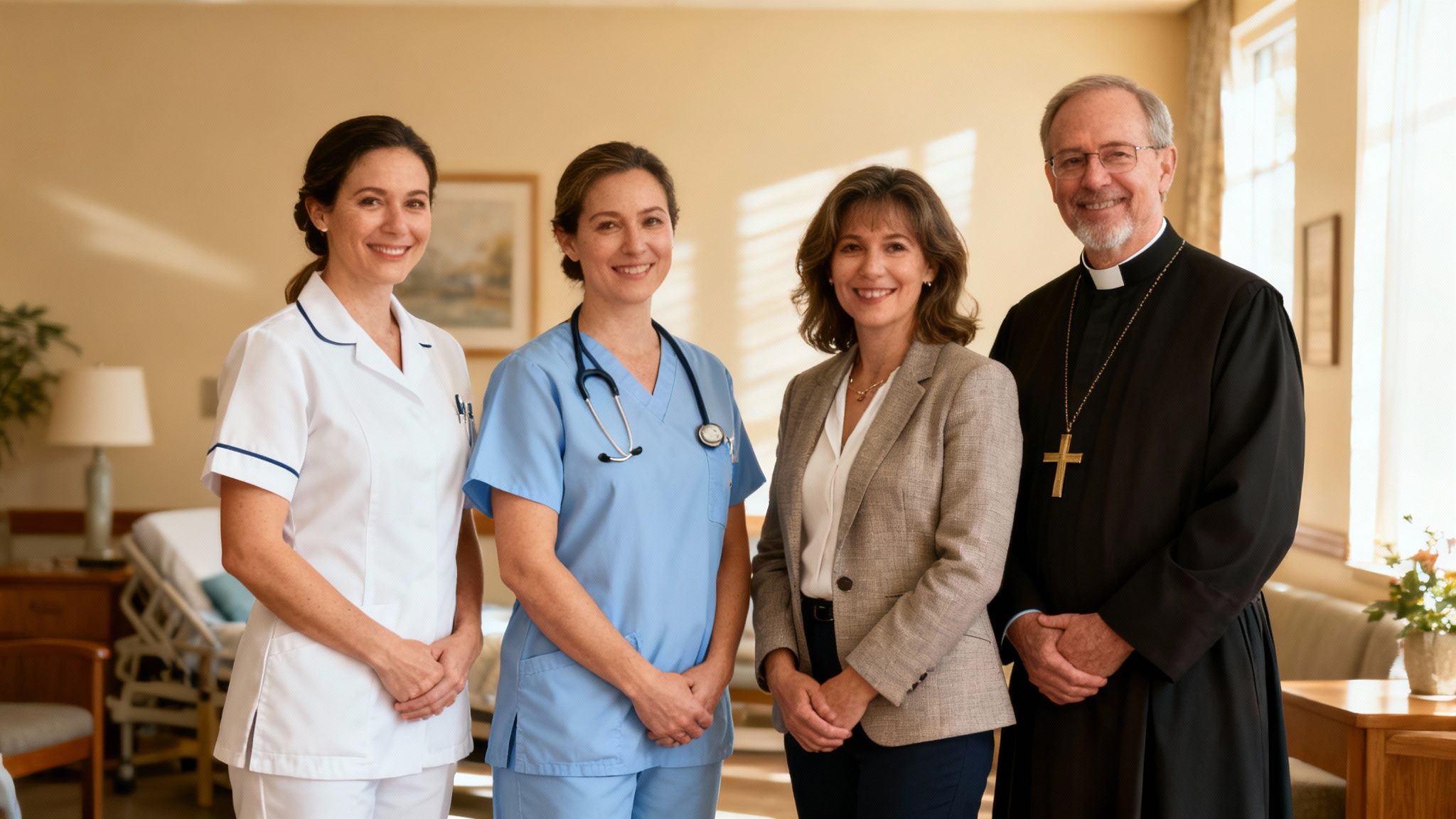
Hospice care is a dedicated, compassionate team that supports your entire family. They make sure every need—physical, emotional, and spiritual—is met with respect. Knowing who is on this team can make the journey feel more supportive.
At Central Coast VNA & Hospice, we build our teams with professionals who have deep expertise. They also have a genuine heart for the communities they serve. Let's walk through the core members of your hospice team.
The Registered Nurse
Your Registered Nurse (RN) is the main clinical point person for your family. They are experts in managing pain and other symptoms. The RN makes regular home visits to check on your loved one and provide education to the family.
The RN also becomes a trusted guide. They listen to your concerns and answer questions in plain language. For Spanish-speaking families, an RN who communicates in your language builds immediate trust.
The Hospice Aide
Hospice Aides provide essential, hands-on personal care with respect. They help with daily activities like bathing, dressing, and grooming. Their gentle support helps preserve a person's dignity and eases the physical demands on the family.
The presence of a Hospice Aide can be a great relief. It allows family members to step back from caregiving duties. They can focus on spending precious time together.
The Social Worker
The healthcare system can be confusing. The Social Worker is your family’s advocate and resource navigator. They connect you with support systems, from financial aid to community resources.
A Social Worker who understands cultural dynamics is invaluable. They can help with paperwork and facilitate family meetings. Their goal is to reduce stress so your family can be present for one another.
Scenario in Action: A family in Santa Cruz County feels overwhelmed by their mother's health and Medi-Cal forms. The CCVNA Social Worker, who is bilingual, sits with them and explains each section in Spanish. At the same time, the team’s Chaplain offers a prayer, providing spiritual comfort.
Streamlining behind-the-scenes work helps our teams focus on you. New tools are automating healthcare documentation. This gives clinicians more time for direct patient and family engagement.
The Chaplain
Spiritual peace is a vital part of end-of-life care. The Chaplain on the hospice team offers support to people of all faiths and beliefs. Their role is to listen with an open heart and offer comfort that aligns with your values.
Our Chaplains are here to:
- Listen without judgment to fears, hopes, and reflections.
- Offer prayers or readings that are meaningful to your family.
- Coordinate with your family’s priest, pastor, or spiritual advisor.
- Help facilitate conversations about forgiveness, legacy, and peace.
This team provides compassion without barriers. They ensure your family feels supported in every possible way on this important journey.
Frequently Asked Questions About Hospice Care
Navigating hospice can feel overwhelming. To help your family feel more prepared, we have answered the most common questions we hear from Latino families in our community. Our goal is to offer clear, straightforward information.
1. Does choosing hospice mean we are giving up hope?
Not at all. This is a common misconception. Choosing hospice is not about giving up; it is about shifting the focus of care to comfort and quality of life. It is an active choice to give your loved one a final journey that is as peaceful and meaningful as possible.
2. Can my family's priest or spiritual advisor be involved?
Absolutely. We know faith is a cornerstone of strength for many families. Our hospice team, including our Chaplains, will work hand-in-hand with your family's spiritual advisors. We support your traditions to ensure your spiritual needs are fully met.
3. What if my loved one only speaks Spanish?
Communication is key to compassionate care. At Central Coast VNA & Hospice, we have Spanish-speaking clinicians on our team. We also use professional translation services to ensure every conversation is clear and comfortable.
4. Is hospice care only for the last few days of life?
This is another common myth. Hospice can provide support for months, and many families wish they had called sooner. A person is eligible for hospice when a doctor believes they have a life expectancy of about six months or less if the illness runs its course. Starting early gives the family more time to benefit from the full range of support.
5. How much does hospice care cost?
Hospice is a fully covered benefit under Medicare, Medi-Cal, and most private insurance plans. This is comprehensive coverage that includes visits from the care team, medications, and medical equipment. As a nonprofit organization, Central Coast VNA & Hospice is committed to providing care to everyone, regardless of their ability to pay.
At Central Coast VNA & Hospice, our mission is to provide care that respects your family's values with clarity and compassion. We have been a trusted local nonprofit serving Monterey County, San Benito County, Santa Cruz County, and South Santa Clara County for over 74 years.
Aprenda más sobre el cuidado de hospicio en su idioma. Llame al 831-372-6668 para hablar con un miembro de nuestro equipo o visite https://ccvna.com para ver nuestros servicios en español.