When managing a health condition or recovering at home, having the right support is essential. This is where home medical equipment rental comes in. It offers a practical and cost-effective way to get devices like hospital beds, wheelchairs, or oxygen concentrators exactly when you need them, without the commitment of buying.
This flexibility is a cornerstone of modern home healthcare. It helps patients stay independent and recover safely in a familiar, comfortable environment.
Why Renting Medical Equipment Is a Smart Choice
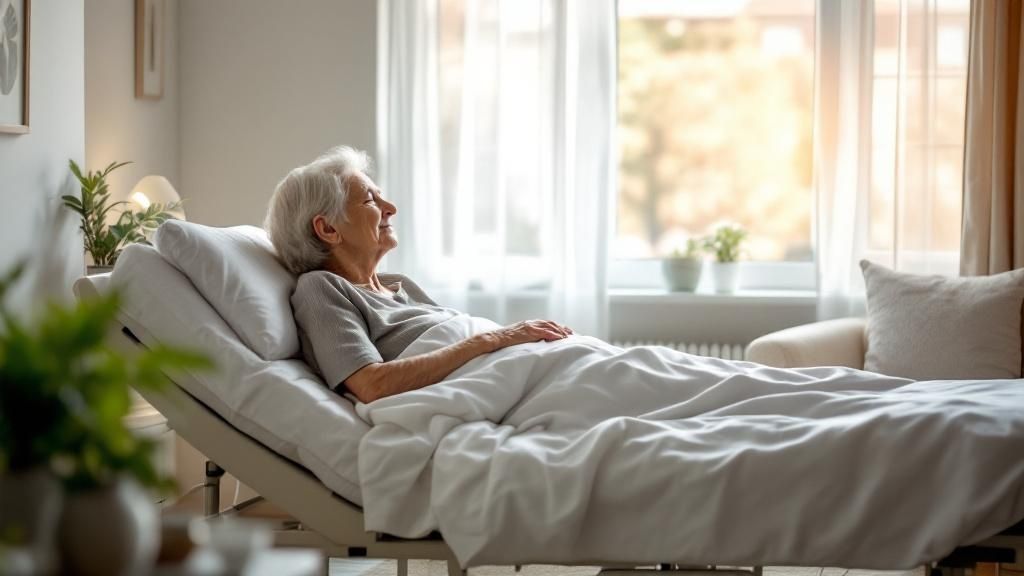
Deciding whether to rent or buy medical equipment can feel like a big decision. For many families, renting is the most logical and supportive path. It gives you access to high-quality, professionally maintained devices without the steep upfront cost.
This is especially true if the need is temporary, such as for recovery after surgery or an injury. Renting also provides incredible flexibility. As a patient's condition changes, so do their equipment needs, making it easy to adapt.
A rental agreement lets you swap a wheelchair for a walker or return a hospital bed once it's no longer necessary. This ensures the support at home always matches the current stage of recovery.
Commonly Rented Home Medical Equipment
To help you get a better sense of what's available, here’s a quick look at some commonly rented items and how they’re used.
| Equipment Category | Examples | Common Use Cases |
|---|---|---|
| Mobility Aids | Wheelchairs, walkers, crutches, scooters | Assisting with movement, improving stability, and preventing falls. |
| Bedroom Equipment | Hospital beds, patient lifts, overbed tables | Enhancing comfort, promoting proper positioning, and making caregiving easier. |
| Respiratory Support | Oxygen concentrators, nebulizers, CPAP/BiPAP machines | Managing breathing conditions like COPD, asthma, or sleep apnea. |
| Bathroom Safety | Shower chairs, toilet risers, grab bars | Reducing the risk of slips and falls in the bathroom. |
The right equipment is always tied to an individual's specific health needs. These needs should be determined in partnership with a healthcare professional.
Supporting Safety and Independence at Home
The right equipment does more than just help with recovery—it empowers people to live more safely and independently. This philosophy is at the heart of what we do at Central Coast VNA & Hospice. As a nonprofit organization, we have been proudly serving our communities for over 74 years.
By integrating durable medical equipment (DME) into a holistic care plan, we help create a secure environment that reduces the risk of falls and other complications. This is a key component of successful in-home care.
For families in Monterey County, San Benito County, Santa Cruz County, and South Santa Clara County, renting home medical equipment is an accessible solution. It fits seamlessly into a broader care plan. It works hand-in-hand with services like our skilled home health care services and our palliative and hospice programs, ensuring every aspect of a person’s well-being is addressed.
The demand for these rental solutions is growing. According to one report, the global medical equipment rental market was valued at about USD 56.25 billion in 2024 and is expected to keep climbing (Cognitive Market Research, 2024). This trend shows a clear shift toward cost-effective, home-based healthcare.
Matching the Right Equipment to Your Needs
Figuring out the right home medical equipment is a critical step for a safe and comfortable recovery at home. This process should always start with a professional assessment. Relying on a clinical expert helps you avoid the frustration of getting equipment that doesn't fit your home or your health needs.
A Registered Nurse or a Physical Therapist, like those on our team at Central Coast VNA & Hospice, can perform a detailed evaluation. They assess mobility, strength, home layout, and daily routines to pinpoint exactly what kind of support is needed.
Navigating Insurance for Medical Equipment
Once you know what's needed, the next step is understanding how insurance covers the home medical equipment rental. This part often feels like a maze, but it's manageable. Medicare, Medi-Cal, and most private insurance plans have specific rules for durable medical equipment (DME).
The most important term you'll hear is "medical necessity." For insurance to cover a rental, a physician must document that the equipment is essential for treating an illness or injury. For instance, a hospital bed is medically necessary if a patient requires specific positioning to relieve pain, not simply for comfort.
This visual breaks down the core steps to getting it right.
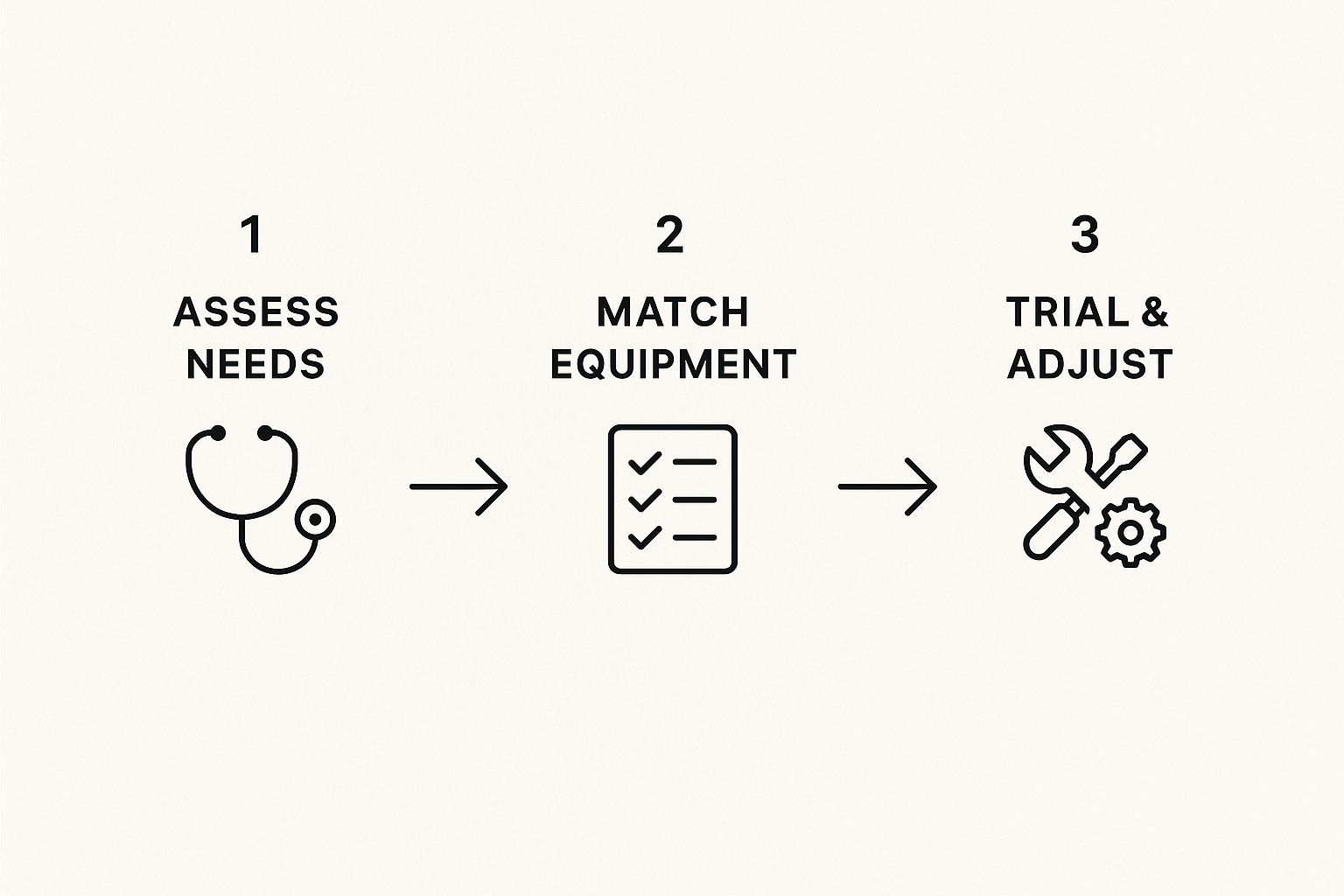
As the infographic shows, it’s a clear path. A professional assessment leads to the right equipment match, which is then adjusted as needed. This structured approach prevents mistakes and keeps patients safe.
Actionable Steps for Verifying Coverage
To make the approval process smoother, it pays to be proactive. A few organized steps can make a huge difference and prevent delays.
- Get a Detailed Prescription: Your physician needs to provide a prescription that clearly states your diagnosis, the exact type of equipment required, and an estimate of how long you'll need it.
- Contact Your Insurance Provider: Call the member services number on your insurance card. Ask directly about your plan’s specific coverage for DME rentals and any copayments or deductibles.
- Work with an Approved Supplier: Insurance companies have a network of approved DME suppliers. You must rent from one of these in-network providers for your claim to be covered.
At Central Coast VNA & Hospice, our team helps patients and their families navigate these exact steps. As a nonprofit that has served Monterey, San Benito, Santa Cruz, and South Santa Clara counties for over 74 years, we have deep experience in coordinating with physicians and suppliers to ensure everything goes smoothly.
Keeping good records is vital. Hold on to copies of all prescriptions, letters of medical necessity, and any communication with your insurance company. This helps you stay organized and provides a paper trail if you need it.
You can learn more about how our home health care team provides this kind of support throughout the recovery journey.
Finding a Trusted Rental Partner on the Central Coast
Choosing a company for a home medical equipment rental is a big decision. It directly impacts a patient's safety and comfort. Not all providers are the same, so it’s critical to look for specific signs of quality and reliability.
A truly trusted partner does more than just drop off equipment. They become an extension of your care team, providing compassionate and reliable service.
When you're vetting potential providers, accreditation is a powerful shortcut to identifying excellence. Look for companies accredited by respected organizations like The Joint Commission. This certification signals that the provider meets tough national standards for safety and equipment maintenance.
What to Look for in a Provider
Beyond formal accreditation, a few practical things will define your experience. A reliable rental partner needs to deliver in these key areas.
- Equipment Quality and Cleanliness: The equipment should be well-maintained and spotless. Ask about their sanitization process, which should follow strict protocols between each patient.
- Responsive Customer Support: What happens if equipment malfunctions? A reputable company will offer 24/7 support to handle emergencies and walk you through problems when they happen.
- Knowledgeable Staff: The technicians who deliver and set up the equipment should be experts. They need to provide clear, patient training on how to operate everything safely and confidently.
Let’s walk through a real-world scenario. Imagine an oxygen concentrator alarms in the middle of the night. A quick call to a responsive provider should connect you with a technician who can calmly walk you through the fix, restoring your peace of mind.
The Value of Coordinated Care
The best results happen when your equipment provider works closely with your healthcare team. When a provider has an established relationship with an organization like Central Coast VNA & Hospice, it creates a much smoother care experience. This collaboration ensures that everyone—from your Registered Nurse to the equipment technician—is on the same page.
As a nonprofit organization with a 74-year legacy on the Central Coast, we’ve seen firsthand how important these partnerships are. Coordinating with trusted local suppliers is a core part of our commitment to delivering comprehensive care. This approach simplifies communication and guarantees that any issues are handled quickly.
Our focus is always on creating a safe, supportive home environment. You can learn more about how our home health care services in Monterey, CA integrate this model. The same principles of vetting a partner apply to finding trusted disability services, where choosing the right organization is key.
Your Guide to Equipment Delivery and Setup

When your home medical equipment rental arrives, it should not be a quick drop-off. A quality rental provider knows this moment is crucial. It’s a comprehensive service designed to ensure you and your family can use the device safely and with total confidence.
The technician who delivers the equipment plays a huge role. Their job goes beyond plugging something in; they are your personal, hands-on trainer. A proper setup session is essential for preventing accidents and ensuring the equipment helps, rather than hinders, your independence.
What to Expect During the Setup Session
A professional setup process should never feel rushed. The technician should patiently walk you through every feature and function. This is your time to learn, so feel comfortable asking them to slow down or repeat something.
A complete training session should cover a few key areas:
- Daily Operation: This includes how to turn it on and off, adjust settings, and understand its main functions. For a hospital bed, they should show you how to raise and lower all parts of the frame.
- Safety Features: The technician must demonstrate every safety mechanism. This includes locking the wheels on a walker, operating bed side rails, and knowing what alarms mean.
- Basic Cleaning and Maintenance: Keeping equipment clean is vital. The technician should explain how to clean the device, how often, and which cleaning products are safe to use.
- Emergency Protocols: You need to know what to do if the equipment stops working. This includes recognizing specific alarm sounds and knowing who to call for 24/7 support.
The point of the setup session is to empower you. By the time the technician leaves, you should feel completely comfortable managing the equipment. This hands-on guidance reflects a provider’s commitment to patient safety.
Asking the Right Questions
This is not the moment to be shy. Before the technician leaves, make sure all your questions have been answered. Getting clear on everything from the start can prevent stress down the road.
Consider asking these questions to make sure you’re fully prepared:
- "Can you watch me do it?" After they demonstrate a function, ask them to watch while you do it. This is the best way to confirm you’ve understood correctly.
- "What are the most common problems people have with this?" This gives you a heads-up on potential hiccups and how to handle them before they become an issue.
- "Who is my direct contact if I have a non-emergency question?" Try to get a specific contact for those "just in case" questions.
At Central Coast VNA & Hospice, we see how proper equipment training is a critical piece of a patient’s overall care plan. It fits perfectly with our mission to provide compassionate care across Monterey, San Benito, and Santa Cruz counties. You can explore our comprehensive guide to understanding home health care.
Living with Your Equipment and Planning for Its Return
Bringing medical equipment into your home can feel overwhelming at first. The key is making a few simple changes to ensure safety and comfort. You’ll want to create clear, wide pathways for getting around with a walker or wheelchair.
This is often as easy as shifting a coffee table or securing a rug to prevent trips. You also need to think about power cords for devices like a hospital bed. Tucking them along baseboards or using cord covers removes a common tripping hazard.
These small adjustments make a huge difference. They help your loved one maintain independence and give everyone peace of mind. The trend toward home-based care is a global movement, with Europe representing over 30% of the worldwide market for medical equipment rentals (Cognitive Market Research, 2024).
When Your Needs Change
A person's healthcare journey is rarely a straight line. As needs change, the equipment that was once essential might no longer be necessary. This is often a good sign—it's a mark of progress in recovery.
As a patient's condition improves, Central Coast VNA & Hospice clinicians continually assess their needs. This ensures you always have the right support at the right time, whether you are receiving home health, palliative, or hospice care.
Our experienced team, including Registered Nurses and Physical Therapists, knows what to look for. They are trained to spot when a piece of equipment has done its job. They will work with you, your family, and the physician to update the care plan and arrange for the return of unneeded items.
Scheduling an Equipment Return
When the time comes, the return process is straightforward. Your only job is to call the rental provider to schedule a pickup. They will confirm the appointment and explain everything you need to know.
On pickup day, the company's technician will handle everything. Here’s what you can expect:
- Inspection: The technician will give the equipment a quick check to ensure it's in good working condition.
- Disassembly: For larger items like a hospital bed, they will handle disassembly carefully and efficiently.
- Removal: The technician will remove the equipment from your home, making sure not to cause any disruption.
- Paperwork: You’ll likely sign a form to confirm the return, which officially closes your rental agreement.
This simple return process is a major benefit of renting. It frees families in Monterey, San Benito, Santa Cruz, and South Santa Clara counties from worrying about what to do with equipment they no longer need.
Frequently Asked Questions About Home Medical Equipment Rental
It's completely normal for patients and their families to have questions about renting medical equipment. Getting clear, straightforward answers is the first step toward feeling confident and secure. Central Coast VNA & Hospice is here to provide the compassionate, professional guidance you need.
1. What happens if the rental equipment breaks down?
Reputable rental providers offer 24/7 support for maintenance and emergency repairs. Before signing an agreement, always ask about their service policy. If your care is coordinated by an agency like Central Coast VNA & Hospice, our clinical team will advocate for you to get any issues resolved quickly.
2. Can I rent equipment for just a few weeks?
Yes. Short-term rentals are a practical solution for temporary situations, like recovering from surgery. This flexibility means you can get a hospital bed or walker for only the time you need it, avoiding the high cost of buying.
3. How do I know the rental equipment is sanitary?
Accredited rental companies must follow strict federal and state guidelines for infection control. Every piece of equipment is thoroughly cleaned, sanitized with medical-grade disinfectants, and inspected for safety before it is delivered to a new patient.
4. Who decides which equipment I need?
The decision is a clinical one made by a healthcare professional. Your physician, Physical Therapist, or Occupational Therapist will determine medical necessity and write a prescription based on an assessment of your condition and home environment. Central Coast VNA & Hospice clinicians conduct these assessments and coordinate with your physician to ensure you get the right equipment.
5. Will my insurance cover a home medical equipment rental?
Most insurance plans, including Medicare and Medi-Cal, cover DME rentals if they are deemed "medically necessary" by a physician. Coverage varies, so it's important to contact your insurance provider to understand your specific benefits, copayments, and any pre-authorization requirements. Our team can help you navigate this process.
At Central Coast VNA & Hospice, our 74-year mission as a local, nonprofit organization is to provide compassionate, high-quality care that supports every aspect of your well-being. From our home health nursing to palliative and hospice care, we serve communities across Monterey County, San Benito County, Santa Cruz County, and South Santa Clara County. If you have more questions or need guidance, our team is here to help.
Learn more about our continuum of care at https://ccvna.com.