

What Vaccines Are Needed for Adults? A Detailed List of Immunizations for Every Age Group
PLEASE NOTE: Central Coast VNA Community Services has discontinued the travel immunization program. As the community immunizers it has been a privilege to provide this vital service of disease prevention and healthy travel to our communities.
Most people know that children need vaccinations to protect them from various illnesses as they grow up. However, you may not realize it's important for adults to get immunized as well. There are several viruses and diseases that can attack adults who are not up to date on their vaccines. Your risk for these conditions varies depending on multiple factors, including your age, health status, occupation and travel plans. Here is a detailed list of recommended vaccines for adults.
Vaccines for All Adults
Influenza vaccine
Influenza claims the lives of thousands of Americans each year. People with health conditions, pregnant women and older adults are most at risk. All adults 19 and over should get annual flu immunizations to prevent the spread of the disease.
COVID-19 vaccine
COVID-19 continues to spread throughout the country. However, COVID vaccines are effective at preventing serious illness, hospitalizations and death due to the virus. Although COVID-19 is most dangerous for older adults and people with certain health conditions, it can also cause healthy young adults to become seriously ill. You can get the COVID vaccine in Salinas by visiting a clinic, pharmacy or doctor's office.
Tetanus vaccine
Tetanus infections are caused by a type of environmental bacteria that can enter the body through open wounds. Once inside, it can produce a toxin that causes severe muscle spasms and stiffness. All adults should get a Tdap immunization — which protects against tetanus, diphtheria and whooping cough — if they did not receive one as a child. They should also get a booster shot every 10 years.
Vaccines for Adults 19–26 Years Old
HPV vaccine
Human papilloma virus can cause genital warts and certain cancers in both men and women. Doctors recommend HPV vaccinations for adults between the ages of 19 and 26 who have not already been immunized against the virus. In addition, some unvaccinated adults between the ages of 27 and 45 may benefit from immunization if they are at risk of new HPV infections.
Vaccines for Adults 19-59 Years Old
Hepatitis B vaccine
Hepatitis B is a viral infection of the liver that frequently causes no symptoms. It can lead to liver damage, liver cancer, cirrhosis and even death. Most people are vaccinated against Hepatitis B as infants, but health experts also recommend that adults between the ages of 19 and 59 get immunized against the disease.
Vaccines for Adults 50 Years Old and Up
Shingles vaccine
Shingles is an infection that stems from the same virus that causes chickenpox. It causes a rash that develops into painful, itchy blisters. The risk of contracting the disease increases sharply with age, so all adults over the age of 50 should get protected by the shingles vaccine.
Pneumococcal vaccine
Pneumococcal bacteria can cause many types of pneumococcal diseases, including pneumonia, ear infections, sinus infections, meningitis and bacteremia bloodstream infections. Adults 65 and over, people with certain medical conditions and smokers are at most risk. Doctors recommend that these populations get either the pneumococcal polysaccharide vaccine (PPSV23) or the pneumococcal conjugate vaccine (PCV13) to protect them against serious illness.
Vaccines for Pregnant Adults
If you're expecting a baby, you should get a Tdap vaccine between the 27th and 36th week of your pregnancy to prevent pertussis, commonly known as whooping cough. You should also get an influenza shot if you are pregnant during flu season, which normally runs from October through May. Other immunizations may also be recommended.
Vaccines for Adults With Health Conditions
Adults with certain health conditions may require additional vaccines. Ask your doctor which immunizations are recommended if you have conditions such as:
- Asplenia
- Type 1 or Type 2 diabetes
- Heart disease or other cardiovascular diseases
- HIV infection
- Asthma or other lung diseases
- Liver disease
- A weakened immune system
Vaccines for Healthcare Workers
Healthcare workers can be exposed to a number of vaccine-preventable diseases while on the job. Because of this risk, medical professionals who work directly with patients should get certain immunizations to prevent the spread of viruses and other contagious infections. These immunizations may include:
- Hepatitis B
- Measles, Mumps & Rubella
- Chickenpox
- Meningococcal
Vaccines for Travelers
Adults traveling from the Monterey area may need to get certain immunizations before they depart. For example, people planning to visit another country might be required to get vaccinated against one or more of the following diseases:
- Hepatitis A
- Hepatitis B
- Typhoid and paratyphoid fever
- Meningococcal disease
- Rabies
- Yellow fever
- Japanese encephalitis
In addition, you might want to make sure you are fully vaccinated against COVID-19 before taking a domestic or international trip. Check government sources for the most up-to-date guidance on travel immunizations.

5 Reasons to Consider Hospice for a Loved One
1. Customized Care
Every hospice situation is different, so it's critical to choose a home health care professional who can provide the pain management or nutritional and hydration care that your loved one needs. Hospice provides all the medical professionals required to support end-of-life needs as they change over time. This customized care means your loved ones will have services to ensure their comfort.
Quality of Life Assessments
This customized care also means patients will receive a quality-of-life assessment regularly. Home health care providers, together with the patient and family, will determine if the hospice patient's physical, emotional, mental, and spiritual needs are being met. Since this end-of-life care covers all aspects of life, hospice, with registered nursing care in Hollister, CA, can help fill those gaps in care to improve a patient's quality of life.
2patient'sation of Care
3. Hospice at Home
5. More Time with Your Loved One
Caregiver Stress
Choosing Patient-Focused Care

10 Easy Ways to Encourage Employee Wellness at Work
1. Obtain Consistent Feedback to Improve Employee Wellness Program
No employee wellness program is going to be perfect from the start. Even if you properly prepare for this program, there's a good chance that you won't meet all of your employee needs immediately. You can correct this issue by obtaining feedback from employees.
There are several methods you can use to collect feedback. For instance, you could put out a workplace survey to inquire about the employee wellness program. You can also send emails that detail 5-7 wellness ideas and ask for feedback, which gives you the opportunity to implement the ideas that employees respond most positively to.
2. Promote Healthy Eating
You should take steps to promote healthy eating wherever possible in the workplace. You could replace any candy with much healthier fruit bowls. Another great idea that can boost employee engagement is to ask that employees send in any healthy recipes they have to create a company cookbook that's centered around health and nutrition.
You could even think about including a healthy recipe in the weekly newsletter your company sends out to employees. No matter what you do to promote healthy eating, you should strive to be part of a lasting solution in this regard.
3. Partner with Wellness Vendors and the Employee Benefits Company
If you want your employee wellness program to be as robust as possible, it should be made with the help of trained and professional individuals as well as your company's employee benefits provider. The insurance provider that represents your company could also have some useful wellness tools that you can take advantage of. Make sure that you have access to local wellness vendors that provide such services as discounted fitness equipment, yoga sessions, and cooking tips.
4. Use a Corporate Wellness Application
You can be certain that your employee wellness program is properly implemented by organizing it with a corporate wellness application. These apps can be quickly downloaded to any smartphone and will provide employees with daily workout suggestions, health tips, and health monitoring features. There are many apps at your disposal. Make sure that the one you choose fulfills the specific health and wellness needs that your employees have.
5. Personalize Employee Health
The only way for practically every employee to start focusing on health and wellness is to personalize employee health. If your business only offers a couple of wellness activities, a high percentage of your employees may not find interest in either activity.
However, offering a multitude of wellness activities means that your employees can select the ones that best suit their preferences. While some employees will enjoy relaxing and peaceful activities like walking, other employees might want to focus on mindfulness activities.
6. Make Sure Employees Remain Hydrated
Consistent productivity among your employees depends on these employees being properly hydrated from the very beginning of the day. Make sure that you have enough juicers and water coolers around the workplace to meet employee needs. While water is the best solution for hydration, you should know that juice, meat, and fruit can also help your employees remain hydrated.
7. Aim to Build Healthy Habits
The key to a sustained employee wellness program is to help your employees build healthy habits that will last for years. No matter the time of the year, it's common for employees to catch a cold or experience allergies. When employees become sick, they should adhere to some basic healthy habits that will keep germs from spreading.
You can promote healthy habits in the workplace by providing flu shots at the office, placing tissues and hand sanitizer around the workplace, and putting handwashing posters at different spots in employee bathrooms.
8. Encourage Paid Time Off
It's highly recommended that you encourage your employees to actually use the PTO that they have. Some employees avoid using PTO because they want to be the "perfect" worker. However, working without any substantive breaks can tire out anyone. It's important that employees get some extra time off every now and then to recharge their batteries. Encouraging your employees to take paid time off should bolster productivity.
9. Facilitate Stress Relief
When employees have busy schedules, stress will invariably build over time. Whenever one of your employees is stressed, it's likely that their productivity will be relatively low. High stress accumulation is particularly common towards the end of lengthy projects. You should show employees that you're taking their mental health into account by encouraging numerous breaks during the day.
10. Put Program Guidelines in Writing
Once you've developed a comprehensive employee wellness program, you should put all of your program guidelines into writing. Doing so will make the program much more structured and easier to adhere to. These guidelines should be included in your employee handbook for the best results, which can also help with recruitment efforts. Whether you have a weekly or monthly newsletter that's sent to employees, some of the health and wellness guidelines your company has adopted should be placed into each newsletter as a reminder.
Keeping your employees healthy and motivated is the most effective way to boost productivity and morale. While employees wellness programs can include everything from stress reduction programs to health risk assessments, the 10 tips mentioned above should provide you with a great starting point when trying to improvement employee and corporate health.

5 Reasons To Choose Home Care Services for Your Hip Replacement Surgery
When it comes to home care after your hip replacement surgery, the most obvious benefit is being at home. It helps to be in a familiar place when you are trying to heal. The comfort of a quiet home always beats the noisier atmosphere of care facilities. It also beats the troubles of adjusting to a different bed. However, there are other benefits that make home care services in Monterey CA a valuable choice for you. Home care nurses help in several important ways.
Reduced Exposure To Other Illnesses
Since the COVID-19 pandemic started, there has been increased concern about contracting contagious virus variants. There are also other viruses, such as the flu, that circulate every year. Any virus can negatively impact the immune system, and that can make surgery recovery harder. Being at home instead of in a care facility can limit exposure to many risks. In care facilities, there is also a greater risk of contracting MRSA or other infections. Home care teams follow strict disinfection and infection control procedures to reduce the risks of spreading viruses and bacteria.
Help With Transportation
Having help with transportation is important during hip replacement surgery recovery. For many people, it is difficult to rely on family members for help. Family members may not be properly trained to transfer you safely into a vehicle. Also, family may not know how to properly and safely help you in a public restroom. If you need transportation to a physical therapy appointment, a home care provider can help you get there safely. You do not have to worry about relying on community transit services. However, community transportation options may be helpful to you after you recover if you are unable to drive. When you work with a reliable home care agency, you can rest easier knowing that you can keep your appointments. Also, they help by keeping track of your upcoming doctor visits, physical therapy sessions or other important appointments.
Medication Reminders
Depending on your needs, your care team may administer your medications or set them up for you. If they set them up for you, they do so in a way that makes them easy to track. During hip replacement surgery recovery, most people take multiple medications. It can be easy to forget them if they have side effects that make you feel drowsy. You may also forget if you are tired from an altered sleep schedule or insufficient sleep. If you take a medication and forget that you took it, you also face the risk of an overdose. In-home nurses know how to help reduce such risks. They ensure that you get the medications you need when you are supposed to take them.
Assistance With Daily Activities
Many tasks you used to easily do before hip replacement surgery may be too difficult to handle alone during recovery. There are lifting restrictions, and bending is harder. Also, you have to learn to avoid bending forward while you sit down. With more limitations, it is helpful to have someone who can assist you. Additionally, you have someone knowledgeable to help you with exercises that your doctor asks you to complete at home. Your care team will help you safely move and walk. They will also ensure that you complete activities on schedule. In-home nurses help you move as much as possible to prevent blood clots and help the healing process. Although physical activities may seem painful at first, proper movement will aid in the healing process. Your care team will also communicate your progress with health care professionals. Together, they may adjust your recovery care plan with you as necessary to accommodate changes.
Dedicated Care
There are many benefits of having nursing staff who are dedicated solely to your care. Although they work with other people who live at home, they focus on you when they are in your home. In a facility, the staff have multiple people to oversee in one area. It is easier to make mistakes or miss something important in care facilities. With one-on-one care, you have the advantage of someone noticing changes in your health. Perhaps you need extensive help for several hours or minimal help for a short time. In either situation, you have someone there who is only there to help you. This makes it easier to review your care plan, talk about medical concerns, ask questions and discuss any ideas.
Home Care Services in Monterey CA for Hip Replacement Surgery Recovery
Your hip replacement surgery recovery atmosphere and care plan are two critical elements of healing. When you combine the benefits of home care, you have more peace of mind and less stress. This means that you can sleep better with the confidence of knowing that you have caring people on your side. Some people have coexisting issues, such as diabetes or cardiac health problems. If this applies to you, it helps to work with an agency that provides those as well. Working with a knowledgeable team will give you the added peace of mind that they understand all your unique needs. Perhaps you are planning an upcoming hip replacement surgery, and you want to consider your options now. Alternately, maybe you recently had hip replacement surgery and need in-home orthopedic care, and you are looking for immediate help. Either way, now is a good time to learn more about home care services in Monterey CA. There are also options available if you live in the Hollister or Central Coast areas.

10 Things to Know When Considering Hospice Care for a Loved One
When your family member or loved one has a terminal illness, hospice care allows them to live their remaining days in comfort at home. The ability to stay in a familiar environment provides peace and a sense of calm to a person with a terminal illness, and it allows them to enjoy a better quality of life during their last days. When considering hospice care service in Monterey CA and the surrounding areas of Hollister and Central Coast counties, the following tips will help you plan and know what to expect.
What Hospice Care Includes
CCVNA offers these hospice services to residents of Central Coast, Monterey County and Hollister counties who have a life-limiting illness. Hospice care includes personal care for the patient. For example, a nurse's aide may assist the patient with getting dressed, sitting up or bathing. Visiting and vocational nurses assist with wound care, administration of pain medication and administration of IV hydration. Hospice social workers help patients and their families with community resources, such as spiritual and bereavement counseling. Hospice care also includes dietary, pharmacy, beauty, pet therapy and speech therapy services.
Customized Care
Each person's situation is different. Some terminal illnesses cause patients to be in a lot of pain. Pain management is an integral part of hospice care. Some patients need special nutritional or hydration plans. For example, after a stroke, a person may have dysphagia. Hospice care includes nutritional counseling to ensure that a patient's dietary needs are met through oral or intravenous nutrition and hydration. As a person's condition changes or worsens, their care plan is updated to reflect their current needs. All of the hospice providers are specially skilled in caring for patients at the end of life.
Coordination of Care
Hospice care includes coordination of services. Each patient is paired with a care coordinator. They may be an administrator or a social worker. This person coordinates the schedules of providers who come to the patient's home. The care coordinator handles all of the scheduling and billing, so patients and their families don't have to worry about pre-authorization or other tasks.
Duration of Services
If a doctor states that your loved one has less than six months to live, it's time to arrange hospice care service in Monterey CA. According to the Centers for Medicare and Medicaid Services, most insurers, including Medicare, pay for up to six months of hospice care. Your loved one's doctor will need to complete documentation verifying the terminal nature of the illness so that hospice care can begin at the right time.
Medical Equipment Is Covered
Many patients in hospice need medical equipment for palliative care. Bandages, dressings and catheters are included in hospice care. Patients who need durable medical equipment, such as a walker or wheelchair, can get what they need. A patient's need for medical supplies and equipment is handled by the care coordinator, and they do the ordering and set up delivery of the products to the patient's home. This relieves families of the need to order and retrieve equipment.
Quality of Life Assessments
An important part of hospice care is ensuring that the patient and their family are receiving what they need. Because the goals of hospice are to help a person live as well as possible for the remaining time they have and to address their and their family's needs, patients receive regular quality of life assessments. These assessments address every facet of care, including physical, emotional, mental and spiritual care. If a patient reports that any of these areas are declining, action is taken to remedy the situation.
Respect for the Patient's Wishes
Hospice care focuses on the wishes of the patients. If a patient does not want oxygen, hydration or any other type of care, their wishes are respected. Hospice allows families and caregivers to spend enjoyable time with their loved one instead of dealing with paperwork and red tape. With a patient's physical, emotional and spiritual needs addressed, they and their families can focus on what is important to them.
Patients Preserve Their Dignity
In hospice care, patients are not subjected to painful tests or embarrassing procedures. Hospice patients don't have to deal with frequent blood draws, loud machines or interruptions in the middle of the night for vital signs. They don't have to undergo any invasive procedures. Preservation of dignity is a main consideration for many families when planning hospice care for their loved ones.
Reduce the Financial Burden on Family
Many families worry about the cost of caring for a loved one who has a terminal illness. Hospitals and nursing homes are expensive, and many families can't afford them. Hospice care is covered under Medicare Part A, which is also called original Medicare. Private insurers also cover hospice care. Under hospice supervision, a patient's end-of-life care costs are significantly lower. Care coordinators can help families estimate their share of costs for hospice care service in Monterey CA.
Families and Caregivers Benefit, Too
Caring for a person with a terminal illness is an exhausting undertaking. If this care is left to just one or two people without medical training, they and the patient may suffer. With hospice care, patients and their caregivers and families benefit. Caregivers get a break every day when the nurse, homemaker, therapist or doctor visits. This allows the caregiver to attend to their own personal and healthcare needs. Families juggling the care of their loved one with other needs, such as work and childcare, may feel relief knowing that their loved one is in capable hands. These services may reduce the risk of caregiver burnout and improve the patient's quality of life, explains the Cleveland Clinic. Short-term respite care also gives caregivers a chance to take a break during the day so that their stress levels don't get too high.
To learn more about hospice care for a loved one, contact us at CCVNA today.

Bereavement and Grief Counseling: How Support Groups Can Help After Losing a Loved One
What You May Not Have Known About Bereavement and Grief but Probably Should
While the sadness felt due to losing a family member or close friend is difficult, it needn't consume your life. And such a loss needn't color your otherwise bright sunny days with dark gray and ominous-looking clouds either, say many bereavement and grief counselors across the U.S. For those not familiar with bereavement and grief counseling, it is a form of psychotherapy that aims to help individuals process and better cope with the emotions and full-on psychosomatic symptoms that usually stem from losing a loved one. Some of the most common ones include the following:
- Shock and numbness
- Guilt
- Anger
- Fatigue
- Overwhelming sadness
- Stress
- Anxiety
- Depression
Who Should Consider Bereavement and Grief Counseling?
Deciding whether or not to partake in bereavement and grief counseling, like any other form of psychotherapy, is a personal choice. After all, everyone processes and copes with the loss of a loved one differently. While some can cope with their emotions on their own, some might need a little help. And the individuals who might need such help can amount to many when you factor in the annual death rate in the U.S. According to an article published in the Journal of the American Medical Association (JAMA), an esteemed peer-reviewed medical journal, more than 3 million Americans died in 2020. And we can all reasonably conclude that many of the friends and family members of the deceased found themselves having to process and find ways to work through the grief they were feeling. That said, studies show that most people are willing to seek professional help when the loss of a loved one starts to impact their day-to-day life.
5 Signs That Might Suggest You Need Bereavement and Grief Counseling
When it comes to losing a loved one, the loss can be so profound that it can affect judgment to the extent that grief-stricken individuals don't realize they are drowning in negative, harmful emotions. If this is something that resonates with you, here are five signs that might suggest you need bereavement and grief counseling:
1. Finding it exceedingly difficult to move on - While there is no set amount of time that an individual should mourn the loss of someone close to them, mourning that seemingly has no end might suggest it is time to seek help. According to most counselors, this would constitute extreme grieving that goes on for more than one year.
2. An inability to process the loss of a loved one at all - In contrast to those who find it difficult to move on, some people seemingly never process or come to terms with the fact that they have lost a close friend or family member. And this can be just as concerning and often points to the need for professional help.
3. Grief starts to interfere with your work-life - After losing a friend or family member, it can be a challenge to get back into the proverbial swing of things at work. And this is not uncommon; however, if someone's grief is so severe that it takes a toll on their work performance to the extent they receive disciplinary warnings or get demoted, it would be a good idea to look into counseling.
4. Feeling chronically depressed - Most will agree that there is a considerable difference between a temporary low mood and full-on depression. That said, the latter often requires help from a bereavement and grief counselor to overcome, especially if those feelings of depression start to give way to self-harm or suicidal ideations.
5. Loss of something other than a friend or family member - While the thrust of this article has focused on the loss of human life, some people need help overcoming other sources of pain and sorrow. Studies show that, aside from the loss of a friend or family member, individuals will seek help from support groups or a counselor if any of the following results in them becoming grief-stricken:
- The loss of a beloved pet
- Divorce or separation
- Family trauma
- Job loss
- Losing one's home due to financial reasons or a natural disaster
- Aging, illness, or disease
What Happens During a Counseling Session With a Bereavement and Grief Counselor?
If you have never been part of any support groups or have partaken in any form of counseling with a licensed therapist, doing either after losing someone near and dear to you can seem daunting. Some might even argue that professional counseling might seem like the more daunting of the two when compared to attending support groups where everyone is struggling with a similar loss and can lean on one another for support. That said, bereavement and grief counseling is a branch of psychotherapy discipline traditionally carried out by licensed psychologists or psychiatrists. However, in some support groups, individuals can take advantage of a less structured form of psychotherapy by talking through their feelings with other members. The benefit of counseling sessions with a psychologist or psychiatrist is that these professionals are well-versed in helping individuals overcome the five most common stages of grieving as per the Kübler-Ross grief model. These five stages are as follows:
- Denial
- Anger
- Bargaining
- Depression
- Acceptance
It is worth noting that, in extreme cases, individuals who are working with a psychiatrist might be prescribed antidepressants or other medications to help elevate their mood. Indeed, everyone handles grief differently, and seeking help from a licensed mental health professional ensures you get access to a treatment modality that is right for you.
Bottom Line
All in all, whether you're grieving the loss of a friend, family member, or the ending of a relationship that has run its course, bereavement and grief counseling can help you feel whole again. And many cases, counseling sessions for this form of psychotherapy are covered by insurance. With that in mind, if you or someone you know are experiencing any of the tell-tale signs of extreme grief, consider speaking with a mental health professional today.

On the Fence About Getting a Vaccine? Learn How Immunizations Can Help Prevent These 10 Serious Illnesses
PLEASE NOTE: Central Coast VNA Community Services has discontinued the travel immunization program. As the community immunizers it has been a privilege to provide this vital service of disease prevention and healthy travel to our communities.
Vaccinations have become an important factor in the prevention of serious diseases that can lead to potentially deadly complications. However, you might be concerned about issues such as safety. Some people are against immunizations and have no problem telling everyone their opinions. With the advent of the internet, those voices may seem to be everywhere, causing doubt to bloom in your mind. However, your health care provider relies on medically backed research for vaccine safety and effectiveness. It's important to put your trust in professionals over social media. Without these preventative measures, you'd be more at risk of developing many serious conditions that could negatively impact your life.
Lifelong Vaccinations
Once you receive these immunizations and the required boosters, you're protected for the remainder of your life.
Polio
Polio can affect the brain and the central nervous system, often causing breathing difficulties, paralysis or even death. Thanks to widespread vaccinations, polio is no longer a problem in the United States. However, it's a small world due to travel. Vaccines can keep you from getting polio from travelers of other countries where the disease is still active.
HPV
Human papilloma virus has been linked to certain types of cancer in both men and women. Although your body may be able to fight this virus on its own, long-term cases cause cellular changes. These alterations can lead to the development of cancer over time. It can be spread through any type of sexual contact. There are several cancers that have been attributed to this virus. They are those of the cervix, vagina, vulva, rectum, penis, mouth and throat. The HPV vaccine has been shown to help prevent up to 90 percent of these types of cancers.
Pneumonia
Bacterial pneumonia often occurs as a complication of other viral infections, especially those that affect the respiratory tract. This illness can land you in the hospital. Additionally, if the bacteria reach the blood stream, this can lead to a deadly infection called sepsis. There are currently two pneumonia vaccinations available that fight against 13 or 23 strains of the bacteria. For some patients, getting both of these immunizations provides the best protection.
Repeated Immunizations
These vaccines require regular boosters, sometimes annually, in order to remain effective in the prevention of disease.
Pertussis
Also known as whooping cough, pertussis affects the lungs and can lead to death, especially in children. The newer vaccines provide less risk of side effects, but the provided immunity can wane over time. Over the last few years, pertussis cases have increased. Although there are multiple reasons for this, lack of vaccination appears to be one of the underlying factors. You can get continued protection from this disease that's trying to make a comeback with a tetanus booster.
Tetanus
Unlike most of the other diseases reduced by vaccination, tetanus is not spread from human to human. However, you can contract this possibly deadly virus through your everyday environment if it enters through broken skin. The intense muscle contractions caused by the virus can be so severe as to break bones. Regular boosters are needed to maintain protection from this excruciating disease.
Influenza
Thousands of people die each year due to the flu and related complications. Different viruses are more active from year to year. It's important that you're immunized annually to prevent the predicted strains that will be most prevalent each season. Some people are reluctant to visit a flu clinic since a few people claim they became ill after being vaccinated. This is not the case; symptoms that resemble the flu are just signs that your body is developing immunity against the virus.
COVID-19
Advanced medical research has given humanity its first chance at fighting off a plague through the preventative use of vaccines. Doctor's offices, clinics and pharmacies offer the COVID vaccine in Salinas and other local areas. You should have no problem finding a provider close by. While it's understandable to be hesitant due to all of the misinformation being spread on social media, it's important to listen to the advice and experience of your health care provider as a reliable resource.
Travel Vaccinations
There are several vaccines for traveling to Mexico or other countries, and these are just a few that are recommended.
Rabies
Did you know that rabies is 100 percent fatal? Although not as prevalent in the United States, this virus is still seen regularly in many countries. In Mexico, feral dogs roam freely and can be very aggressive, so get protection before you go. Once you've been infected, it's too late to get vaccinated.
Hepatitis A
Close contact with an infected person or consuming food or water in unsanitary areas can lead to contracting Hepatitis A. This is a very contagious disease that can cause inflammation of the liver. The more time you spend in a risky region, the greater the likelihood you'll come in contact with this virus. Vaccinations can prevent the virus from damaging your liver. Additionally, you can get vaccinated within two weeks of getting the virus.
Typhoid Fever
Although rare in the United States, typhoid fever is prevalent in underdeveloped countries. While the vaccine provides limited protection, it can prevent serious complications. Once you've contracted the virus, there's a small chance that you could become a lifetime carrier.
Addressing Your Concerns
Talk to your health care provider for any additional concerns you may have. This is what researchers know about vaccines:
- They are safe and effective for most people, and the benefits typically far outweigh the risks.
- Vaccines don't cause the disease they're meant to prevent. Only inactive or partial viruses are used in the manufacture of immunizations.
- Researchers haven't found a connection between childhood immunizations and autism. This lifelong developmental disability is typically detected at the same age as childhood vaccinations are given. However, the ingredient in question, thimerosal, hasn't been used in children's vaccines since 2001.

Health Matters - VNA & Hospice Article
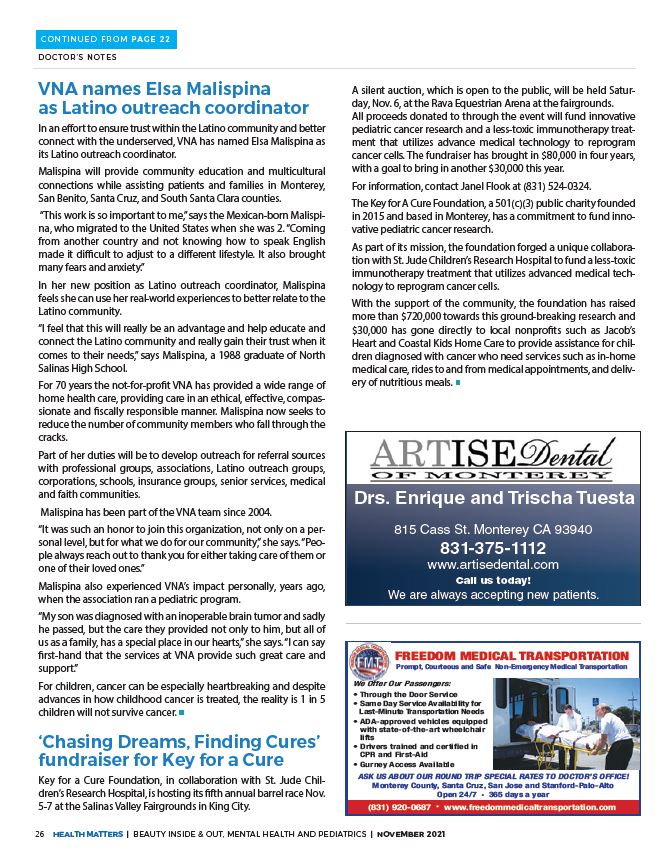
VNA names Elsa Malispina as Latino outreach coordinator
 In an effort to ensure trust within the Latino community and better connect with the underserved, VNA has named Elsa Malispina as its Latino outreach coordinator.
Malispina will provide community education and multicultural connections while assisting patients and families in Monterey, San Benito, Santa Cruz, and South Santa Clara counties.

VNA offers monthly grief support group for South Monterey County residents
Article posted at King City Rustler.com
GONZALES — Grieving is a natural part of life, and impacts each individual journey physically, emotionally and spiritually.
While every loss is unique, Central Coast VNA and Hospice Grief and Loss Program offers a free monthly support group in South Monterey County called New Beginnings, which is designed to help participants share, bond and commiserate.
The program — funded in part by Hospice Giving Foundation, and in partnership with Taylor Farms Family Health and Wellness Center — provides a non-judgmental, fully confidential and supportive environment to share feelings of pain and loss. Individual support is also available, and great efforts are made to reach out to the South Monterey County bilingual community.
The no-cost support group is offered to older adults who have experienced a significant loss of someone in their life. The purpose is to learn about the grieving process and share experiences that help with the emotion of isolation.
The group meets every third Thursday of the month from 4 to 5 p.m. at the Taylor Farms Family Health and Wellness Center, 850 Fifth St. in Gonzales, a part of Salinas Valley Memorial Healthcare System.
For more information, contact VNA’s Latino Community Outreach Coordinator Elsa M. Malispina or Spiritual Care Coordinator Osa Massen at 831-241-3834.
7 Questions You May Have About the Difference Between Hospice vs Palliative Care
Seniors and people with long-term illnesses may wonder what their medical care will look like as their health declines. There are many options for people with serious illnesses, including hospice and palliative care. Hospice and palliative care are similar, but hospice is usually 100% covered if a patient qualifies for it.
1. Who Is Eligible for Palliative Care?
An individual who is in any stage of a serious illness can seek palliative care. The goal of palliative care is to relieve symptoms in someone who is suffering from a long-term medical condition. It doesn’t matter whether other doctors are exploring a cure for your condition. You can receive palliative care for a chronic, complex, terminal or non-terminal illness.
Some people seek palliative care to keep them comfortable as they recover from major surgery. Others may choose it to help manage side effects from chemotherapy treatments. Palliative care is available for people with a wide range of illnesses, from multiple sclerosis to kidney disease.
2. Who Is Eligible for Hospice Care?
A patient who has a serious illness with a prognosis of fewer than six months to live is eligible for hospice care. A doctor must certify the prognosis based on the typical path of the illness.
The medical condition is usually defined as terminal when treatments are no longer working or the patient chooses to discontinue aggressive treatments. In other words, hospice care is only available toward the expected end of a patient’s life, when the patient is no longer undergoing active curative treatments.
Hospice doesn’t always mean that it’s the end. It can boost a patient’s health and well-being. If the patient’s situation improves and their life expectancy is extended, they will no longer be eligible.
3. What Does a Palliative Doctor Do Differently Than Other Doctors?
The goal of a palliative doctor is to keep a patient comfortable. A patient who is in palliative care may have a team of medical professionals working with them on a treatment plan. But those are not the palliative doctors.
The palliative doctors focus on easing symptoms and side effects of the medical condition or medications. They’re not treating the illness. They’re helping the patient to maintain a high quality of life despite the illness.
Palliative professionals may include doctors and non-medical team members who work together to support the patient’s medical, physical, psychological and personal needs. They coordinate with the treatment team to provide continuity of care and help the patient understand their diagnosis and management plan.
4. When Should You Enter Hospice or Palliative Care?
Many patients wait until the last minute to begin hospice care. Choosing this type of care may feel like a death sentence. However, delaying the decision may hinder a patient’s ability to maximize their quality of life in this final stage.
Deciding to seek hospice care doesn’t mean that there is no hope. This specialized care enhances well-being and comfort. When patients feel better, they are more empowered, satisfied and fulfilled.
The best time to enter hospice is different for every situation. If a patient is eligible, they should enter when their quality of life would be improved by this type of care.
You can opt for palliative care at any stage of an illness. Many patients choose palliative care when they need additional support and coordination to manage their condition. There is no time limit for palliative services.
5. Can You Leave Hospice Care Voluntarily?
Hospice care is intended for people who are expected to live no longer than six months. However, a patient’s situation can change. The prognosis could shift, extending the patient’s life expectancy. In that case, hospice care would be discontinued. It would be available again if the condition deteriorated and the patient regained eligibility.
You can choose to discontinue hospice care at any time and for any reason. Hospice benefits that are covered by a patient’s health care plan may be revoked when these services are terminated, however. In that case, you could opt for palliative care and pay out of pocket or through your insurance plan.
6. Can You Use Palliative and Hospice Care Simultaneously?
You can’t use hospice care at the same time that you’re actively undergoing therapeutic treatment for your medical condition. However, you can receive palliative and hospice care at the same time.
Many of the services that are offered under hospice care are intended to keep the patient comfortable. Therefore, they’re inherently palliative. Moreover, they’re hospice benefits that are covered under Medicaid and most insurance plans.
7. Where Can You Get Hospice and Palliative Care?
Both types of care can be provided at home or in a facility and on an inpatient or outpatient basis. Because it’s important to maximize the patient’s comfort, hospice and palliative services are often offered at home. A patient may also move into a facility or receive services at a nursing home or residential care facility.
In either case, a variety of professionals make up the care team. These include your primary care physician, nurses, home health care workers, social workers and physical therapists. Spiritual and psychological counselors are often involved in palliative care. In hospice, volunteers may offer additional services to improve patients’ well-being, such as massage and pet therapy.
A hospice or palliative care coordinator will manage this medical team to keep the patient well-informed and at ease. Most people have many questions about initiating this type of care. Reach out to a VNA care coordinator to learn more about palliative care in Monterey CA and the surrounding areas.