
Recovering from surgery at home is more than just getting rest. It's about making your space safe and comfortable to help your body heal. This guide covers preparing your home, managing pain, and eating right.
This journey is a big step toward getting back your strength and independence. We are here to help you feel ready.
Your Healing Journey Begins at Home

Coming home after the hospital is a big moment in your recovery. You get to heal in a familiar place, surrounded by your own things. This guide will help you and your family feel more confident.
We will share simple, practical steps for a smooth recovery. From setting up your home to knowing what your body needs, you will find clear advice here. You are not alone on this journey.
Feel Confident in Your Recovery
Our goal is simple: to give you the knowledge you need for a good recovery at home. Moving from the hospital back home can feel like a lot. With the right support, it can be a positive experience.
A well-planned recovery lowers stress and reduces the risk of problems. For more details on this important step, this guide on home care after hospital discharge has great tips.
At Central Coast VNA & Hospice, we believe that when patients know what to expect, they feel more in control. This allows you to focus on healing.
As a local nonprofit, our team has served the Central Coast for over 74 years. Our mission is to support our community members in Monterey County, San Benito County, Santa Cruz County, and South Santa Clara County.
What to Expect in This Guide
This guide breaks down your recovery into easy-to-follow sections. This helps you feel prepared and in control.
- Home Preparation: Simple changes to make your home safer.
- Pain Management: Smart ways to stay comfortable.
- Nutrition and Hydration: How to feed your body to heal well.
- Movement and Rest: Finding the right balance for your body.
- Warning Signs: Knowing when to call a professional for help.
Each section has tips you can use right away. Our advice comes from decades of experience from our team of Registered Nurses, therapists, and other health professionals.
For over 74 years, Central Coast VNA & Hospice has provided expert in-home care. Our nonprofit status means our focus is on your health. We are here to make sure you feel safe and cared for.
How to Prepare Your Home for a Safe Recovery
Coming home after surgery should be a relief, not another worry. A little preparation before you leave the hospital can make a big difference. It helps create a safe space where you can focus on getting better.
Think about how you move through your house each day. The goal is to make it as easy and safe as possible. Start by clearing things you might trip over, like loose rugs or cords. This is very important if you will be using a walker or crutches.
Create Your Recovery Station
Once you are home, you won't want to search for things you need. Setting up a central "recovery station" is a great idea. Pick a spot where you will spend most of your time, like next to your bed or a comfy chair.
Gather everything you need and keep it within reach. This means you won't have to get up and down as much, which can be hard at first.
- What to Keep Nearby:
- Your phone with a long charging cord.
- All your medicines and a schedule for taking them.
- A big water bottle to help you stay hydrated.
- Simple snacks like fruit or crackers.
- The TV remote, books, or a tablet to keep you busy.
Make the Bathroom Safer
The bathroom can be a tricky room to use after surgery. Wet floors and the need to bend or stand can increase the risk of falling. A few simple changes can make it much safer.
A non-slip mat in the shower is a must. A shower chair is also a great tool, as it lets you sit while you wash. You can also get temporary grab bars that use suction cups to attach to the wall for extra support.
We have learned that small, practical changes often have the biggest impact on a patient's safety. Preventing even one fall can make a huge difference in recovery.
Arrange for Practical Support
No one should have to recover from surgery by themselves. It is very important to arrange for help with daily tasks. These tasks may be hard for you to do at first.
You could ask a friend to bring meals or a neighbor to walk your dog. A family member could help with groceries and laundry. Planning this support before you come home can reduce a lot of stress.
For those who need more support, home health care services in Monterey, CA can provide peace of mind. This ensures a professional is available to help. Our team at Central Coast VNA & Hospice often helps families in Santa Cruz and San Benito Counties with home safety. With 74 years of local service, we can offer advice to make your return home as safe as possible.
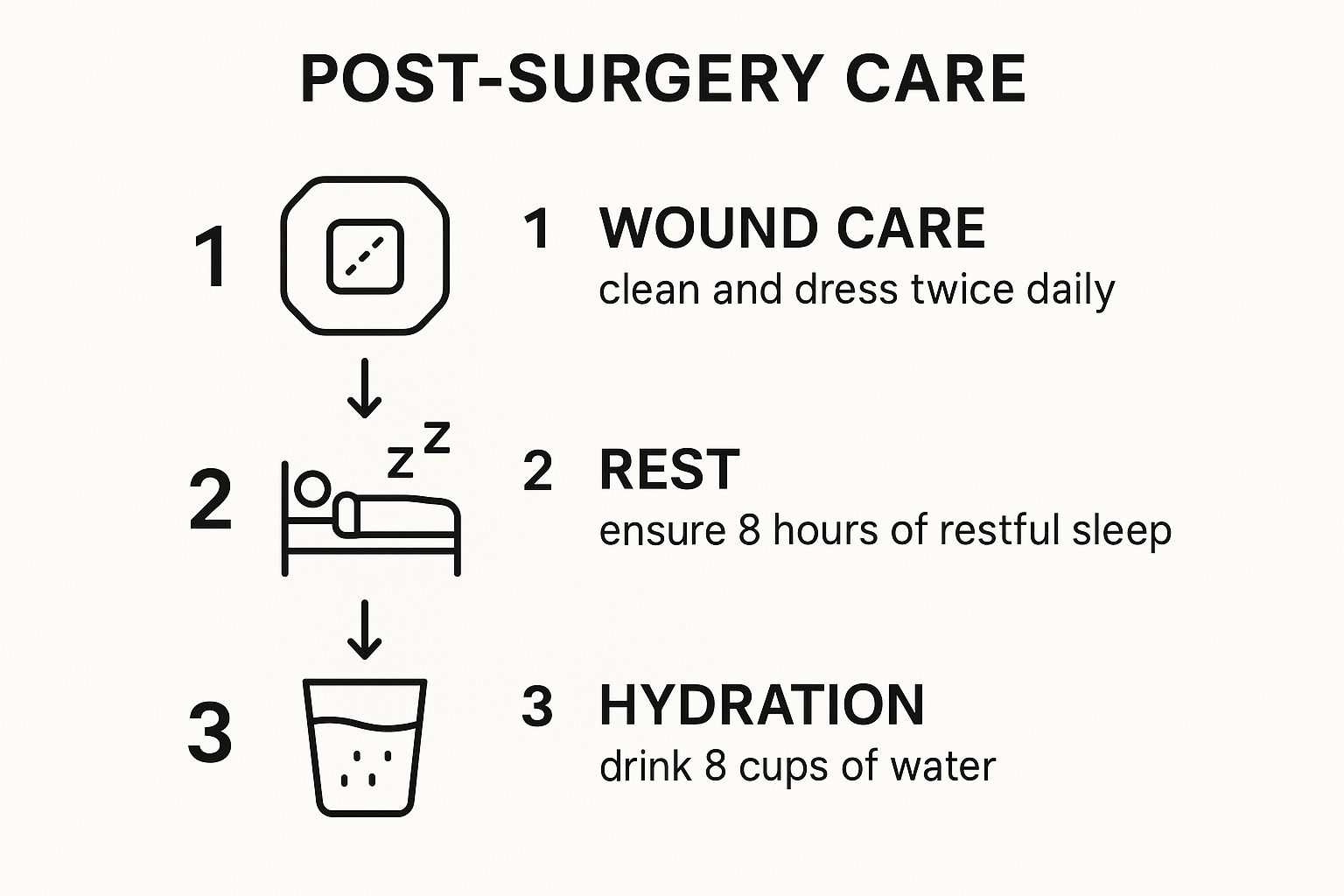
The picture above shows the three key parts of post-surgery recovery. These are wound care, getting enough rest, and staying hydrated. These things work together to help your body heal.
A Realistic Approach to Managing Pain

Managing pain after surgery is about more than just comfort. It is an important part of healing. When your pain is controlled, you can rest better and move more safely.
The most important strategy is to stay ahead of the pain. Do not wait for it to get bad before you act.
Waiting until the pain is severe makes it harder to control. A better way is to take your prescribed pain medicine on a regular schedule. This helps maintain a steady level of comfort.
Creating a Simple Medication Routine
It can be hard to keep track of new medicines, especially when you are tired. But a simple system can help you avoid missing a dose.
A weekly pill organizer can be very helpful. You can also set alarms on your phone for each dose. Find a system that works for you and use it every day.
We also suggest keeping a small notebook. Write down when you take your medicine and how you are feeling. This log is a valuable tool to share with your home health nurse. At Central Coast VNA & Hospice, our Registered Nurses help patients in Monterey and Santa Cruz Counties manage their medicines safely.
Beyond the Pill Bottle: Other Ways to Find Relief
Medicine is a key part of pain management, but it's not the only tool. Simple, non-drug methods can also improve your comfort.
- Cold Therapy: An ice pack on the surgical area for 15-20 minutes at a time can help. It numbs the area and reduces swelling, which is a big cause of pain.
- Gentle Repositioning: Simply changing how you sit or lie down can relieve pressure on sore spots. This also helps your blood flow.
- Relaxation Techniques: Never forget the power of your mind. Deep, slow breathing can calm your nerves and change how your brain feels pain.
It is very important to be open about your pain. Never feel like you have to "tough it out." Your feedback helps your care team create the best plan for you.
Research shows that recovering at home with professional support can lead to better results. One study found that patients who received care at home were less likely to be readmitted to the hospital.
Partnering with Your Home Health Team
Your home health nurse is your partner in managing pain. They will listen to you and work with your doctor to find what works best. The more you can tell them about your pain, the more they can help.
This partnership is what we do at Central Coast VNA & Hospice. For over 74 years, our teams have served communities from San Benito County to South Santa Clara County. We provide expert, compassionate support.
To learn more about how we help, check out our resources on professional pain and symptom management. This team approach helps make your recovery at home as comfortable as possible.
Fueling Your Body for Faster Healing
What you eat and drink after surgery directly affects how quickly you heal. Think of your meals as part of your medical plan. Eating healthy foods that are easy to digest can make a big difference.
Good nutrition gives your body the tools it needs to heal. It helps fight infection and regain strength. Without the right fuel, your recovery can slow down.
Protein: The Master Repair Tool
When it comes to healing, protein is the most important nutrient. Your body uses it to rebuild damaged tissues like skin and muscles. You need more protein after surgery, so make it a priority in every meal.
Try to include a good source of protein each time you eat. The best options are often simple.
- Lean Meats: Chicken, turkey, and fish are good choices.
- Eggs: Scrambled or hard-boiled eggs are soft and full of nutrients.
- Dairy: Greek yogurt and cottage cheese give you a lot of protein.
- Plant-Based Sources: Beans, lentils, and tofu are great options.
Vitamins and Minerals: Your Healing Allies
Vitamins and minerals help protein do its job. Vitamin C is needed to make collagen, which helps repair your skin. You can find it in oranges, berries, and leafy greens like spinach.
Zinc is another mineral that helps your immune system and wound healing. It is found in nuts, seeds, and whole grains. An easy way to get a good mix is to eat colorful foods.
Food is a powerful tool for your recovery. A well-fed body is ready to heal itself.
Your appetite may be low after surgery. If so, try eating smaller meals or snacks throughout the day. A healthy smoothie can also be a great way to get calories and protein.
Your Post-Surgery Healing Foods Checklist
| Nutrient Focus | Healing Foods to Include | Foods to Limit or Avoid |
|---|---|---|
| Protein | Lean chicken & turkey, fish, eggs, Greek yogurt, beans, lentils, tofu | Fried meats, processed sausages, fatty red meat |
| Vitamin C | Oranges, strawberries, kiwi, bell peppers, broccoli, spinach | Sugary juices, processed fruit snacks |
| Zinc | Nuts (almonds, walnuts), seeds (pumpkin, sesame), whole grains (oats) | Refined grains (white bread, white rice), sugary cereals |
| Fiber & Hydration | Fruits, vegetables, whole grains, plenty of water, herbal tea | Sugary sodas, excessive caffeine, high-sodium foods |
| Healthy Fats | Avocado, olive oil, nuts, seeds | Trans fats (found in many baked goods and fried foods) |
This simple guide can help you make smart food choices. This ensures your body has what it needs to mend.
The Critical Role of Hydration
Staying hydrated is just as important as eating well. Water helps your body do everything, from moving nutrients to controlling your temperature. If you get dehydrated, you can feel tired, dizzy, and constipated.
Do not wait until you feel thirsty to drink. Keep a water bottle near you and sip it all day. Staying hydrated also helps prevent falls, which is a major risk during recovery. You can read our home health care tips for fall prevention to learn more.
The home health team at Central Coast VNA & Hospice serves Monterey, San Benito, Santa Cruz, and South Santa Clara counties. Our clinicians can help create a personal eating plan to support your recovery.
Balancing Gentle Movement with Quality Rest

After surgery, it is important to find a balance between moving and resting. Rest is needed for healing. But gentle, doctor-approved movement is key to preventing problems like blood clots.
Some people think you should stay still after an operation. But light activity gets your blood flowing. This helps deliver oxygen to the surgical site and speeds up repair.
Gentle Movement: The First Steps
The key is to start slow and listen to your body. This is not about hard exercise. It is about keeping your muscles working and your blood flowing. Never push through sharp pain.
Even small movements can help:
- Ankle Rotations: While sitting or lying down, gently circle your ankles.
- Leg Lifts: From a seated position, slowly lift one leg, hold, and then lower it.
- Arm Stretches: Gently raise your arms as far as feels comfortable.
- Short Walks: Once your doctor says it's okay, short, slow walks are very good for you.
Early movement is a big part of staying independent. Studies show that patients who get back to their home environment quickly often have better recoveries.
Prioritizing Deep, Restorative Sleep
High-quality rest is just as important as gentle movement. Sleep is when your body does its serious repair work. Without enough deep sleep, your healing can slow down.
Pain can make it hard to get good sleep. Creating a peaceful sleep environment can help.
"Sleep isn't just downtime; it's an active and essential phase of healing. Prioritizing rest is one of the most proactive things you can do for your recovery."
To sleep better, make your bedroom a quiet place for rest. Keep it dark, quiet, and cool. Avoid screens like your phone or TV for at least an hour before bed. You can also explore mastering breathing techniques for improved sleep and stress relief to help you relax.
Partnering with Professionals for Mobility
Getting your strength back takes time and expert help. Physical and Occupational Therapists can create a personal therapy plan. This helps you get back on your feet safely.
The therapists at Central Coast VNA & Hospice are here to help. We serve communities across Monterey, San Benito, Santa Cruz, and South Santa Clara counties. A good therapy plan is one of the best ways of preventing hospital readmissions and building a strong recovery.
With over 74 years of local experience, we understand the challenges of recovering from surgery at home. Our nonprofit mission ensures you get the highest quality of care.
Recognizing When to Call for Help
It can be hard to know what is normal during recovery and what is a red flag. Knowing what to watch for can help you act quickly.
Having a professional team from Central Coast VNA & Hospice means you have trained eyes helping you. This partnership is key for a safe recovery at home.
Urgent Warning Signs
Some symptoms are emergencies and need immediate action. If you or your loved one has any of these signs, call 911 or go to the nearest emergency room.
- Sudden, sharp chest pain or trouble breathing
- A fever of 101°F (38.3°C) or higher
- Severe pain that your medicine does not help
- Pain, swelling, or redness in your calf, which could be a blood clot
Being prepared for these situations is important. Learning about navigating post-surgery complications can help you know what to look for.
For less urgent questions, knowing your local health care resources for seriously ill family members can also provide support.
FAQs: Your Top Questions About Home Recovery
Going home after surgery brings up a lot of questions. Here are some simple answers to common concerns from patients and families.
1. When can I shower or drive again?
This depends on your specific surgery and your doctor's instructions. Usually, you can shower after any surgical drains are removed and your wound is healing well. For driving, you must be off prescription pain medicine and strong enough to control the car. Always get approval from your doctor first.
2. How should I care for my incision?
Good wound care is important to prevent infection. Keep the area clean and dry. Follow the cleaning instructions from your medical team. Watch for signs of infection like more redness, swelling, warmth, or any new drainage. If you see these signs, call your home health nurse.
3. How can family members help without getting overwhelmed?
Supporting a loved one can be a lot of work. The best way to help is to focus on practical tasks and offer encouragement. Helping with meals, chores, or managing visitors can be a big relief. It is also important for family helpers to take breaks and care for themselves.
4. What happens during a home health visit?
When a CCVNA Registered Nurse or therapist visits your home in Monterey County or our other service areas, they focus completely on you. They will check your vital signs, ask about pain, and look at your incision. They will also review your medicines. This visit is your chance to ask any questions you have.
5. Can technology help with my recovery at home?
Yes, technology can be a great support. For example, a recent study showed that patients who used a smartphone app for follow-up care reported a better quality of recovery. You can read about these digital health interventions in postoperative care on jamanetwork.com. Our team combines compassionate, in-person care with modern tools to help you feel supported.
If you or a loved one needs professional support while recovering from surgery at home, the compassionate team at Central Coast VNA & Hospice is here to help. Contact us today to learn more about our home health services.