Are you searching for a career that offers more than just a paycheck? A role rooted in mission and community impact can provide profound personal and professional satisfaction.
For those drawn to serving others, non-profit healthcare jobs present a unique opportunity to align your skills with a meaningful purpose. These positions go beyond traditional clinical settings, focusing on compassionate, patient-centered care that addresses the whole person.
This guide illuminates a path for individuals seeking fulfilling work on the California Central Coast. We will explore key roles within a non-profit healthcare framework, from community-facing positions to vital administrative functions. You will gain a clear understanding of the responsibilities these professionals bring to patients and families across Monterey County, San Benito County, Santa Cruz County, and South Santa Clara County.
1. Program Manager – Global Health Initiatives
One of the most dynamic non-profit healthcare jobs is the Program Manager for Global Health Initiatives. These professionals are the architects of complex health programs, often addressing critical issues like disease prevention and access to essential medicines.
A Program Manager orchestrates everything from initial strategy to on-the-ground implementation. This role is pivotal in ensuring resources are used effectively to achieve life-saving goals.
They lead multi-disciplinary teams, manage substantial budgets, and navigate intricate political and social landscapes. The work is demanding but offers the profound reward of shaping health outcomes for entire communities.
Core Responsibilities and Required Skills
A Program Manager's duties are multifaceted, requiring a unique blend of leadership, technical knowledge, and strategic acumen. Their primary responsibilities include designing program frameworks, securing funding, and monitoring progress.
Success in this role hinges on a robust skill set that combines project management with a deep understanding of public health.
This infographic illustrates the hierarchical nature of a Program Manager's core functions, from high-level strategy to team and financial oversight.
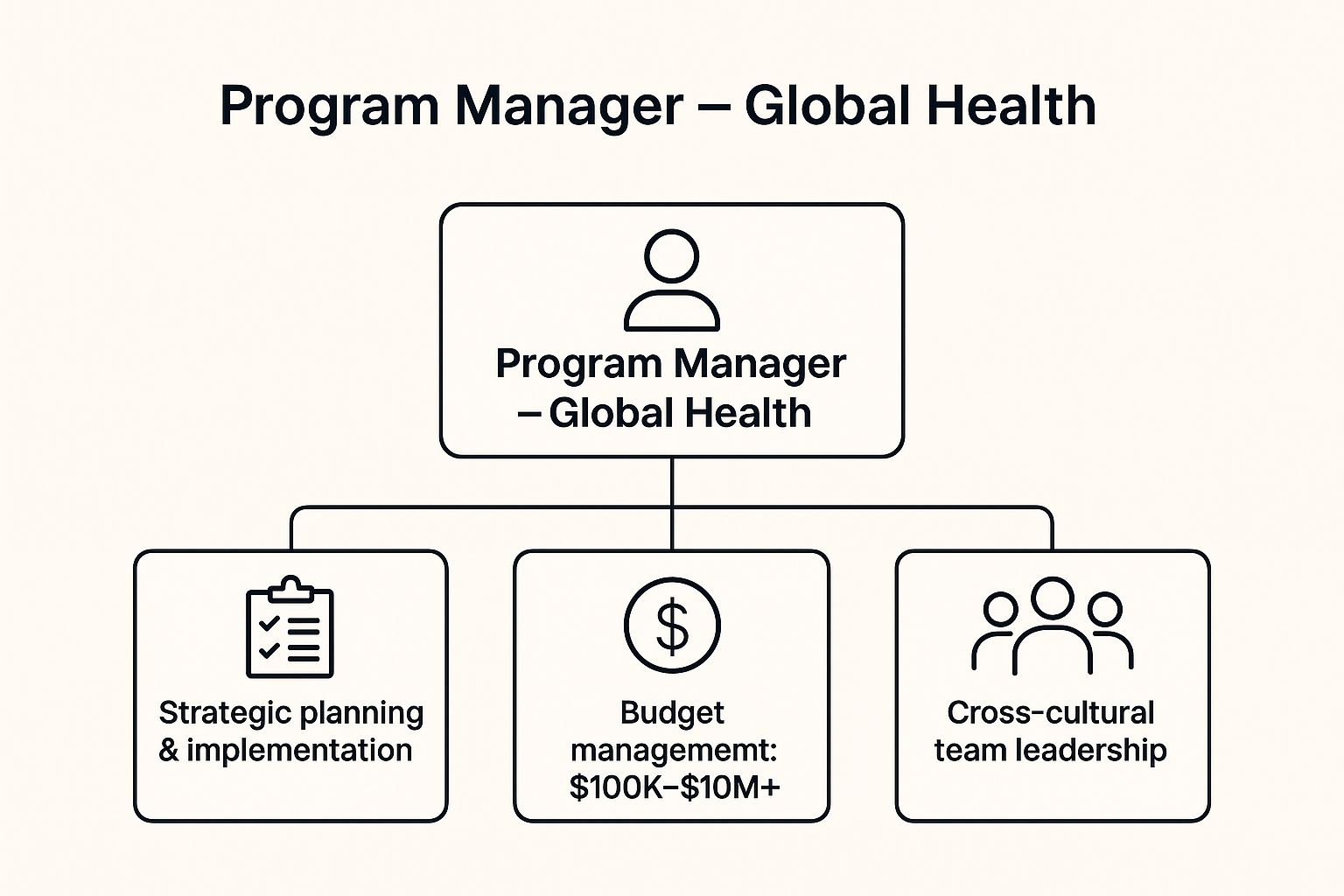
As visualized, strategic planning forms the foundation. This directly influences the management of budgets and the leadership of diverse, cross-cultural teams.
How to Pursue This Career Path
To become a Program Manager in global health, a strategic approach to building your expertise is essential.
- Gain Certifications: A Project Management Professional (PMP) certification is highly valued and demonstrates your ability to manage complex projects.
- Acquire International Experience: Volunteer with organizations like the Peace Corps or Doctors Without Borders to gain firsthand field experience.
- Develop Language Skills: Fluency in French, Spanish, or Portuguese can be a significant advantage, opening doors to programs in Latin America and Africa.
- Specialize Your Knowledge: Build deep expertise in a specific area, such as maternal-child health or infectious diseases, to become a more competitive candidate.
2. Grant Writer and Development Specialist
One of the most vital non-profit healthcare jobs is the Grant Writer and Development Specialist. These professionals are the financial lifeline, securing the necessary funding that allows mission-driven organizations to deliver essential medical services.
They are storytellers and strategists, translating an organization's impact into compelling narratives that resonate with funders. A Grant Writer ensures a non-profit has the resources to not just operate, but to innovate and expand its reach.
This role is fundamental for local health centers applying for funding to serve vulnerable populations. The work is detail-oriented, but it provides the satisfaction of knowing your efforts directly enable patient care and community wellness programs.
Core Responsibilities and Required Skills
A Grant Writer's duties demand a unique combination of exceptional writing, meticulous research, and strategic relationship management. Their core responsibilities include identifying grant prospects, drafting high-quality proposals, and tracking outcomes.
This position is a blend of art and science. It requires creative storytelling to articulate the organization's mission and analytical precision to manage budgets and data.
Their work ensures every dollar is accounted for and supports program goals. This includes everything from providing in-home nursing to funding supportive community services.
How to Pursue This Career Path
To become a successful Grant Writer, you must strategically build a foundation of specialized skills and a proven track record.
- Build a Strong Portfolio: Assemble a collection of successful grant applications, including narratives and budgets, to showcase your abilities.
- Develop Funding Expertise: Specialize in specific funding streams, such as grants from the Centers for Disease Control and Prevention (CDC) or local community foundations.
- Master Key Tools: Become proficient in using donor databases like Salesforce or Blackbaud Raiser's Edge to manage relationships and track progress.
- Join Professional Associations: Network and gain credentials through organizations like the Association of Fundraising Professionals (AFP).
- Collaborate with Program Staff: Develop strong internal relationships to gather powerful patient stories and accurate data for grant proposals.
3. Community Health Worker Coordinator
For those dedicated to grassroots healthcare, the Community Health Worker (CHW) Coordinator is one of the most vital non-profit healthcare jobs. These professionals lead teams of frontline public health workers who bridge the gap between residents and the healthcare system.
A CHW Coordinator ensures their team provides health education, connects individuals to services, and advocates for underserved populations.
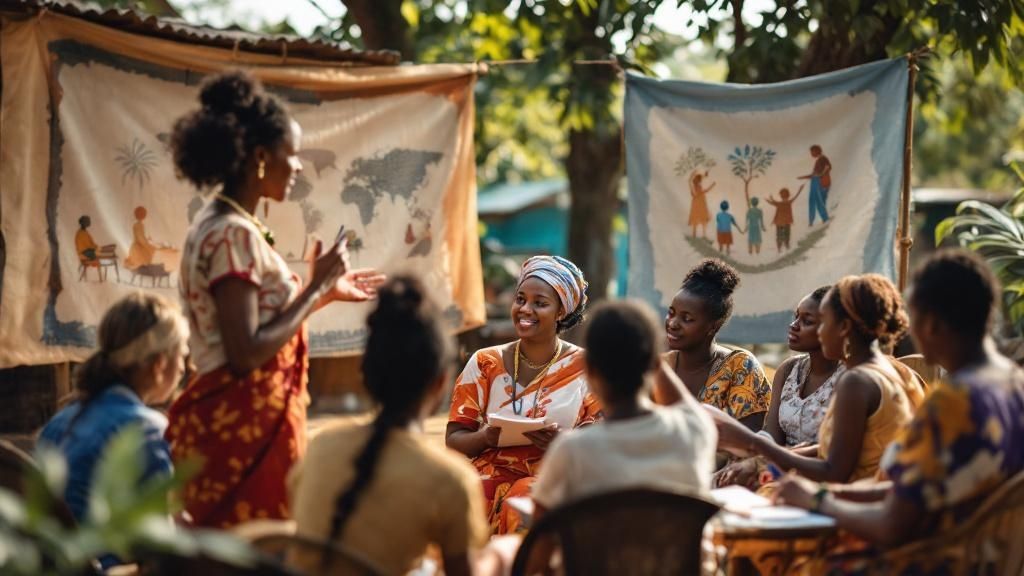
They are responsible for the training, supervision, and ongoing support of Community Health Workers. This role is crucial in local health departments and non-profits focused on community outreach.
By managing these programs, CHW Coordinators directly address social determinants of health. They empower community members to take control of their well-being.
Core Responsibilities and Required Skills
A Community Health Worker Coordinator's duties require a deep understanding of community dynamics combined with strong leadership. Key responsibilities include recruiting and training CHWs and developing outreach strategies.
Success depends on a diverse skill set that blends social advocacy with programmatic oversight. The CHW Coordinator role is pivotal in translating public health strategy into tangible, community-level action.
These professionals must be adept at program management, fostering trust and communication. This involves strong interpersonal skills and a genuine commitment to community empowerment, central to the mission of organizations like Central Coast VNA & Hospice.
How to Pursue This Career Path
Becoming a Community Health Worker Coordinator involves building a foundation in public health and hands-on community engagement.
- Gain Field Experience: Start by working or volunteering in roles related to community organizing or social work to understand community needs.
- Develop Multicultural Competencies: Becoming bilingual (e.g., in Spanish for communities in Monterey or Santa Cruz County) is essential for serving diverse populations.
- Understand Social Determinants of Health: Pursue education focused on how factors like housing and food security impact health outcomes.
- Obtain Certifications: Many states offer certifications for Community Health Workers, which can be a prerequisite for leadership roles.
4. Clinical Research Coordinator
One of the most vital non-profit healthcare jobs is the Clinical Research Coordinator. These detail-oriented professionals are the operational backbone of clinical trials and research studies designed to improve patient outcomes.
A Clinical Research Coordinator manages the day-to-day activities of a study. They recruit and enroll participants and ensure every piece of data is meticulously collected and recorded.
They work at the intersection of patient care and scientific inquiry. The work is precise but offers the immense satisfaction of contributing directly to evidence-based practices that shape the future of healthcare.
Core Responsibilities and Required Skills
A Clinical Research Coordinator's duties are diverse, demanding a unique combination of organizational prowess and interpersonal skills. Key responsibilities include screening patients, managing study documentation, and ensuring compliance with Good Clinical Practice (GCP) guidelines.
They must navigate complex regulatory requirements and communicate effectively with patients, investigators, and sponsors. The coordinator's work ensures the integrity of research, which is critical for developing new treatments.
This is especially true in fields like palliative care, where new approaches to symptom management are constantly being explored. Research informs CCVNA’s approach to palliative care.
How to Pursue This Career Path
To become a Clinical Research Coordinator and excel in this essential non-profit role, a focused approach to building your qualifications is key.
- Obtain Key Certifications: Earning a certification like the Certified Clinical Research Coordinator (CCRC) from the Association of Clinical Research Professionals (ACRP) validates your expertise.
- Learn Good Clinical Practice (GCP): A deep understanding of GCP guidelines is non-negotiable, as it forms the ethical and scientific quality standard for all clinical trials.
- Develop Technical Proficiency: Gain hands-on experience with electronic data capture (EDC) systems and other clinical trial management software.
- Strengthen Communication Skills: Your ability to clearly explain complex trial procedures to patients is fundamental to successful participant retention.
5. Public Health Data Analyst
For those driven by data, one of the most vital non-profit healthcare jobs is the Public Health Data Analyst. These professionals are the investigators and storytellers of healthcare, transforming raw numbers into actionable intelligence.
They collect, clean, and interpret complex health data to uncover trends and guide evidence-based decisions. Their work is designed to improve public well-being on a community-wide scale.

A Public Health Data Analyst is central to the mission of organizations focused on population health. They might work to analyze hospital readmission rates or monitor disease outbreaks for a local health department.
The insights they generate are critical. Their work ensures healthcare interventions are not just well-intentioned but are also measurably effective.
Core Responsibilities and Required Skills
A Public Health Data Analyst's role is a blend of technical prowess and strategic thinking. Their primary duties include managing large datasets, applying statistical methods, and creating compelling reports for stakeholders.
Key responsibilities involve identifying health disparities and evaluating the impact of public health interventions. Mastering these tasks is essential for driving meaningful improvements in community health.
This ensures organizations like CCVNA can tailor services, such as home health or palliative care, to the needs of populations in Monterey and San Benito Counties.
How to Pursue This Career Path
Building a career as a Public Health Data Analyst involves a deliberate focus on acquiring specialized technical skills.
- Master Statistical Software: Proficiency in statistical packages like R, SAS, or Python is highly valued in the field.
- Develop Data Visualization Skills: Gain expertise in tools like Tableau or Power BI to create interactive dashboards that tell a compelling story.
- Learn SQL and Database Management: Strong SQL skills are fundamental for retrieving and manipulating data from the relational databases common in healthcare.
- Understand Healthcare Data Standards: Familiarity with standards like HL7 and FHIR is essential for working with electronic health records.
6. Patient Navigator
For patients and families navigating healthcare complexities, a Patient Navigator is a compassionate guide and indispensable advocate. This role is one of the most hands-on and impactful non-profit healthcare jobs, focused on helping individuals overcome barriers to care.
Navigators coordinate the entire patient journey. They handle everything from scheduling appointments to accessing financial aid and community resources.
They serve as the central point of contact, ensuring seamless communication between patients, physicians, and other providers. The work is deeply personal, offering the reward of directly improving a patient's ability to receive timely and appropriate care.
Core Responsibilities and Required Skills
A Patient Navigator's responsibilities require a unique combination of empathy, organizational skill, and system-level knowledge. Their primary duties involve assessing patient needs, creating care plans, and educating families on treatment options.
Key skills include exceptional interpersonal communication, as navigators must build trust with patients from various backgrounds. Strong problem-solving abilities are essential for untangling insurance issues or finding solutions to logistical challenges.
A deep understanding of the healthcare landscape, from clinical processes to billing, is also vital for success in this role.
How to Pursue This Career Path
To become a Patient Navigator and effectively guide patients through their healthcare journey, a focused approach to skill development is key.
- Develop Strong Empathy and Communication: Master active listening and culturally competent communication to advocate for diverse patient populations.
- Learn Health Systems and Insurance: Gain a thorough understanding of Medicare, Medicaid, and private insurance to help patients manage costs.
- Acquire Case Management Experience: Work or volunteer in social work or case management to develop skills in coordinating complex care.
- Obtain Certification: Pursue a Patient Navigator certification from an organization like the Harold P. Freeman Patient Navigation Institute to validate your expertise.
- Build a Community Resource Network: Proactively build relationships with local support organizations, from food banks to mental health clinics.
7. Medical Social Worker
The Medical Social Worker is one of the most vital non-profit healthcare jobs. These professionals provide essential psychosocial support, counseling, and case management to patients and families facing difficult health challenges.
A Medical Social Worker goes beyond physical symptoms to address the social determinants of health. This includes factors like housing, financial stability, and emotional well-being that impact quality of life.
They are crucial members of the care team, connecting patients with resources and coordinating smooth care transitions from hospital to home. Their work ensures that no patient falls through the cracks, providing a safety net of support and advocacy.
Core Responsibilities and Required Skills
A Medical Social Worker’s role is deeply person-centered, blending clinical skills with resource management and advocacy. Key responsibilities include conducting psychosocial assessments, providing crisis intervention, and developing comprehensive care plans.
These professionals must have a strong grasp of how social, emotional, and financial factors intersect with health. For instance, at CCVNA, our Medical Social Workers collaborate closely with our Registered Nurses and other clinicians.
This synergy is essential for successful recovery and is a cornerstone of our home health services. Learn more about our collaborative home healthcare nursing.
How to Pursue This Career Path
Becoming a Medical Social Worker in a non-profit setting requires a dedicated educational and professional journey.
- Obtain a Master of Social Work (MSW): An MSW degree with a specialization in healthcare is the standard educational requirement.
- Gain Supervised Clinical Experience: Seek internships or entry-level positions in medical settings like hospitals or clinics to build hands-on experience.
- Develop Population-Specific Expertise: Focus on a particular area, such as geriatrics or palliative care, to become an invaluable specialist.
- Pursue Clinical Licensure: Earning a Licensed Clinical Social Worker (LCSW) credential significantly enhances your professional standing.
Build Your Career with Central Coast VNA & Hospice
Choosing a career in the nonprofit sector is a commitment to serve and uplift your community. The roles we've explored illustrate the diverse opportunities available within mission-driven healthcare.
Each position offers a unique way to apply your skills toward a greater good. You can directly impact the well-being of individuals and families across the Central Coast.
These non-profit healthcare jobs are built on a foundation of compassion and purpose. The focus is on patient outcomes and community health, not shareholder returns. This environment fosters professional satisfaction and a powerful sense of connection to the people you help every day.
Working at an organization like Central Coast VNA & Hospice means joining a legacy of care. We have proudly served Monterey, San Benito, Santa Cruz, and South Santa Clara counties for over 74 years.
Key Takeaways for Your Career Search
As you consider your next steps, remember these core insights:
- Mission Drives Everything: Your work will directly contribute to providing essential care to those in need, including seniors, veterans, and underserved populations.
- Diverse Skill Sets Are Valued: Whether your expertise is in data analysis, community outreach, or clinical care, there is a vital role for you.
- Professional Growth and Personal Fulfillment: These careers offer a blend of challenging, meaningful work and the opportunity to grow with a dedicated team.
Taking the Next Step in Your Journey
Embarking on a career in nonprofit healthcare requires preparation and passion. As you refine your resume to highlight your commitment to community-focused work, prepare for the modern hiring process.
Many organizations now use virtual platforms to connect with candidates. Learn more about how to prepare for a video interview to ensure you present your best self.
Ultimately, a career in this field is an investment in both your future and your community’s health. It is a chance to build a legacy of compassion, one patient at a time. The demand for dedicated professionals in non-profit healthcare jobs continues to grow.
Frequently Asked Questions (FAQs)
1. What is the main difference between a non-profit and a for-profit healthcare job?
The primary difference is the organization's mission. Non-profits, like Central Coast VNA & Hospice, reinvest revenue into their patient care programs and community services rather than distributing profits to shareholders. This creates a work environment focused on patient outcomes and community well-being.
2. Do non-profit healthcare organizations offer competitive salaries and benefits?
Yes. To attract and retain qualified professionals, reputable non-profits offer competitive compensation packages. These often include comprehensive benefits, retirement plans, and opportunities for professional development, such as our employee wellness program.
3. What kind of non-clinical jobs are available in non-profit healthcare?
Beyond direct patient care roles like Registered Nurses and Hospice Aides, there are many essential non-clinical positions. These include Grant Writers, Community Health Worker Coordinators, Data Analysts, and administrative staff who support the organization’s mission.
4. How does working for a local non-profit like CCVNA benefit the community?
Working for a local, mission-driven provider ensures that care is tailored to the specific needs of the Central Coast community. With over 74 years of service in Monterey, San Benito, Santa Cruz, and South Santa Clara counties, our focus remains on providing compassionate, high-quality home health, palliative, and hospice care to our neighbors.
5. Are there opportunities for career advancement within non-profit healthcare?
Absolutely. Non-profit organizations value retaining dedicated staff and often provide clear pathways for professional growth. Employees can advance into leadership roles, specialize in areas like palliative or hospice care, or transition between different departments to broaden their skills.
Are you ready to build a career with purpose at a trusted, local nonprofit? Explore current openings and discover how you can make a difference with Central Coast VNA & Hospice. Join our team and help us continue our legacy of providing compassionate care.