
The moments following the death of a loved one in hospice care are tender and often overwhelming. While your hospice team provides immediate support, you are also faced with a series of necessary tasks. Having a clear plan can bring a sense of order during a disorienting time, allowing you to focus on grieving and honoring your loved one.
This hospice after death checklist is designed to guide you through the crucial steps with clarity and compassion. At Central Coast VNA & Hospice, we have supported families across Monterey County, San Benito County, Santa Cruz County, and South Santa Clara County through this process for over 74 years. Our experienced team, from Registered Nurses to Chaplains and Bereavement Specialists, is here to provide the continuity of care you need.
This guide breaks down the process into seven manageable steps, offering practical advice to help you navigate administrative, legal, and emotional responsibilities. It addresses everything from contacting the hospice team and securing documents to handling initial financial tasks and planning a memorial service.
By following this checklist, you can ensure that important obligations are met without feeling lost or overburdened. You will learn how to methodically manage each task, giving you the space to process your loss. Each step is an important part of a journey no one should walk alone.
1. Contact the Hospice Team and Physician
The very first action to take after a loved one passes away under hospice care is to contact their hospice provider. This step is a cornerstone of the entire hospice after death checklist because it initiates the formal process and ensures everything proceeds according to the established plan of care.
Unlike an unexpected death where calling 911 is the standard protocol, a hospice death is an anticipated event. The hospice team is prepared to guide you.
Why This Is Your First Call
Making the hospice team your first call ensures a peaceful and dignified transition. The team, including Registered Nurses and other dedicated staff, is trained to handle the moments after death with compassion and professionalism.
This prevents an unnecessary 911 call, which could trigger a full emergency response that is not required. The hospice Registered Nurse will coordinate the next steps, from the official pronouncement of death to contacting the pre-selected funeral home.
Practical Tips for Making the Call
To make this process as smooth as possible, follow these practical steps:
- Keep the Number Accessible: Post the hospice agency’s 24-hour hotline number in a visible place, such as on the refrigerator or near the patient's bedside.
- Designate a Caller: Decide in advance which family member will be the designated point of contact. This prevents confusion and ensures one person communicates with the medical team.
- Have Information Ready: When you call, have the patient's full name, date of birth, and address ready to provide to the on-call Registered Nurse.
- Ask About Timing: Inquire about the expected arrival time for the hospice Registered Nurse.
The following visual guide outlines the immediate notification process.
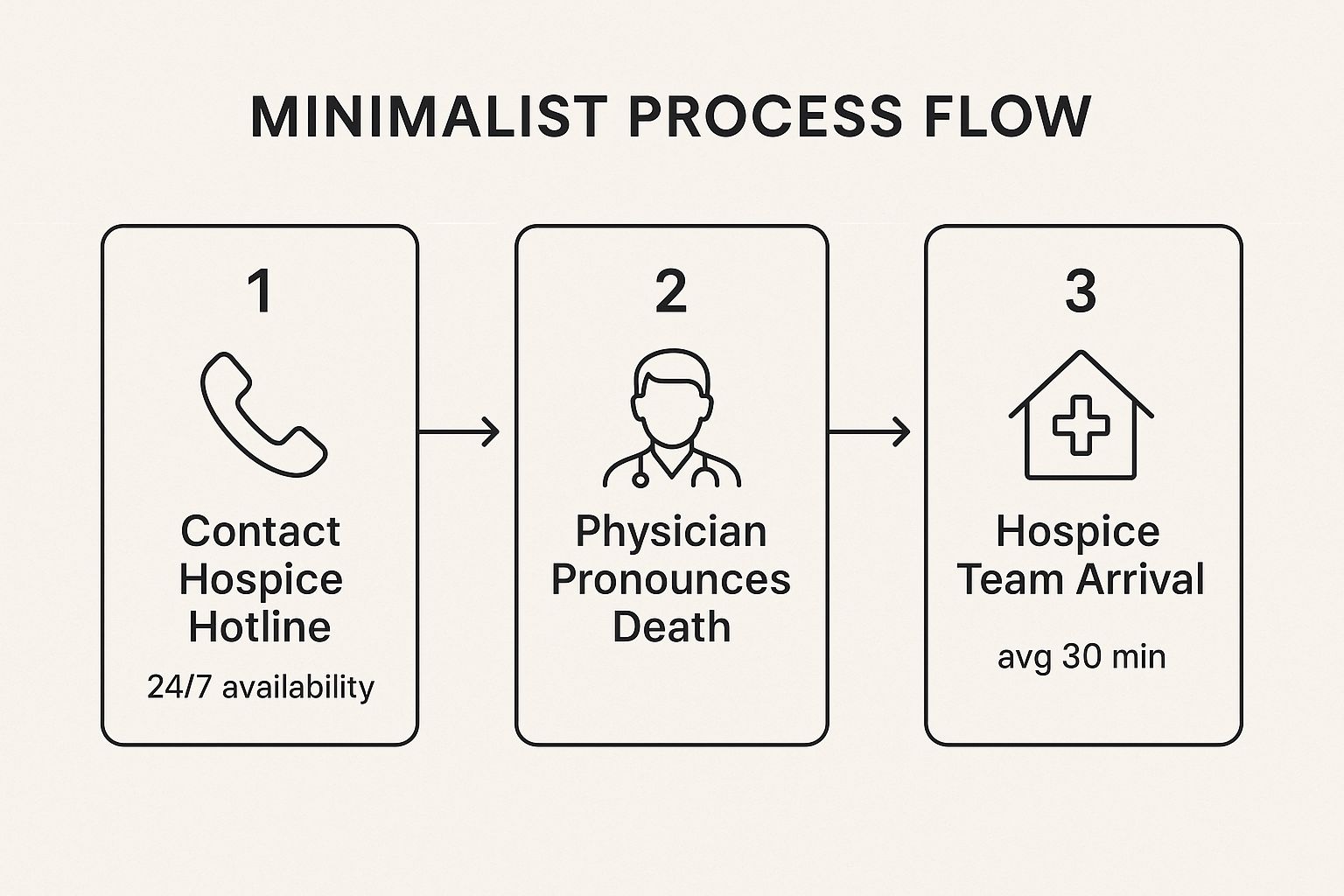
This simple flow illustrates that your first action directly leads to the official pronouncement and on-site support, bypassing emergency services entirely. For more information on creating a comprehensive care strategy, you can learn more about advance care planning.
2. Arrange for Body Preparation and Removal
After the hospice Registered Nurse has officially pronounced the death, the next critical step in the hospice after death checklist is arranging for the dignified preparation and transport of your loved one’s body. This process involves coordinating with a pre-selected or newly chosen funeral home or crematory service.
The hospice team remains a vital resource during this time, often assisting with the logistics to ensure a seamless and respectful transition. This step is deeply personal and can be emotionally challenging, but having a clear plan helps alleviate stress.

Why This Is Your Next Step
Coordinating body removal promptly but without rush ensures the process is handled with dignity and respect. The hospice Registered Nurse will typically assist in contacting the funeral home once the family is ready.
This managed approach prevents the feeling of being rushed. It provides a structured, compassionate transition from the home environment to the care of the funeral service provider.
Practical Tips for Arranging Transport
To navigate this sensitive task, consider these practical steps to ensure everything is handled respectfully and efficiently:
- Pre-Arrange When Possible: If funeral or cremation services were pre-arranged, locate the "pre-need" contract. This document contains all the necessary contact information and details.
- Discuss Final Wishes: Clearly communicate any specific cultural, religious, or personal wishes for body preparation with both the hospice Registered Nurse and the funeral home staff.
- Take Your Time: You do not need to have your loved one removed immediately. Take the time you need to say your final goodbyes in the comfort of the home setting before the transport team arrives.
- Gather Important Documents: Keep the deceased's personal identification, Social Security number, and any pre-arrangement paperwork in an accessible folder to provide to the funeral director.
- Designate a Support Person: Ask a close friend, family member, or your hospice Chaplain to be present when the transport team arrives. Their presence can provide emotional support.
3. Notify Close Family Members and Friends
Once the hospice team has been contacted, the next step on the hospice after death checklist is to begin notifying close family members and friends. This is a deeply personal and emotional task, requiring sensitivity and careful thought.
Handling these conversations with compassion ensures that loved ones receive the news in a supportive and respectful manner.

This process is more than just sharing information; it is the beginning of a collective grieving process. Having a plan can reduce the immense stress of deciding who to call and what to say in the raw moments after a loss.
Why This Is Your Next Step
Prioritizing close family and friends ensures your immediate support network is aware and can begin to process the loss alongside you. It prevents them from hearing the news through less personal means, like social media, which can be hurtful.
Hospice Medical Social Workers are often available to help families navigate these difficult conversations. Many families also create a "phone tree" or communication plan in advance to distribute the responsibility.
Practical Tips for Making the Calls
To handle this sensitive task effectively, consider these practical recommendations:
- Create a Contact List in Advance: During the hospice care period, compile a list of immediate family, extended family, and close friends with their phone numbers and relationships.
- Designate Callers: Assign specific people to notify certain groups. For instance, an adult child can call aunts and uncles, while a close friend can inform the social circle.
- Prepare Key Information: Write down a few simple sentences to share. This ensures the message is clear, consistent, and you don’t forget important details during an emotional call.
- Consider the Timing: Be mindful of time zones and the recipient’s circumstances. It is generally best to call, as a text message can feel impersonal for such significant news.
- Ask for Help: Lean on your support system. Ask a sibling, spouse, or close friend to sit with you or help make some of the calls.
Navigating the grief that follows is a long-term process. For those needing additional emotional support, Central Coast VNA & Hospice offers bereavement and grief support.
4. Secure and Organize Important Documents
After addressing the immediate medical and emotional needs, the next critical task is locating and organizing your loved one’s important documents. This step is a foundational part of the hospice after death checklist.
These papers are essential for handling legal, financial, and administrative responsibilities. Gathering everything in one central place will significantly streamline the estate settlement process.
Why This Is a Critical Step
Securing important documents early on prevents potential legal hurdles and financial complications. It empowers you to manage the estate confidently, making informed decisions based on the deceased's expressed wishes.
Many of these documents have time-sensitive requirements, so locating them quickly is crucial. For instance, a will must be filed with the probate court, and life insurance companies have specific claim deadlines.
Practical Tips for Organizing Documents
To manage this task effectively, consider the following practical steps:
- Create a Master Inventory: Start by creating a comprehensive list of all essential documents and their locations. This inventory will serve as your guide.
- Locate Key Legal Papers: Prioritize finding the will or trust, birth and death certificates, marriage certificates, and Social Security information.
- Gather Financial Records: Collect bank and investment account statements, tax returns from the last few years, credit card statements, and information on any outstanding loans or mortgages.
- Check for a Safe Deposit Box: Look for a safe deposit box key or related paperwork. You may need to check with the family's attorney or financial advisor for its location.
- Make Copies: Before distributing any original documents, make multiple copies for your records and for submission to various agencies.
- Secure Valuables: Store all original documents, keys, and other small valuables in a secure, fireproof location until the estate is settled. As you work to secure and organize important documents, especially those containing sensitive personal and financial information, considering how to maintain confidentiality during their transmission can be important, and some might find it useful to review confidential cover sheet templates.
Advance directives, which outline medical care preferences, are also a key part of this collection. To understand their role more deeply, you can discover more about the three common types of advance directives.
5. Contact Insurance Companies and Begin Claims Process
Initiating contact with insurance providers is a crucial financial step in any hospice after death checklist. This task involves locating the deceased’s life insurance policies and submitting the necessary paperwork in a timely manner.
Prompt action ensures that beneficiaries receive the funds intended to cover final expenses, outstanding debts, or provide long-term financial support.
Why This Is a Critical Financial Step
Filing life insurance claims promptly helps secure the financial stability of the surviving family members. The benefits from these policies are often essential for covering immediate costs like funeral services or medical bills.
Delaying this process can create unnecessary financial strain during an already difficult emotional period. It is a key step in settling the deceased's estate and honoring their financial planning.
Practical Tips for Managing Insurance Claims
To navigate the insurance claims process efficiently, consider the following practical steps:
- Locate All Policies: Search the deceased’s personal files, safe deposit box, and digital records for all life insurance policies, including individual, group, and employer-sponsored plans.
- Order Multiple Death Certificates: Most insurance companies require a certified copy of the death certificate, not a photocopy. Order 5-10 copies from the funeral home or vital records office.
- Gather Key Information: Before calling, collect the policy number, the deceased's full name, date of birth, Social Security number, and cause of death.
- Document Everything: Keep a detailed log of every conversation. Note the date, the representative’s name, the claim number, and a summary of the discussion.
- Understand Payout Options: Ask about the available payout options, such as a lump-sum payment or an annuity, and discuss any potential tax implications with a financial advisor.
6. Handle Immediate Financial and Legal Obligations
Once the initial logistical arrangements are underway, addressing immediate financial and legal tasks becomes a critical part of the hospice after death checklist. This step involves securing the deceased’s assets, managing urgent bills, and notifying key financial institutions.
Acting quickly can prevent financial complications, protect against identity theft, and ensure a smoother transition for managing the estate’s long-term affairs.
Why This Is a Priority
Promptly managing financial matters protects the estate from liability and loss. Neglecting these duties can lead to significant problems, including identity theft or financial penalties if important bills are missed.
This step lays the groundwork for the executor or administrator to fulfill their duties. It establishes an orderly process, whether that involves a formal probate process or a simpler distribution of assets.
Practical Tips for Managing Finances
To navigate these responsibilities effectively, consider the following practical steps:
- Contact Banks Immediately: Notify all banks and financial institutions where the deceased held accounts. Request that the accounts be frozen or retitled to "Estate of [Deceased's Name]."
- Notify Credit Bureaus: Contact the three major credit bureaus (Equifax, Experian, TransUnion) to report the death. This places a "deceased alert" on the credit file to help prevent identity theft.
- Maintain Essential Payments: Continue paying the mortgage, utilities, homeowner’s insurance, and car insurance to protect the assets. Review bank statements for automatic payments and cancel any non-essential subscriptions.
- Gather Important Documents: Locate the will, trust documents, bank statements, deeds, life insurance policies, and tax returns. These will be essential for the estate settlement process.
- Consult an Attorney: If the estate is complex, involves significant assets, or if a will is contested, it is wise to consult with an estate or probate attorney.
Properly managing these initial financial steps is a foundational part of the estate administration process.
7. Begin Funeral or Memorial Service Planning
After addressing the immediate logistical and legal steps, the focus naturally shifts toward honoring your loved one. Planning a funeral or memorial service is a crucial part of this hospice after death checklist.
It provides a structured way for family and friends to grieve, share memories, and celebrate the life that was lived. This process involves numerous decisions, from the type of service to coordinating with a funeral home.
Why This Planning Is Essential
Organizing a memorial service provides a focal point for grief and remembrance. It helps formalize the passing and allows the community to pay their respects, which can be an important part of the healing process.
By carefully planning the event, you ensure it aligns with your loved one’s character. This provides a comforting experience for attendees, rather than adding stress during an already difficult time.
Practical Tips for Service Planning
To navigate the planning process effectively, consider these actionable steps:
- Review Pre-Arrangements: The first step is to locate and review any pre-planned funeral arrangements, wills, or written instructions your loved one may have left. This honors their wishes.
- Hold a Family Meeting: Gather key family members to discuss preferences, roles, and the budget. This ensures everyone feels involved and that financial constraints are respected.
- Delegate Responsibilities: You do not have to do everything yourself. Assign specific tasks, such as coordinating flowers or creating a slideshow, to willing family and friends.
- Plan for Guests: If friends or family will be traveling, provide them with information on local accommodations and transportation to ease their journey.
- Preserve Cherished Memories: As part of memorial planning, you might also consider preserving cherished memories by organizing and digitizing family photographs. Explore tips for preserving old photos effectively.
This stage is about creating a tribute that feels authentic and provides closure. To learn more about how compassionate support extends through every stage of end-of-life care, you can explore hospice care in Monterey County.
Compassionate Support for Every Step of the Journey
Navigating the days after a loved one passes is a journey no one should walk alone. This hospice after death checklist was designed to serve as a steady guide, breaking down tasks into manageable steps.
From the initial calls to the hospice team and family, to handling financial accounts and legal documents, each item is a critical piece of the puzzle. By addressing these responsibilities methodically, you create the space necessary to focus on what truly matters: grieving and healing.
Key Takeaways for Your Path Forward
As you move through this process, keep these core principles in mind. They are the emotional anchors that will support you through the practical demands.
- Lean on Your Support System: The hospice team’s role does not end at the moment of passing. Your Registered Nurse, Medical Social Worker, and Chaplain are invaluable resources.
- Organization is a Form of Self-Care: Gathering documents and making lists is a powerful tool that reduces stress and gives you a sense of control during a period that can feel anything but.
- Pace Yourself and Delegate: You do not have to do everything at once, nor do you have to do it all by yourself. Prioritize tasks and accept help from trusted relatives and friends.
Finding Meaning Amidst the Practicalities
While this checklist focuses heavily on the logistical side of loss, it is equally important to create space for remembrance and healing. These practical steps are a means to an end, freeing you to engage in the deeply personal work of grieving.
Finding ways to keep your loved one’s memory alive can take many forms. Some find solace in tangible keepsakes that serve as a constant, gentle reminder of their bond, such as personalized memorial jewelry.
As a nonprofit, mission-driven organization, Central Coast VNA & Hospice is committed to continuing our care long after a patient’s passing. Our bereavement services, which include support groups and individual counseling, are available to families for up to 13 months. According to the National Hospice and Palliative Care Organization (NHPCO), providing such bereavement support is a cornerstone of quality hospice care.
We understand that grieving is not a linear process, and our team of Medical Social Workers, Chaplains, and Bereavement Specialists is here to help you navigate it. If you are in Monterey County, San Benito County, Santa Cruz County, or South Santa Clara County and need guidance, please reach out. Let our 74+ years of compassionate care support you.
Frequently Asked Questions (FAQs)
1. What is the very first thing I should do when a loved one dies in hospice at home?
Your first call should be to the hospice agency's 24/7 on-call number, not 911. A hospice Registered Nurse will come to pronounce the death, provide support, and coordinate the next steps according to your loved one’s plan of care.
2. How long do I have before the funeral home needs to be called?
There is no immediate rush. The hospice team will wait until you and your family have had time to say your final goodbyes. The hospice Registered Nurse can help you contact the funeral home when you are ready.
3. Who at Central Coast VNA & Hospice can help me with the emotional stress?
CCVNA provides comprehensive bereavement support through our Medical Social Workers, Chaplains, and trained Bereavement Specialists. These services are available to families for up to 13 months after a loss and are a key part of our mission-driven care.
4. How many copies of the death certificate will I need?
It is generally recommended to order 5 to 10 certified copies. You will need them for life insurance claims, closing bank accounts, transferring titles, and notifying government agencies like the Social Security Administration.
5. How does Central Coast VNA & Hospice support families in the community?
As a local nonprofit with over 74 years of service, CCVNA provides a continuum of care that includes home health, palliative care, and hospice. We serve families across Monterey, San Benito, Santa Cruz, and South Santa Clara counties with a focus on compassionate, professional, and mission-driven healthcare.
At VNA and Hospice, we believe that compassionate care extends beyond a patient’s life to support the entire family through their grieving process. If you or someone you know in Monterey, San Benito, Santa Cruz, or South Santa Clara County needs guidance after a loss, our bereavement services are here for you. Contact us today to learn more about how our 74+ years of nonprofit service can support your family.